Becoming a bank will bolster prospective customers’ trust in Chime and allow the fintech to move faster with product launches, CEO Chris Britt said Wednesday.
San Francisco-based Chime said Tuesday it seeks to acquire one of its bank partners, Enid, Oklahoma-based Stride Bank, for $590 million in cash. The deal combines the fintech’s tech stack with the bank’s infrastructure, and means lower funding costs and no more bank partner fees for Chime.
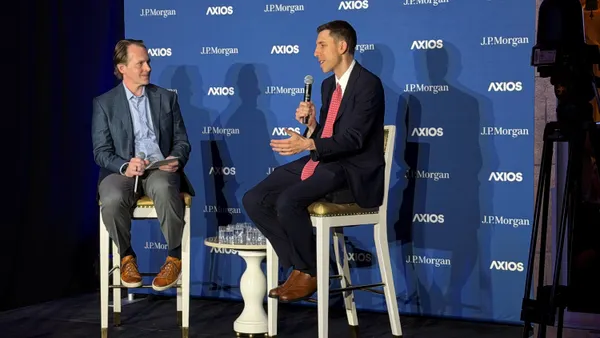
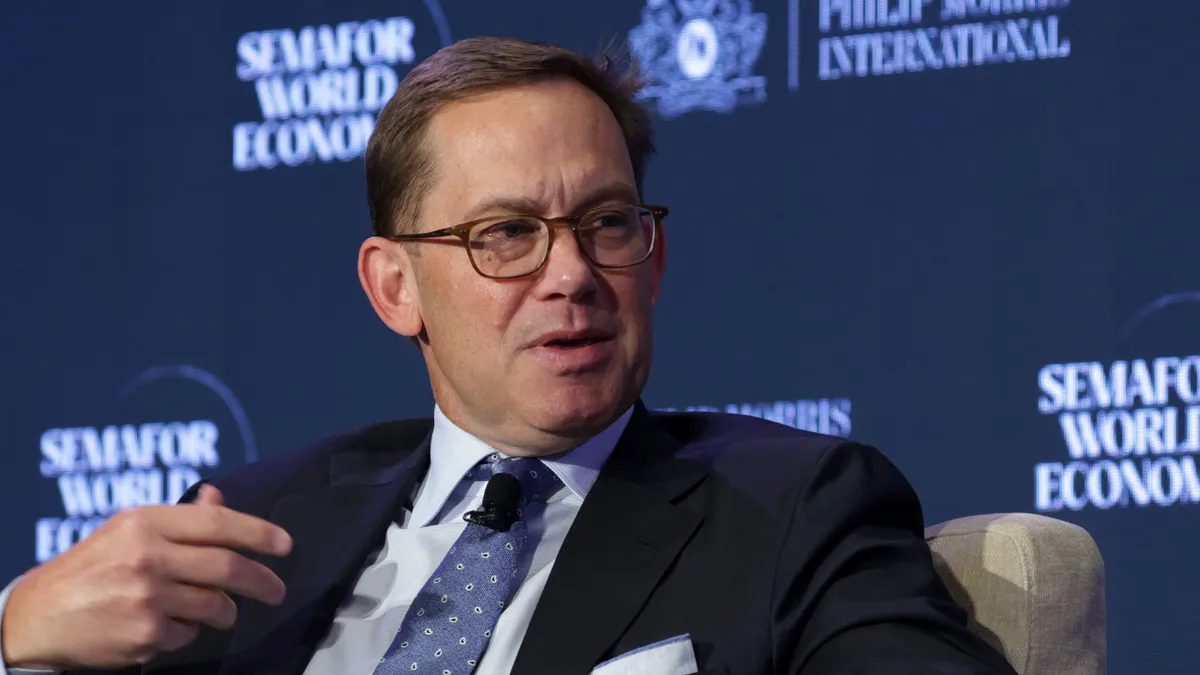
It’s been “an inevitability” that “to achieve our ambition to be the leader in banking, we would at some point be a bank,” Britt said Wednesday at a Goldman Sachs investor conference.
The time was right to make that move, he said, pointing to the current regulatory climate and the opportunity to release products more quickly. He indicated charter-holding Chime can be more efficient on that front than it has been through bank partners.
With artificial intelligence, “you can create new products, new services, new experiences faster than you ever could,” he said. “When we look at all the innovation, how quickly things are changing in the age of AI, we have to have full control of the product output and delivery cycle.”
But regulated products have to go through legal, compliance and other reviews, and “inevitably” there have been “redundant steps in the process” in working with bank partners, Britt said.
“I wouldn't say we've been prevented from doing new products, but there's no question that we haven't been able to move as fast as we would like,” he said. “We have our level of risk tolerance and compliance, and so forth. They have theirs. We're both mostly right, but we have different perspectives on those things. So, just adding those friction points have made it a bit of a struggle at times.”
Getting to product launch has taken longer than the fintech might like in some cases, so the charter allows Chime to “streamline” the process, he said.
“We are at a size and a scale when we need to have complete control of our destiny,” Britt said. “So that means having full confidence and control of the resiliency of the underlying platform.”
Trump-appointed regulators’ openness to mergers, acquisitions and novel chartering has led fintechs to chase charters, applying for one themselves or by buying a bank. Fintechs SmartBiz, Enova and OppFi have all pursued bank acquisitions, while Upstart, Affirm and PayPal are among those that have applied for their own charters.
Britt sees the charter move fostering trust with customers who’ve been wary of banking with a fintech.
“More directly connecting Chime brand and Chime app to a bank is most certainly going to unlock greater levels of trust for certain segments of the population who maybe aren't as comfortable banking through an app that has another bank that gives you the [Federal Deposit Insurance Corp.] insurance,” he said. “They want it all from one provider.”
And from a lending perspective, owning a national charter will “open up more opportunity geographically to expand into certain markets that we haven't been able to get into,” Britt said.
Chime plans to offer more in the way of credit and lending products and services over time, he said. The fintech is testing an unsecured revolving line of credit with a group of loyal, high-income customers, and plans to do more in that area, Britt said.
Acquiring $5.4 billion-asset Stride means Chime itself will hold consumer deposits and use those to fund loans, allowing the fintech to offer affordable lending products, he said.
In its current bank partner arrangements, when a customer signs up with Chime, a tri-party relationship between the customer, bank and Chime is established. Consumer funds go to the banks, which then lend Chime those funds so the fintech can engage in credit and lending businesses, Britt said.
Removing a step from the process “creates more efficiency and more flexibility to do even more in areas that we’ll continue to riff on,” Britt said.