Dive Brief:
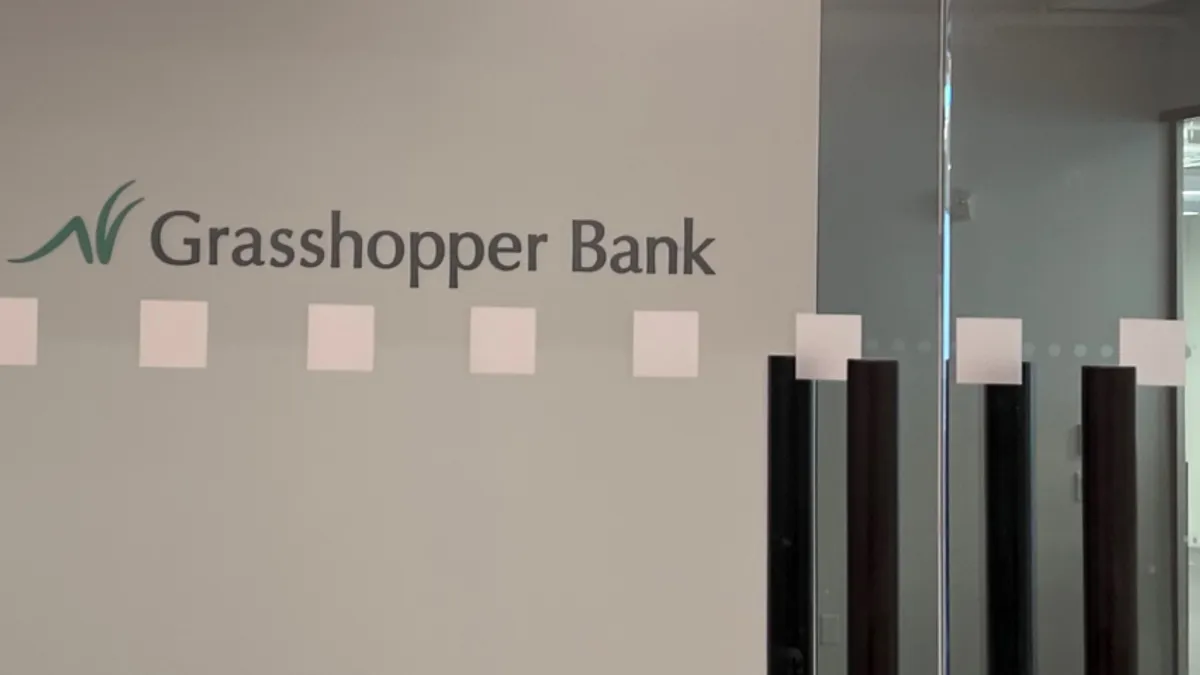
- Fintech Enova International has agreed to buy Grasshopper Bancorp and its digital bank subsidiary, Grasshopper Bank, for $369 million in cash and stock, the companies said Thursday.
- Pairing Chicago-based Enova’s online lending platform with Grasshopper’s national bank charter and deposit-gathering capabilities will allow the combined company to access to more consumers and small businesses, “who have traditionally been underserved by banks,” Enova CEO David Fisher said during a Thursday conference call to discuss the deal.
- The transaction, subject to Grasshopper stockholder approval and regulatory green lights from the Office of the Comptroller of the Currency and the Federal Reserve, is projected to close during the second half of 2026.
Dive Insight:
Nonbank online lender Enova has made about $65 billion in loans to consumers and small businesses since 2004, according to an investor presentation. It has reportedly been pursuing a bank charter since at least 2020.
“Acquiring a bank has been an aspiration of ours for a long time, and we believe we have found the perfect partner and we believe now is the perfect time to move forward with this important, strategic step,” Fisher said during the call.
Digital bank Grasshopper, founded in 2019 and based in New York City, has about $1.4 billion in assets and caters to both businesses and consumers with banking-as-a-service, commercial and Small Business Administration lending, and consumer banking services. Last year, Grasshopper acquired Dearborn, Michigan-based Auto Club Trust.
“By simplifying our product and operational model under this charter, we believe there are significant opportunities to accelerate the growth of our existing products with enhanced ability to serve customers in more states, as well as an ability to expand into new, complementary products,” Fisher said during the call.
Under the deal’s terms, Enova shareholders will own about 95% of the combined company and Grasshopper investors will own about 5%.
“We're thrilled to join forces with Enova, a market leader in digital lending and a true innovator in the use of technology and analytics in the financial services sector,” Grasshopper CEO Mike Butler said. “This combination of enhanced digital lending and banking will enable us to serve an even broader set of customers while expanding and strengthening the product offerings for our current clients.”
Steve Cunningham, set to become Enova CEO Jan. 1 as Fisher steps back, will also become CEO of Grasshopper Bank. Butler will become president of the bank, reporting to Cunningham. Grasshopper management will stay on as bank employees, according to the investor presentation. Fisher, meanwhile, will become executive chairman of the board.
Enova will become a Fed-regulated bank holding company, while Grasshopper will retain its national bank charter.
For a fintech company, “having the bank charter just avoids having to go through all the different state licensing procedures,” said Joe Silvia, a Chicago-based partner at law firm Duane Morris. “It’s not a one-stop shop, but it's a lot easier than getting 49, 50, 51 different licenses.”
With non-traditional acquisitions like a fintech acquiring a bank, maintaining certain bank staff or executive leadership can benefit the regulatory application process, assuming the bank was in good standing with regulators, Silvia noted.
“Part of the application process is, ‘who’s running this institution after the deal closes and do they have any experience in banking? Because if they don’t, then we’re not going to be approving this,’” he said.
The deal’s price-to-tangible book value ratio is 2.54. The transaction is expected to generate about 15% accretion to adjusted earnings per share within the first year and about 25% “once the synergies are fully realized beyond the first year,” Enova said.
Enova reported $2.3 billion in revenue and $229.4 million in net income for the first nine months of 2025, according to its third quarter regulatory filing.
Fintech chartering activity has been muted in recent years, but a “reopening of the regulatory gates” for fintechs and nonbanks has been expected given new leaders atop regulatory agencies. In March, fintech SmartBiz received regulatory approval to acquire Northbrook, Illinois-based United Community Bancshares and its subsidiary, Centrust Bank.