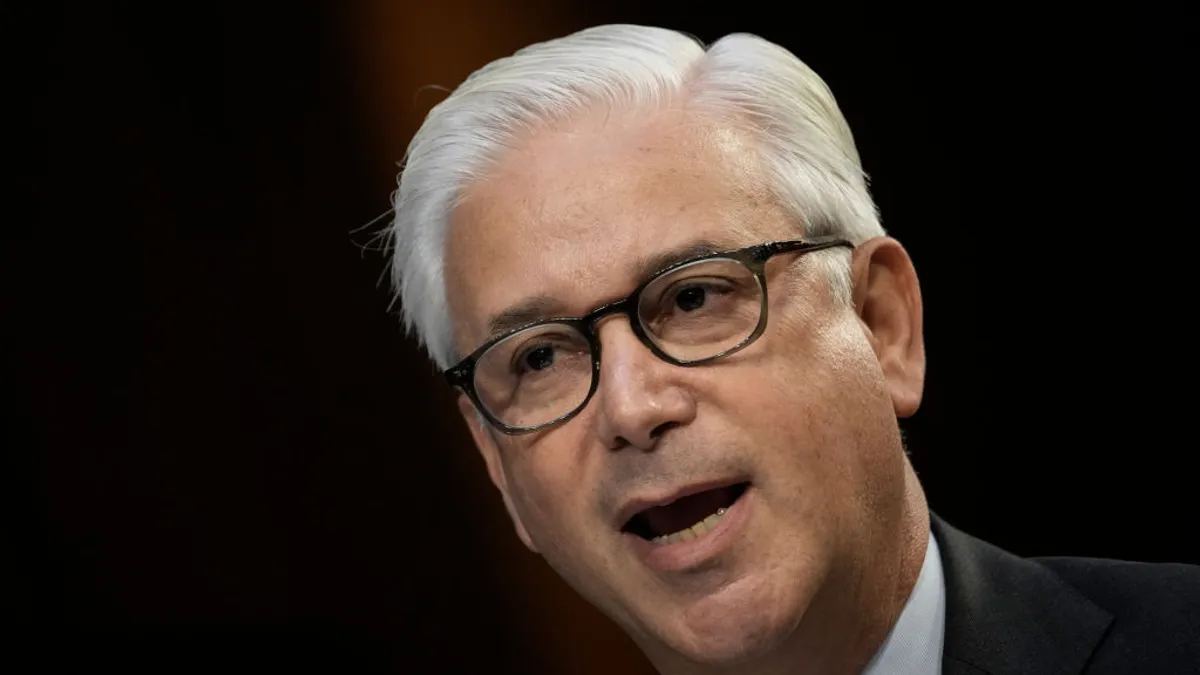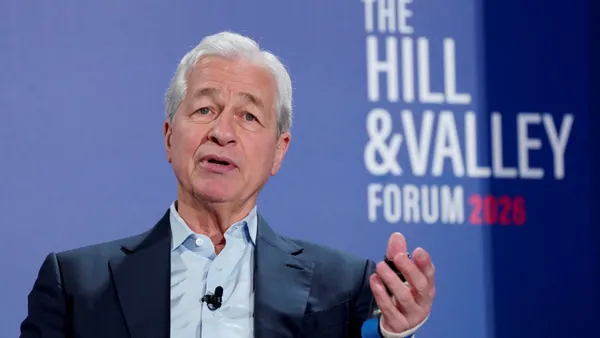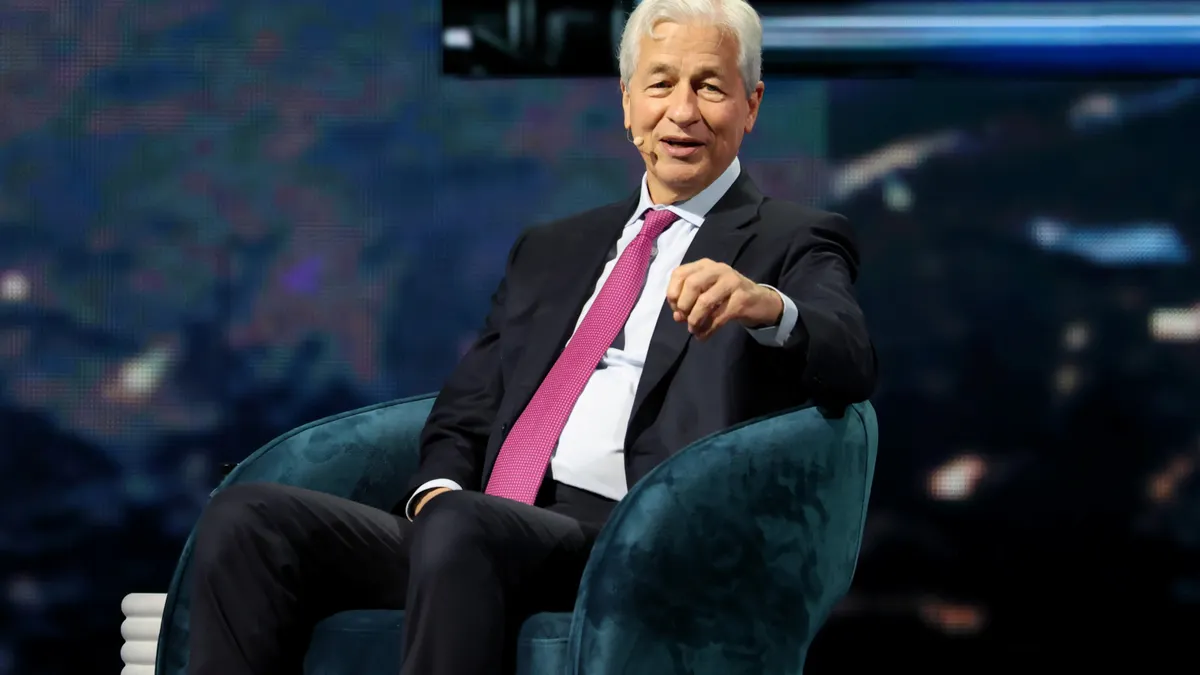
JPMorgan Chase CEO Jamie Dimon on Monday warned of similarities between the current moment and the years just before the 2008 financial crisis, saying he’s anxious that lofty asset prices are fueling the risk of a coming credit cycle.
The bank has more competitors than ever now, and everyone’s on offense, the CEO said.
“My own view is people are getting a little comfortable that this is real, these high asset prices and high volumes – that we won’t have any kind of problem whatsoever,” Dimon said during the bank’s company update event in New York City.
“Everyone’s coining money and everyone’s great,” Dimon said. “It does feel really good. And then when I think about all the factors taking place, I like to take a deep breath and say, ‘Watch out.’”
A swing in the opposite direction is coming, Dimon said, adding he doesn’t know when. “My anxiety is high over it. I’m not assuaged by the fact that asset prices are high. In fact, I think that adds to the risk,” he said.
“Unfortunately, we did see this in ’05, and ’06, and ’07. Almost the same thing,” Dimon said. “The rising tide was lifting all boats, everyone was making a lot of money, people were leveraging to the hilt. The sky was the limit.”
The CEO of the biggest U.S. bank frequently frets over the geopolitical environment or signs of cracks in the credit environment.
Amid intense competition to make loans, JPMorgan remains “quite cautious,” Dimon told investors Monday.
“We stick to our own rules,” he said.
If the bank loses business “because we don’t want to underwrite a leveraged loan, so be it. We’re not chasing anything,” he added.
He appeared to contrast that with what he sees as “a couple of people doing some dumb things” to “create [net interest income] or say they’re winning in the markets business, or something like that.”
Analysts asked Dimon about the bank’s appetite toward acquisitions, given the amount of excess capital JPMorgan holds and the more favorable regulatory environment for M&A.
Dimon expressed a clear preference for organic growth but said “inorganic is very important.”
He named payments and asset and wealth management as two areas where an acquisition holds appeal.
“I’d love Mary [Callahan Erdoes, the bank’s CEO of asset and wealth management] to buy something if it made sense,” Dimon said. But if it doesn’t, the bank has the ability to hire people and grow on its own, he added.
“Payments, I would look at all the time,” Dimon said. “We’ve done several, some did not work, as you know. But that doesn’t mean we wouldn’t try again.”
Growing without making acquisitions is “hard, but it’s your way, your culture, your people, your technology,” he said. “Any merger you do, any one of them, you are talking about consolidating systems and people and back offices and [communications] teams and cultures.”
In commercial and investment banking, growing organically seems better, he said. With an acquisition in one of those segments, “you’re taking on other people’s books, and other people’s systems, and other people’s credit and their loans.”
The CEO believes the bank can deploy some $40 billion to $50 billion organically over the next five years, pointing to things like the bank’s security and resiliency initiative, being led by former Geico CEO Todd Combs.
With that initiative, JPMorgan has said it will make direct equity and venture capital investments of up to $10 billion, but “we could do $20 billion,” Dimon said.
He also noted the incremental revenue opportunity that comes with technology investments, which the bank is focused on.
Dimon, who turns 70 next month and has been CEO for two decades, was again asked for the latest projection on his time remaining at the helm of the bank.
“I’m here for a few years as CEO, and maybe a few after that as executive chairman, pending whatever the board wants to do,” he said.