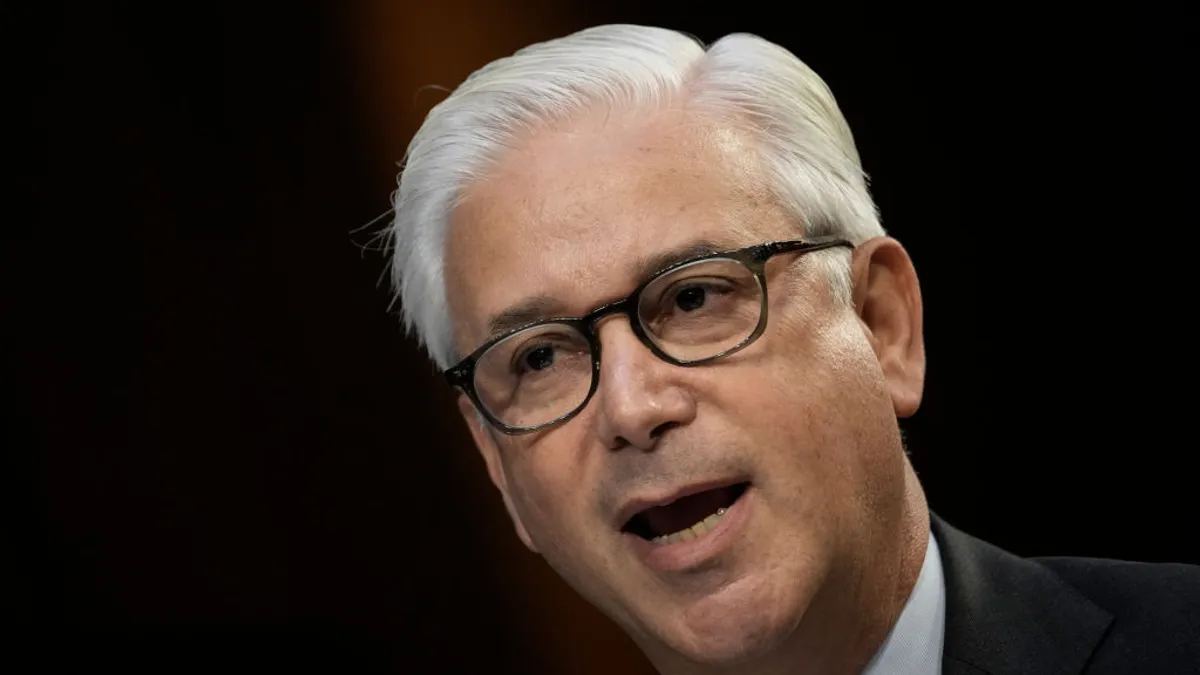
Former Federal Reserve Gov. Adriana Kugler violated the central bank’s rules on trading individual stocks during blackout periods that surround Federal Open Market Committee meetings to set interest rates, according to financial disclosures released Saturday by the Office of Government Ethics.
Fed ethics officials referred the matter to the OGE earlier this year, the forms show. The matter is still under investigation at the central bank, however.
“We have opened an investigation and, consistent with our practice, we are unable to comment further until our investigation is closed,” a spokesperson for the Fed’s Office of Inspector General told Bloomberg.
The disclosures, which cover 2024, were initially due in May. Kugler requested an extension at that point.
Days before the FOMC meeting July 29 and 30, Kugler asked Fed Chair Jerome Powell to grant her a waiver so she could divest impermissible holdings during a blackout period, a Fed official told The New York Times. Powell denied the request.
Kugler did not participate in the July FOMC meeting. At the time, the Fed credited her absence to a “personal matter.”
However, she resigned Aug. 1 – ahead of her term’s expiration in January – allowing President Donald Trump to nominate Stephen Miran, whose philosophy on interest rates more closely mirrors his own.
Kugler did not give an explanation for her resignation, though the Fed said she would return to teaching at Georgetown University.
Saturday’s disclosures do not represent the first time Kugler ran afoul of Fed ethics rules. She disclosed in October 2024 that her husband, immigration lawyer Ignacio Donoso, made four stock purchases — three of Apple shares that July, and one of Cava shares two months later, in violation of Fed trading rules.
“These four purchases were carried out by my spouse, without my knowledge, and I affirm that my spouse did not intend to violate any rules,” Kugler said at the time. “Upon learning about the purchases, I immediately notified ethics officials, and at their direction, I initiated divestiture of these assets as soon as possible under FOMC ethics policies.”
In the latest disclosure, Kugler reported the purchase of shares in restaurant company Cava a week before the March 19-20 FOMC meeting. Those were sold April 5. Company stock was bought and sold two more times by May 15, according to Saturday’s disclosure.
The filing also discloses the March 22 purchase of Southwest Airlines stock – later sold the day before the April 30-May 1 FOMC meeting. The forms also note the purchase of between $100,000 and $250,000 in shares of tech firm Apple in April.
In the filing, Kugler also disclosed roughly $41,000 in pro bono legal services from law firm Arnold & Porter.
Kugler filed the latest disclosures in September, after resigning. Fed ethics officers declined to certify Saturday’s filings.
Ethics violations by high-ranking Fed officials have been a persistent thorn in the side of the central bank. Two regional Fed presidents, Eric Rosengren in Boston and Robert Kaplan in Dallas, resigned in fall 2021 after financial disclosure forms showed they traded stocks at the start of the COVID-19 crisis while also helping to set monetary policy.
Months later, then-Fed Vice Chair Richard Clarida resigned after filing an amended disclosure that revealed he sold an exchange-traded fund Feb. 24, 2020, then re-bought it Feb. 27 – a day before Powell signaled in a statement that the central bank might cut interest rates.
Atlanta Fed President Raphael Bostic also came under fire over trading activity that violated two FOMC rules and code-of-conduct policies. Bostic, incidentally, announced his retirement Wednesday.
“Every time the Federal Reserve faces an ethics scandal, it chips away at Americans’ confidence in one of our most important institutions,” Sen. Tim Scott, R-SC, said in a statement Saturday. “The latest report makes clear that the Fed still doesn’t have the guardrails or culture of accountability the American people expect.”
The Fed, shortly after Rosengren and Kaplan resigned, issued new rules barring its board governors, 12 regional presidents and senior staff from buying individual stocks, holding investments in individual bonds or agency-backed securities, or entering into derivatives. Policymakers and senior staff are required to provide 45 days’ notice before buying or selling any allowed securities, must obtain approval for those transactions, and must hold any investments for at least a year, the central bank said in 2021. “Further, no purchases or sales will be allowed during periods of heightened financial market stress,” the Fed said.
Scott, the Senate Banking Committee’s chair, made clear, in his statement, that he was looking past the Powell era at the Fed.
“The next Fed Chair must restore integrity, strengthen transparency, and end the pattern of insiders playing by their own rules,” he said. “Reform isn’t optional, it’s essential if the Fed is going to fully regain the trust it has lost.”
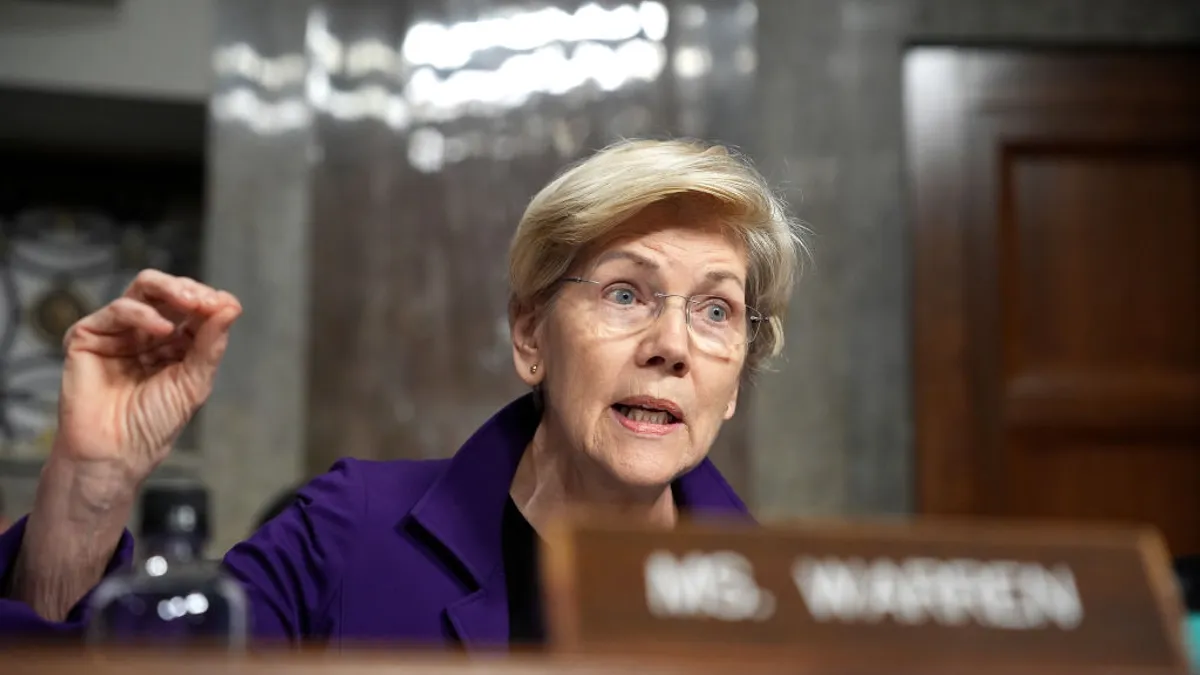
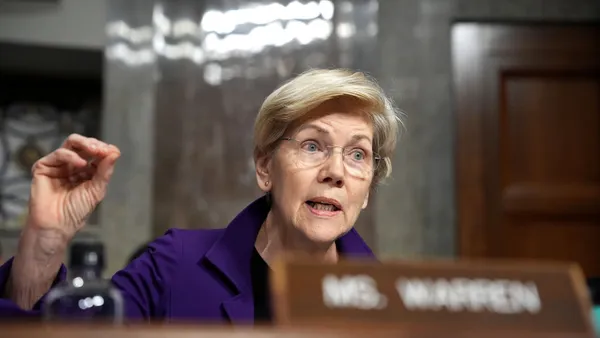
Scott’s Democratic counterpart on the committee, ranking member Elizabeth Warren, D-MA, said Saturday in a post on X that she, too, has “long pushed for stronger ethics rules at the Fed.”
“The American people should be able to trust that the Fed’s decisions are not driven by the personal interests of individuals or the political interests of Donald Trump,” Warren said.