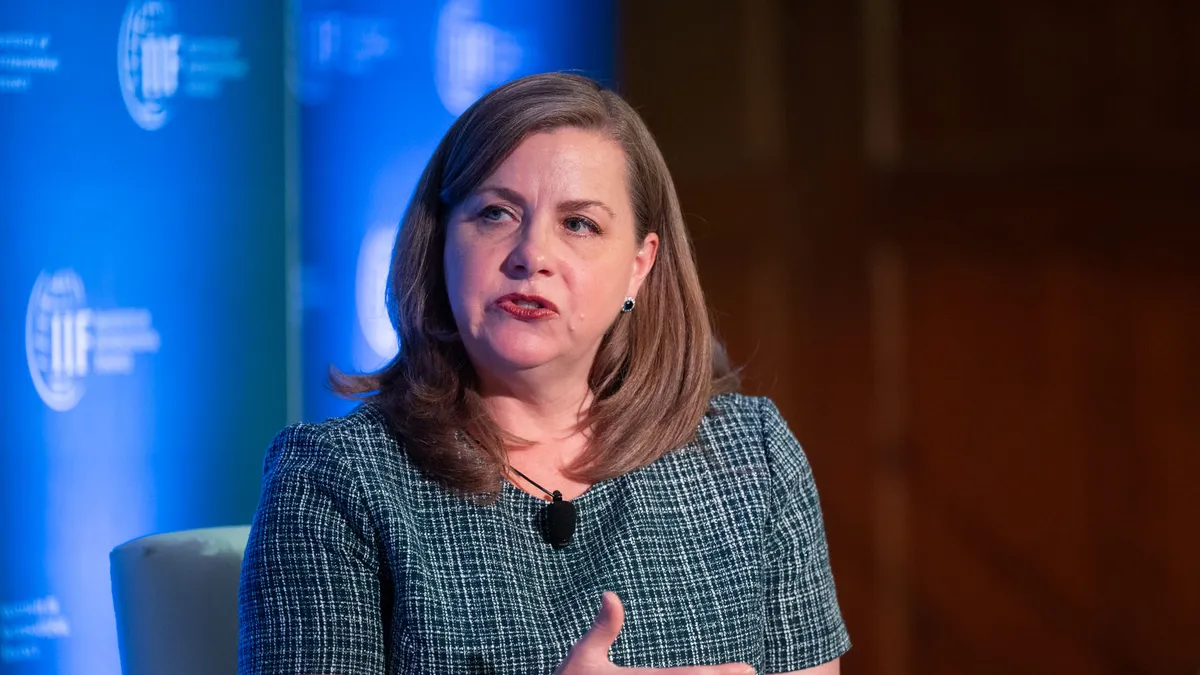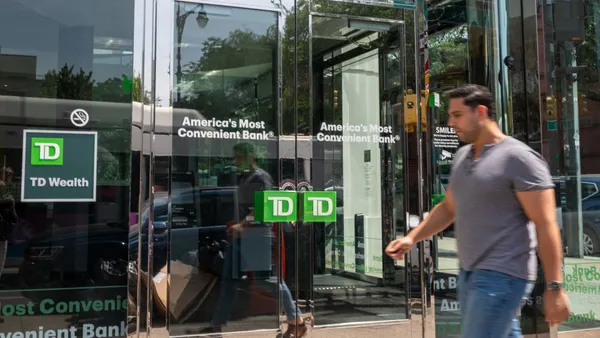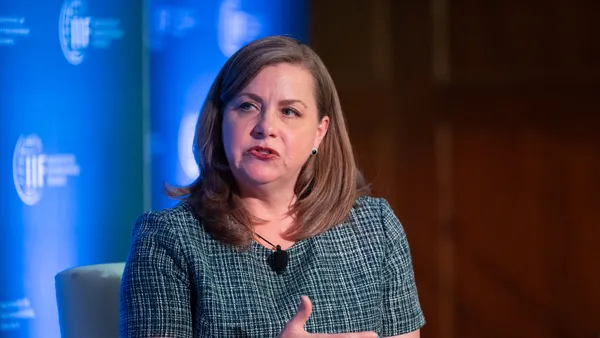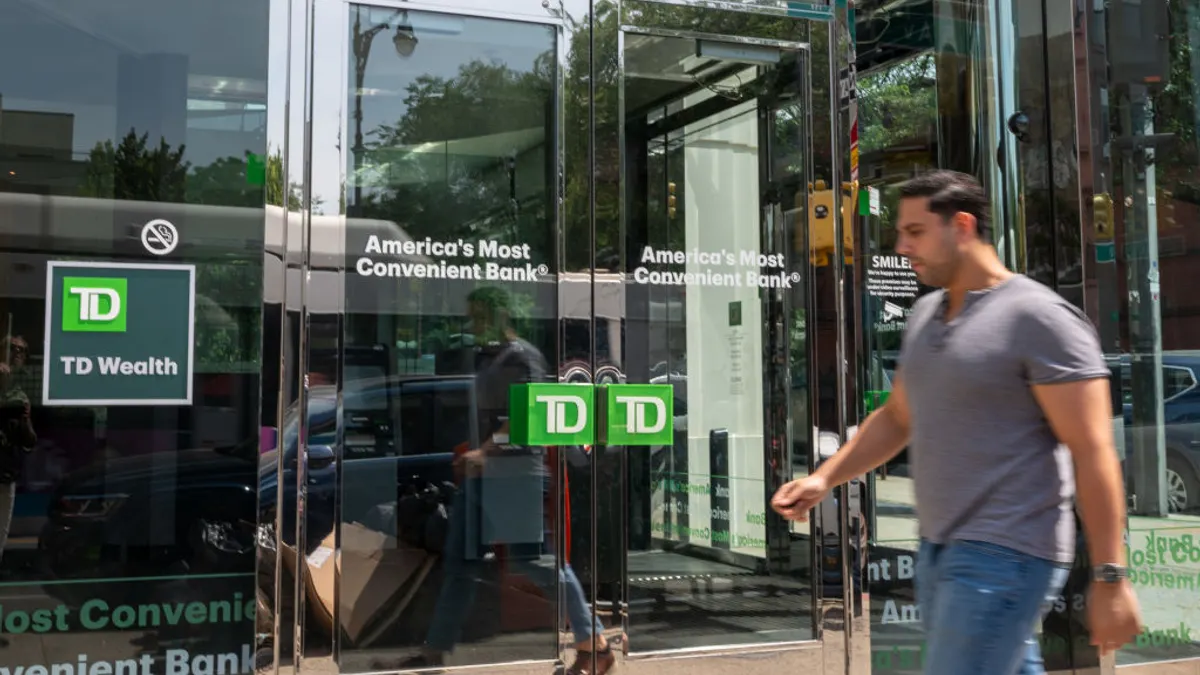
When TD gets customers, it doesn’t lose them, executive Marc Womack said.
But maintaining that position amid a highly competitive landscape in which it’s easier than ever to open accounts and move money digitally requires adaptation, he noted.
“That’s really our focus going forward: How do we make sure that, as the market moves and as capabilities and expectations change, that we’re changing with those expectations so that we can continue to deliver that for our customers?” said Womack, the bank’s head of U.S. consumer deposit and payment products.
He joined the U.S. subsidiary of Toronto-based TD in August, after a stint at Santander, where he was head of operations for their consumer finance business. Prior to that, Womack served as president and CEO for TD Auto Finance.

Competition for deposits “is probably as fierce as it’s been in a long time,” Womack said during a recent interview. That’s driven by the number and variety of banks, fintechs and credit unions chasing deposits, but also by interest rate dynamics.
U.S. Bank’s CFO recently noted the competitive deposit market during the bank’s latest earnings call, saying “not many peers grew consumer deposits” last year. JPMorgan Chase, the largest U.S. lender, expects lower growth this year than originally projected, partly due to persistent yield-seeking behavior.
There will always be consumers moving for the best rate, and TD captures “a fair bit of those customers,” Womack said. But many others double down on getting what they need from their current bank, he said.
“That's the place where we have historically played and where we will continue to play,” Womack said.
The bank monitors retail deposits daily, he said. “We want to make sure that not only are we bringing in the right customers, but we’re also making sure that the ones that we have are not falling out of the bottom of the bucket,” he said.
Refreshing the brand
Since the bank’s historic anti-money laundering settlement was announced in October 2024, TD has “maintained stable deposit levels with minimal customer attrition,” U.S. CEO Leo Salom said last September during the bank’s investor day.
A $434 billion asset cap was placed on its U.S. retail banking operations, as the bank was ordered by regulators to pay more than $3 billion in fines and address its AML deficiencies. TD completed most management remediation actions last year.
Earlier this month, the bank refreshed its brand, launching a marketing campaign with the tagline “More Human.” The rebrand “reflects how our business is evolving alongside consumer expectations,” said Jennie Platt, chief marketing officer for TD Bank U.S. “As everyday banking becomes increasingly digital, we believe human connection becomes even more important.”
At TD’s investor day, executives laid out goals of boosting digital adoption to 70% and driving digital self-serve above 90%. U.S. retail counts about 10 million clients, and about 5.2 million are mobile users, as of the bank’s fiscal fourth quarter. The lender reports quarterly earnings Feb. 26.
“Consumers expect speed, transparency and control when they’re managing routine transactions, so we’ve focused on simplifying our digital tools and making them easier to use,” Platt said. “At the same time, financial decisions such as buying a home, planning for retirement or growing a business are still deeply personal. In those moments, clients value experienced bankers who understand their goals and the communities they serve.”
Finding relationship depth
TD has been a “very store-centric” organization, historically, Womack said. “We have to retain the essence of that whether in the physical or in the digital.” That includes ensuring added digital capabilities are easy for customers to find.
“What we're really trying to do is to expand the impact of the things that customers like about us into those channels, into those products, into those capabilities, rather than trying to wholesale pivot to be something that we aren't,” he said.
“We don’t try to out-fintech fintechs,” he said. “That’s not who we are.”
His team is also mulling how to better personalize initial engagement and onboarding with the bank, to identify what customers need and want to do, and angling to do more for customer segments that find TD most appealing. Salom has said the bank lacks relationship depth with many of its U.S. customers.
As TD regains its U.S. footing following the AML challenges, Trump-appointed regulators have given the green light to sizable bank deals and new entrants seeking charters.
Amid rapid industry change, Womack said he’s confident TD has the right plans, but “if the wind changes and it blows in our face, how do we make sure that we’re being as nimble as we can to address those things?”
“Are we moving fast enough, in every way, to really address the needs of our customers?” he said.
Womack said he doesn’t lose sleep at night “because bank XYZ offers 10 basis points higher in rate than me,” or a competitor offers “another click less in the [account] opening process.”
“At the most macro things, there's a bar that you have to make sure that you're chinning, and below that bar, you are at a disadvantage,” he said.
“But on some of those dimensions, being way out in front doesn't necessarily advantage you as much as” when “you balance with everything else that we're trying to do,” he said.