As artificial intelligence reshapes banking, small lenders know they can’t ignore the technology, said BNY’s head of community banking, Shofiur Razzaque.
“There's skepticism around the controls: ‘How do I keep us safe?’ There’s no skepticism around, ‘We need to do this; otherwise, we’re in trouble,’” Razzaque said.
Last September, the New York City-based bank launched an initiative that offers free training, led by BNY senior leaders, for 1,000 community bank executives on topics such as AI, cybersecurity, data analytics, corporate finance and strategic planning.
Dozens of community bank leaders attended program events in December, Razzaque said. As the initiative is tailored to meet community bank needs, an upcoming session for human resources practitioners will be led by a BNY HR leader.
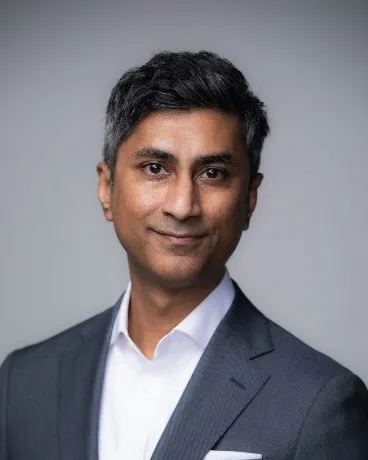
BNY has $2.2 trillion in assets under management, and the custody bank’s clients include other financial institutions. Razzaque’s community banking and solutions group offers local lenders services such as payment solutions within BNY’s global payments and trade business.
In engaging with community bankers, it became apparent there was a desire for more information on AI, cybersecurity and digital assets, Razzaque said in a recent interview.
As a large bank, BNY sees the move to assist banks with less than $10 billion in assets “as a duty,” he said.
“These players matter,” he said. “If we help them, the entire financial system gets stronger. Is there an aspect of it where there's commercial opportunity? That's secondary.”
Editor’s note: This interview has been edited for clarity and brevity.
BANKING DIVE: Tell me about your role and this unit at the bank.
SHOFIUR RAZZAQUE: When we set this team up, we thought about two ways we could help community banks. One is through access to our products, services and capabilities. My job on that aspect is, how do we open the door for BNY? How do we bring them in? So I go out, I meet community banks, I'm at conferences, getting to know these organizations and explaining how we can help them on their journey.
The second aspect: On some of these emerging capabilities, whether it's AI, digital assets, treasury service trends, we have deep experts who do this for a living. Smaller organizations face challenges such as running on a really lean staff, so they're always looking for some form of education, guidance, insight. So we introduced a free financial education program, allowing community bank leaders, middle managers to take part in sessions on topics such as AI.
Are bank executives turning to their peers more than consultants for this kind of information?
Consultants add a different level of value. But when you are a banker, when you're talking to your own colleagues or folks that have the same background, you're speaking the same language. And when there's no cost associated with that, and you could really ask about use cases and how to increase adoption, I think it's different. It goes from hypothetical, strategic to really practical discussion.
What’s your take on the AI opportunity within community banks?
These banks know every customer that walks through the door. The relationship banking is so pure. But when you go to the back office, a lot of them are doing things the way they've done for many years. That's where AI could really unlock potential, if you can free up employees to interact with customers while you apply AI to some of these mundane tasks. Adoption is scary, but they have to embrace AI; otherwise, if you don't start using and applying it in some shape or format, you fall behind.
Using AI, at first blush, would seem to inhibit the relationship banking community lenders are known for – not so, in your mind?
The area where AI unlocks is growth. When you're in a smaller organization and what you're focused on is increasing your loan portfolio and increasing your client base, I don't imagine AI doing that. I imagine banker Mr. Smith, who knows the local clients, that's who's going to do that. If you give Mr. Smith more time to focus on that, because you remove some of the tasks from his day to day, that’s the growth.
What are the hurdles to adoption for these banks?
When you run a bank, you're regulated, you're risk-oriented. You're always worried about controls. But also, not knowing where to start, and almost overthinking it and trying to use it in too many different places. And, not having the right partners who can enable it for you. You don't necessarily need to build your own AI to use it. A lot of these institutions could leverage it through their Microsoft engagement. They just need a blueprint and answers to some of these scary questions, such as, what are the guardrails? What are the controls?
One in two banks is already investing in AI in some way. Adoption into some core operations still slightly lags, but I think the adoption rate will be much higher in the next few months.
How can community banks begin weaving AI into their operations?
At BNY, we jumped onto this AI journey several years ago. Today, all employees have access to our AI tool, which is called Eliza, and 50% of our non-engineering employees are using it to build their own agents. We got there with simple use cases. Informing the team: AI is available. You can use it to help write emails. You can use it to review your notes. It’s these small adoptions in community banks. Encourage the team to use it, create an environment where it’s talked about often, and then build to some of the more complex operational uses, which come fast.
Are there areas of the bank in which community lenders should avoid using AI – perhaps customer service?
No, I don't think there's any spots they shouldn't, but I think there's some areas where it might be easier to integrate on Day One. I don’t think interrupting client engagement is the right place to start. But if you can improve some back office operations, create efficiency, it might be the ideal area to start.