The Consumer Financial Protection Bureau has been accused of “revers[ing] 50 years of fair lending protections” by changing how the Equal Credit Opportunity Act is applied, according to court documents filed Wednesday.
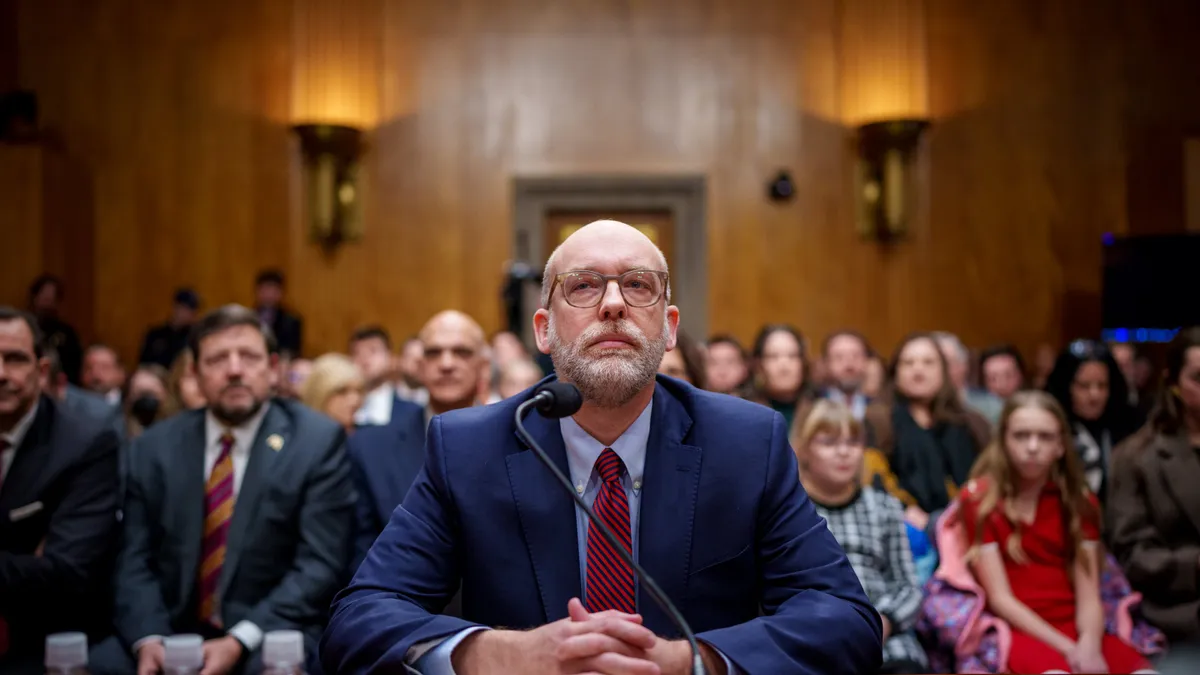
The agency and its acting director, Russ Vought, are being sued by the National Fair Housing Alliance and fellow non-profit Rise Economy, along with consultant BLDS LLC and compliance software firm SolasAI. The group is challenging a final rule the CFPB issued in April that amends Regulation B, which implements the ECOA, by eliminating “disparate impact” – or unintentional discrimination – as a basis for enforcement.
“Congress enacted ECOA fifty years ago to eradicate credit discrimination against groups of people, like women and Black Americans, who had systematically been denied access to financial independence and opportunity,” plaintiffs alleged. “The Final Rule upends decades of consistent regulatory implementation of ECOA and dismantles some of the statute’s fundamental protections.”
The final rule goes into effect July 21.
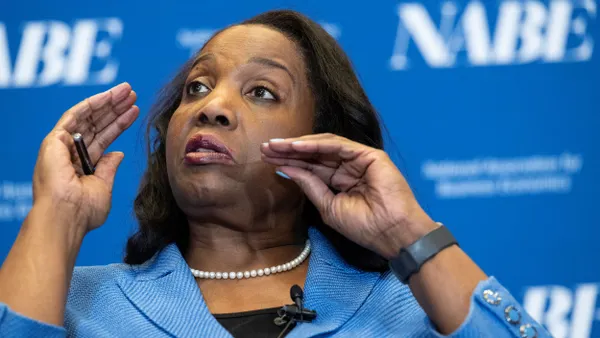
“This reversal by the CFPB is a continuation of this Administration’s efforts to gut fair housing and lending protections,” NFHA CEO Lisa Rice said in a press release. “Eviscerating these guardrails will ultimately result in less credit access for many people, make our markets less sound, and cause our economy to be less productive.”
Plaintiffs allege that by eliminating “disparate impact” under the ECOA, the risk that lenders will use policies and algorithms to wrongly exclude protected groups will increase.
They also allege that the rule increases the possibility lenders will digitally redline by marketing loans to predominantly White neighborhoods, increasing protected groups’ reliance on “risky, high-cost lenders that offer predatory loans with exorbitant interest rates.”
The new rule also prohibits for-profit companies from creating special purpose credit programs that use demographic data including race, color, nationality or sex to extend credit to underserved communities.
Plaintiffs alleged that the CFPB’s cost-benefit analysis of the rule, as required under the Dodd-Frank Act, “independently renders the Final Rule arbitrary and capricious.”
“The CFPB’s asserted benefits rest on unsupported generalizations and assumptions,” plaintiffs said. “The CFPB’s simplistic references to general principles of economic theory, free-floating hypotheses about potential outcomes, and disregard of hard facts are not actual ‘analysis’ and, thus, do not satisfy the requirements of the Dodd-Frank Act.”
Elena Babinecz, who formerly managed the CFPB’s ECOA rulemakings and is now a partner at Baker Donelson, told American Banker that while the lawsuit doesn’t seek a preliminary injunction to stop the rule from taking effect, the court will likely delay it in consideration of the Administrative Procedure Act. Plaintiffs allege that the 32-day comment window was “needlessly compressed,” and more so because it overlapped with other CFPB comment periods as well as the Thanksgiving holiday.
A spokesperson for the CFPB did not immediately respond to a request for comment.