The Consumer Financial Protection Bureau must continue to request funding from the Federal Reserve, a federal judge ruled last week.
“This process has unfolded seamlessly since the Bureau was established in 2011, even in the years since 2022 when the Federal Reserve's interest expenses have exceeded its earnings,” Judge Amy Berman Jackson of the U.S. District Court for the District of Columbia wrote Dec. 30.
The ruling comes roughly a month and a half after the CFPB alerted the court to a “potential lapse in appropriations.”
The Justice Department’s Office of Legal Counsel asserted in a November memo that the CFPB could not legally request funds from the Fed based on an interpretation of the term “combined earnings,” as used in the Dodd-Frank Act. The OLC interpreted earnings based on profits, rather than revenues.
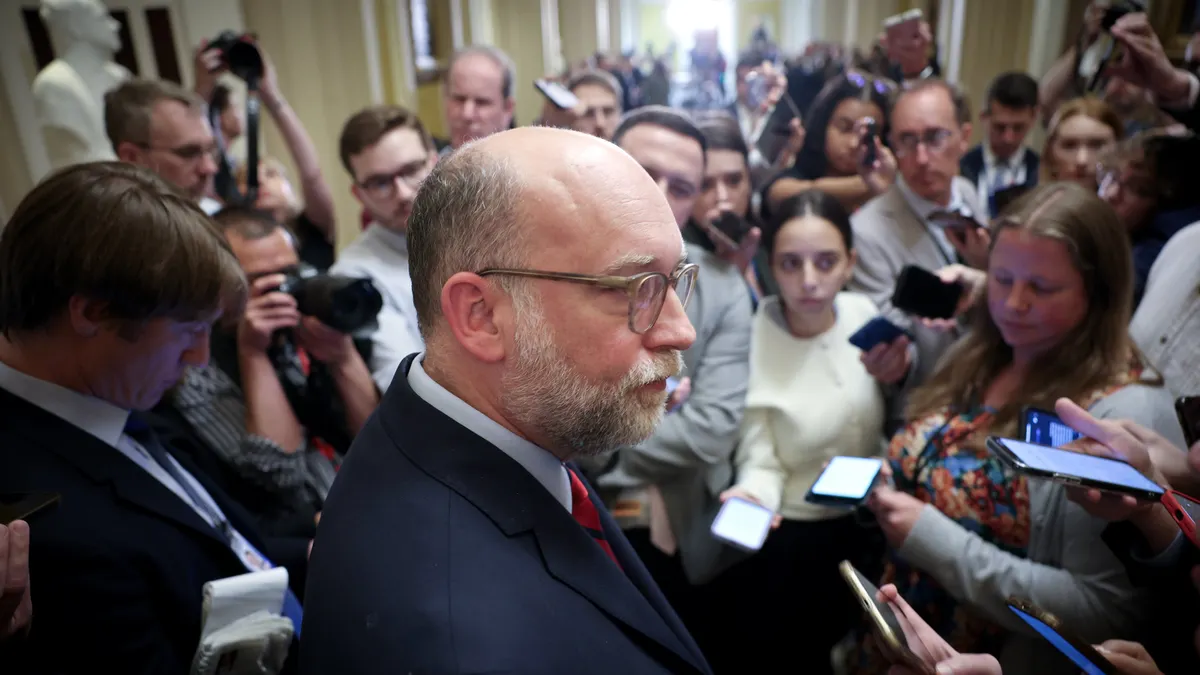
“If the Federal Reserve has no profits, it cannot transfer money to the CFPB,” T. Elliot Gaiser, the assistant attorney general who leads the OLC, wrote to the bureau’s acting director, Russ Vought, in November.
Berman Jackson, in her ruling Tuesday, called the OLC’s argument “flawed reasoning.”
“One problem with this is that it is entirely inconsistent with the way the Dodd-Frank Act has been consistently interpreted by all the parties involved,” Berman Jackson wrote. “The claimed ‘lapse’ in funding, which was manufactured by the defendants based solely on the OLC Memo, is not a valid justification for the agency’s unilateral decision to abandon its obligations.”
The National Treasury Employees Union, locked in a nearly yearlong court battle with the CFPB, sought Tuesday’s ruling to clarify the boundaries of a March preliminary injunction that Berman Jackson ordered, barring the bureau from mass reductions in force.
"Neither [Dodd-Frank], the injunction, nor the Fed's willingness to pay has changed; the only new circumstance is the administration's determination to eliminate an agency created by Congress with the stroke of pen," Berman Jackson wrote.
Vought has been frank in his ambition to shutter the CFPB, telling “The Charlie Kirk Show” in October he aimed to “put it out … within the next two, three months.”
And his aim to cut off CFPB funding at its source stretches back to his first full day leading the agency, when he notified the Fed in February that the bureau would not take any unappropriated funding for the next fiscal quarter.
“The Bureau’s current balance of $711.6 million is in fact excessive in the current fiscal environment,” Vought wrote on X. “This spigot, long contributing to CFPB’s unaccountability, is now being turned off.”
DOJ attorneys in November told Berman Jackson the CFPB “anticipates exhausting its currently available funds in early 2026.”
Berman Jackson on Tuesday called out what she saw as the true motive behind the argument.
"The defendants are unabashedly trying to shut the agency down again, through different means," she wrote. “It appears that defendants’ new understanding of 'combined earnings' is an unsupported and transparent attempt to achieve the very end the court’s injunction was put in place to prevent."
In a footnote Tuesday, the judge also cited an amicus brief from Dec. 10, suggesting that the Fed had returned to profitability “because balance sheets show that the deferred assets total size has fallen in recent weeks.”
“According to amici, this means that the Federal Reserve has positive ‘combined earnings’ under any definition of that term, even the definition in the OLC Memo,” Berman Jackson wrote Tuesday.
The CFPB didn’t immediately respond to a request for comment on the ruling.
The attorney representing the plaintiffs, Jennifer Bennett of the law firm Gupta Wessler, said she is “very pleased that the court made clear what should have been obvious: Vought can’t justify abandoning the agency’s obligations or violating a court order by manufacturing a lack of funding.”
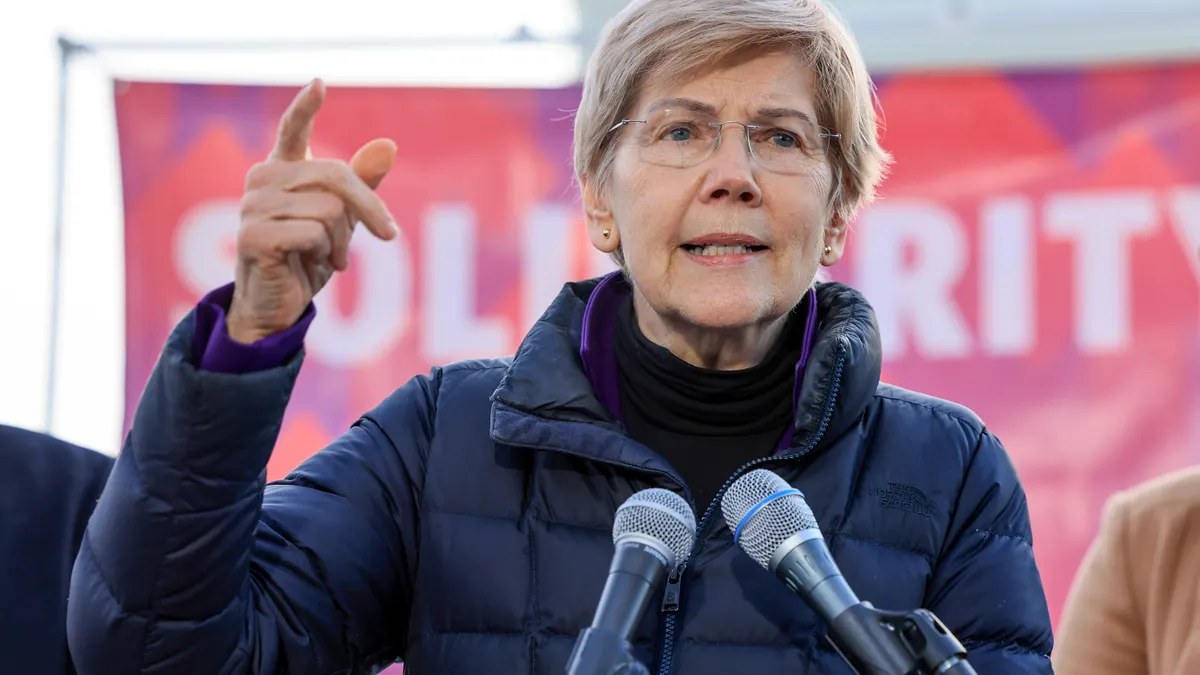
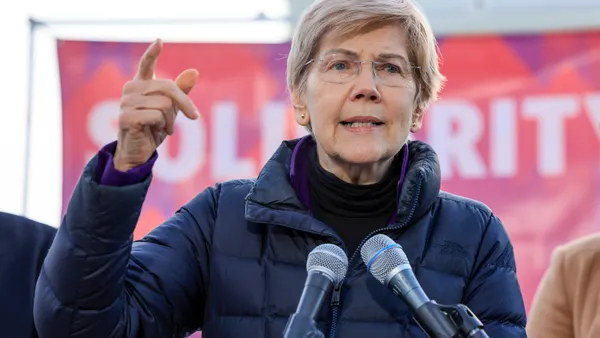
In a statement, Sen. Elizabeth Warren, D-MA, the architect of the CFPB, called the “lapse” argument “the Trump Administration's most recent, ridiculous attempt to starve the Consumer Financial Protection Bureau of funding.”
"If courts continue to uphold the law, they'll keep blocking Russ Vought's illegal attempts to 'close down' the agency that has returned $21 billion directly to Americans who were cheated by big banks and giant corporations," Warren said.
Twenty-two Democratic state attorneys general sued Vought last month in an Oregon federal court to force the CFPB to accept money from the Fed.