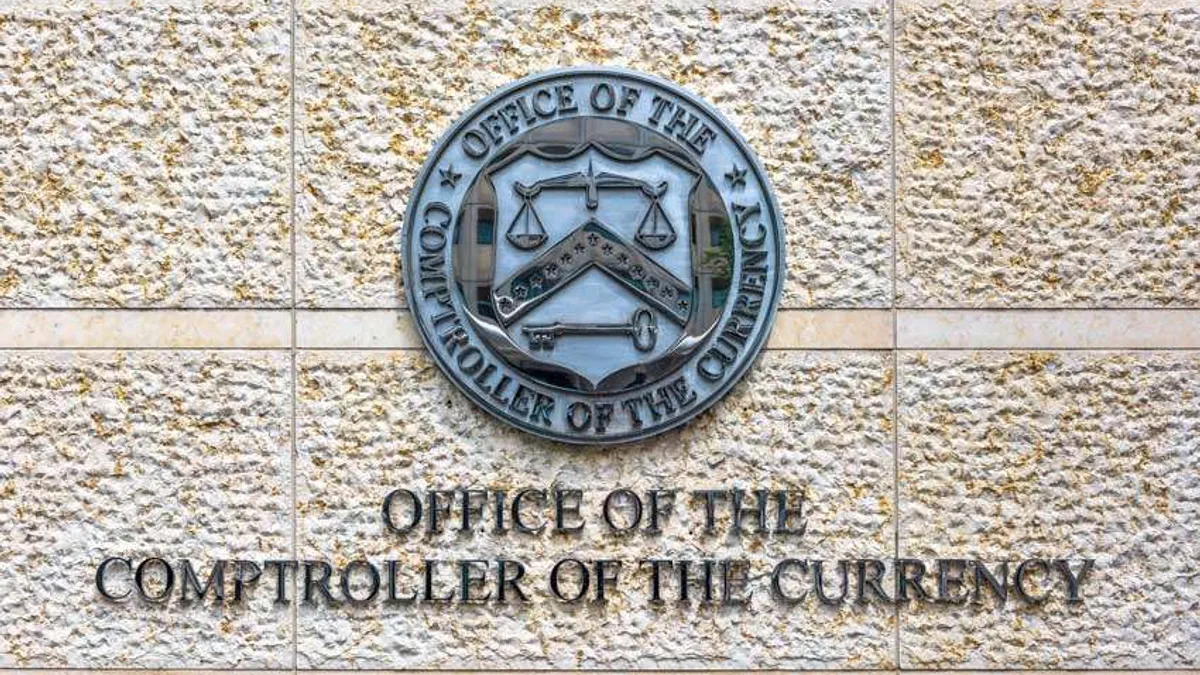
Crypto.com has received conditional approval for a national trust bank charter from the Office of the Comptroller of the Currency, the company said Monday.
Foris Dax National Trust Bank, doing business as Crypto.com National Trust Bank, received the conditional charter roughly four months after submitting its application in October.
The national trust bank charter will permit the fintech to custody assets but not to take deposits or lend. Crypto.com has said it plans to offer custody and staking of digital assets and to handle trade settlement.
“This conditional approval is the latest testament to both our commitment to compliance and to providing customers trusted and secure services they expect from Crypto.com,” co-founder and CEO Kris Marszalek said in a prepared statement. “This milestone brings us a major step closer to meeting leading institutions’ needs for a one-stop-shop qualified custodian under a gold standard of federal oversight.”
A spokesperson for the OCC did not immediately respond to a request for comment on the conditional approval.
Crypto.com was one of 18 firms that applied for OCC charters in 2025 – and many of them applied for national trust charters.
“What we see now is the fintech sector … finally being encouraged and welcomed into the regulatory fold, seeking the benefits of having a banking license and also being willing to meet the very high standards that go along with that privilege,” Klaros Group co-founder Michele Alt told Banking Dive last month in a conversation about the boom in novel charter applications.
More than a half-dozen of 2025’s charter applicants have been at least conditionally approved. Circle, Ripple, Paxos, BitGo and Fidelity Digital Assets received a conditional go-ahead from the OCC for national trust bank charters in December. Stripe subsidiary Bridge followed earlier this month.
Other firms have opted to try for a full national bank charter. Erebor Bank, for example, received final approval for that license this month.
The OCC’s renewed push to diversify banking options – and the relatively rapid approval of applications – may have spurred some firms, such as the Trump family-led World Liberty Financial and Nomura spinoff Laser Digital, to apply for the trust bank charter.
At least one banking trade group has signaled its disapproval of the uptick in charter activity. The Bank Policy Institute in October accused digital asset firms applying for the trust charter of “not planning to operate genuine trust companies.”
“Endorsing this pathway and allowing firms to choose a lighter regulatory touch while offering bank-like products could blur the statutory boundary of what it means to be a ‘bank,’ heighten systemic risk and undermine the credibility of the national banking charter itself,” BPI warned the OCC.
Paige Pidano Paridon, the trade group’s co-head of regulatory affairs, said digital asset firms should seek full-service national banking charters rather than limited-purpose trust licenses if they want to engage in traditional banking activities.
“BPI supports efforts to bring innovative new products and services into the regulated ecosystem and agrees that digital assets have a role to play in the U.S. financial system, provided that they are subject to the same rules and responsibilities as every other chartered institution engaging in the same activities,” Pidano Paridon said.
Fintechs Mercury and Bunq applied for full-service national bank charters in December and January, respectively. Brazilian challenger Nubank received conditional OCC approval for the full-service charter last month.