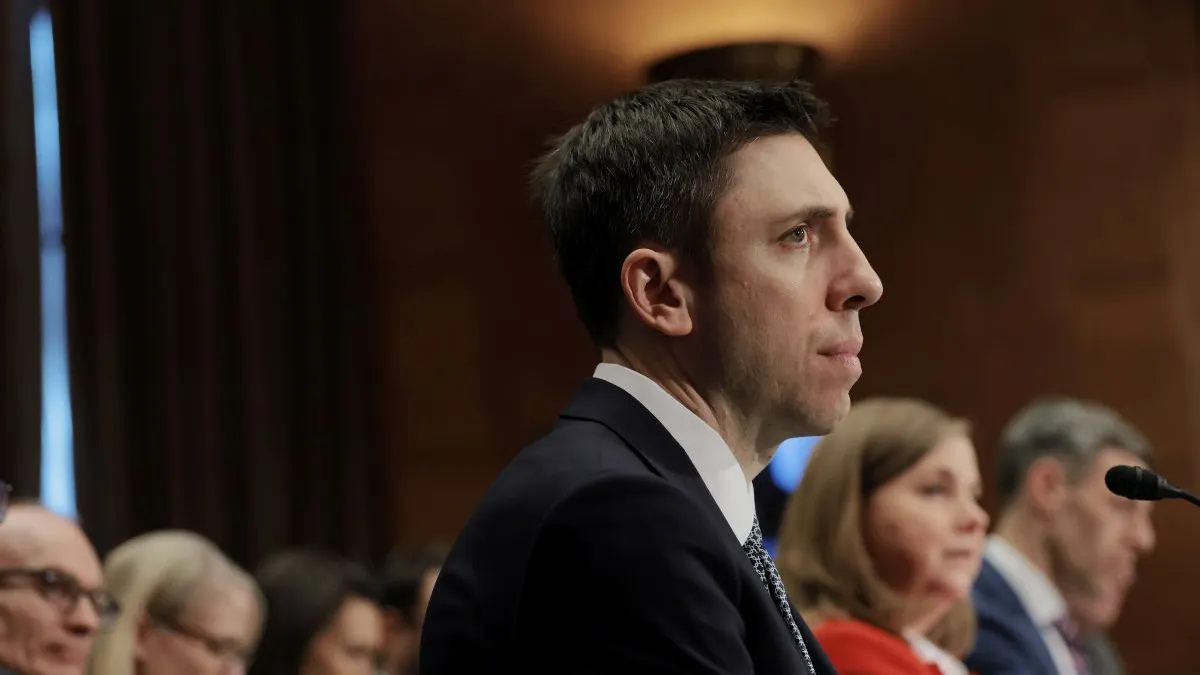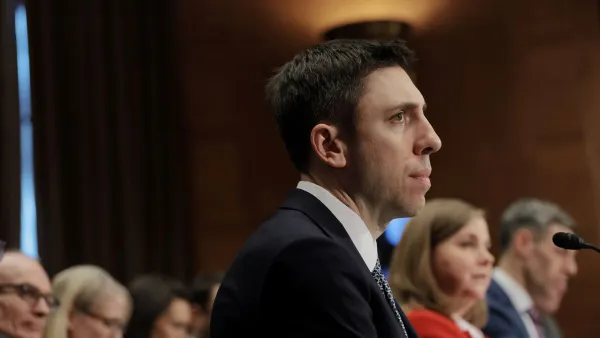
Fed Gov. Christopher Waller, speaking Tuesday at a Boston Fed event, said the central bank “cannot approach AI casually,” but noted its use “is not optional” for staff and the Fed seeks “durability” with its use.
The Fed is taking a system-wide approach to artificial intelligence use with its 12 reserve banks, with an internal AI platform accessible by all employees, specialized AI tools for software developers and AI-powered capabilities woven into enterprise workflows, he said.
The Fed has “clear guardrails” around AI use, as well as information-security controls, “rigorous” model validation and human accountability for decisions, Waller said.
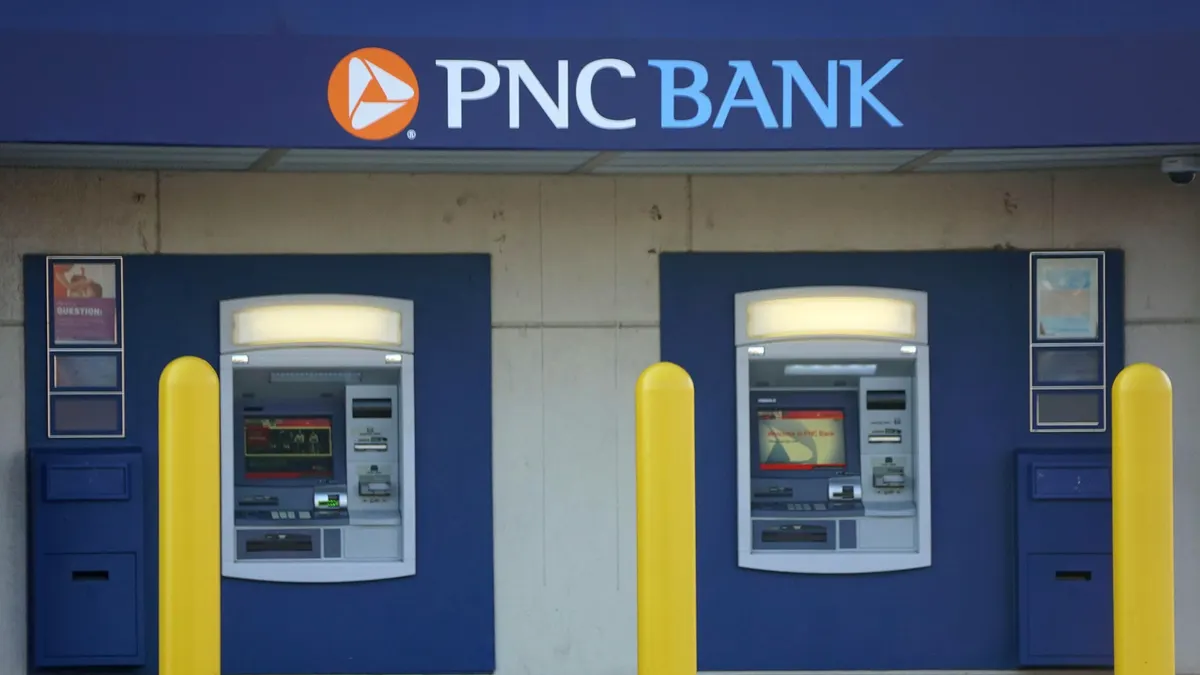
Waller repeatedly referred to AI as a tool meant to aid people and allow them to be more efficient, rather than replace them. He likened the current moment to the advent of ATMs, which didn’t eliminate bank tellers but shifted “human effort” toward “higher-value activities.”
“The real impact wasn't automation alone — it was how institutions reorganized around technology,” he said. “AI is similar. The biggest gains won't come from simply adding AI to existing processes. They'll come from rethinking workflows, roles and systems to take advantage of what this technology makes possible.”
Waller said he’s not “a doom and gloomer” when it comes to AI’s impact on the labor market. “I don't think you're ever going to take the humans out of the picture and AI is going to do everything and we're going to be left working the drive-through window at McDonald's,” he said after his prepared remarks, according to Reuters.
Fed employees have used an internal, general-purpose AI platform to synthesize information in background materials and identify key themes quickly to prepare Fed staff for meetings, and to summarize and prioritize what had accumulated in inboxes after returning from vacations.
Similar to banks in the industry, the Fed is employing AI through coding assistants, which are handling the time-consuming and less satisfying parts of software development, allowing developers to focus on security and quality, Waller said. “In several teams, tasks that used to take days are now completed in hours with AI assistance,” he said.
Another example: AI tools are being used at the Fed to extract themes from and compare patterns and flag sentiment shifts within large volumes of interview notes and other qualitative information, Waller said. “That doesn't replace human judgment — it accelerates the first pass so economists can spend more time interpreting what matters,” he said.
The central bank is also embedding AI directly into existing workflows in legal, risk, procurement and operations, Waller said. “Given how quickly the technology is evolving, consuming AI through vendor platforms allows us to benefit from ongoing improvements, rather than building and maintaining tools that can become costly or stale,” he said.
While the Fed is off to a “solid start,” Waller indicated he’s focused on “durability.” The Fed is training and upskilling workers on the technology, making use expectations explicit and having leaders setting the example, he said.
“The technology isn't the hard part anymore; change management is,” he said. “It comes down to how quickly people adopt the tools, how deeply they embed them into daily workflows, and whether that adoption translates into results.”
An alternate viewpoint
Fed Gov. Lisa Cook also addressed AI on Tuesday, though she approached the topic with a larger lens.
The “AI transition,” bringing new opportunities as well as costs, could have “profound implications” on monetary policy, Cook said Tuesday at a National Association for Business Economics conference in Washington, D.C. She has warned that job displacement due to AI could boost the unemployment rate and lead to a decline in labor force participation.
She indicated the Fed may be faced with tough choices in keeping both unemployment and inflation in check.
“If AI continues to raise productivity, economic growth could remain strong, even as churn in the labor market leads to an increase in unemployment,” she said. “In a productivity boom such as this, a rise in unemployment may not indicate increased slack. As such, our normal demand-side monetary policy may not be able to ameliorate an AI-caused unemployment spell without also increasing inflationary pressure.”
That means monetary policymakers would face unemployment and inflation tradeoffs, she added. “While there is a role for monetary policy, education, workforce, and other policy that is nonmonetary may be better suited to address these challenges in a more targeted way,” she said.