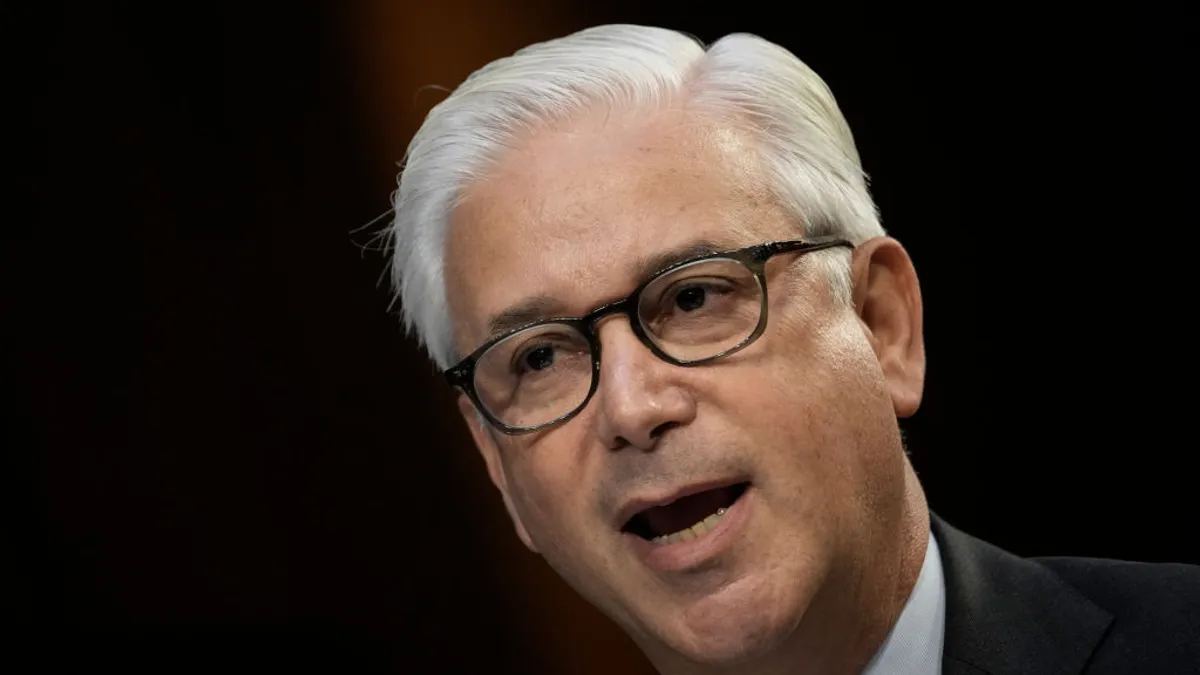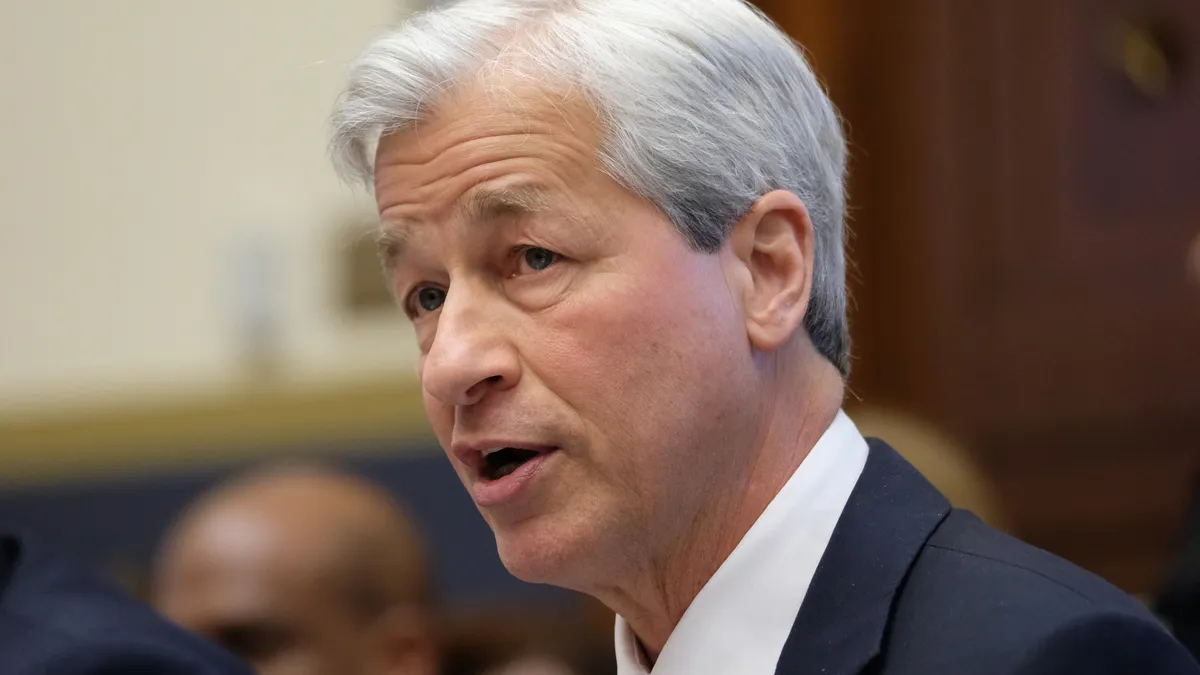
JPMorgan Chase CEO Jamie Dimon should not have been named as a defendant in President Donald Trump’s debanking lawsuit against the lender, attorneys for the bank said Thursday in a court filing.
Trump’s lawsuit claims Dimon violated the Florida Deceptive and Unfair Trade Practices Act by directing the nation’s largest bank to put the plaintiffs on a “blacklist,” which allegedly was “published” to other, unnamed banks, the lender’s lawyers wrote Thursday.
But that law “does not apply to bank officers who are directly regulated by federal banking agencies, or to any officers who act on behalf of a bank in their official capacity,” JPMorgan’s lawyers wrote.
Further, Trump’s lawyers “fail to plead the basic facts necessary to establish their ‘blacklist’ claim,” the bank’s attorneys said.
“They do not explain what this ‘blacklist’ entails, when it was created, to whom it was supposedly circulated, or any other detail describing it. Nor is it plausible that JPMorgan could create such a list consistent with the complex federal regulatory scheme to which it is subject,” the bank’s lawyers wrote. “But to the extent JPMorgan and Mr. Dimon understand these vague, conclusory allegations, they deny them — they are aware of no such list.
“If and when Plaintiffs explain what they mean by this ‘blacklist,’ JPMorgan will respond accordingly,” the lawyers added.
In a statement, a spokesperson for Trump’s legal team doubled down on the existence of a blacklist.
“By their own admission, JPMorgan Chase, at the direction of CEO Jamie Dimon, unlawfully debanked and blacklisted President Trump, his family, and several of his businesses, causing overwhelming financial and reputational harm,” the spokesperson said Thursday. “The defendants committed these tortious acts only because of the president’s America First policies, which have saved our nation. President Trump is standing up for all those wrongly debanked by JPMorgan Chase and their cohorts, and will see this case to a just, and proper conclusion.”
The president first publicly broached the topic of debanking at last year’s World Economic Forum in Davos, Switzerland, when – while answering an unrelated question from Bank of America CEO Brian Moynihan, Trump said, “I hope you start opening your bank to conservatives, because many conservatives complain that the banks are not allowing them to do business within the bank, and that included a place called Bank of America.”
“I don’t know if the regulators mandated that because of [former President Joe] Biden or what, but you and Jamie [Dimon] and everybody, I hope you’re going to open your banks to conservatives because what you’re doing is wrong,” Trump added at the time.
Trump sued JPMorgan and Dimon last month, seeking at least $5 billion in damages. He claims the alleged debanking came after Trump supporters stormed the U.S. Capitol on Jan. 6, 2021, shortly before the end of the president’s first term.
JPMorgan isn’t the first bank Trump or his family has sued, alleging debanking. The Trump Organization sued Capital One last March, claiming the bank closed more than 300 accounts because it believed “the political tide at the moment favored doing so.” Capital One asked a federal judge to dismiss the case in May, citing a lack of evidence.
JPMorgan said in response to Trump’s suit in January that it “does not close accounts for political or religious reasons.”
“We do close accounts because they create legal or regulatory risk for the company,” a spokesperson told Banking Dive at the time.
The bank’s lawyers on Thursday called Trump’s lawsuit “threadbare” and asked that the president’s case be moved to federal court in the Southern District of Florida and eventually, to federal court in New York.
“Plaintiffs have no possibility of success against JPMorgan’s CEO, his inclusion in this suit cannot defeat federal jurisdiction, and this action properly belongs in federal court,” the lawyers wrote Thursday. “Even if … a ‘blacklist’ existed, there still would be no conceivable claim against Mr. Dimon under [the Florida law that’s cited].”