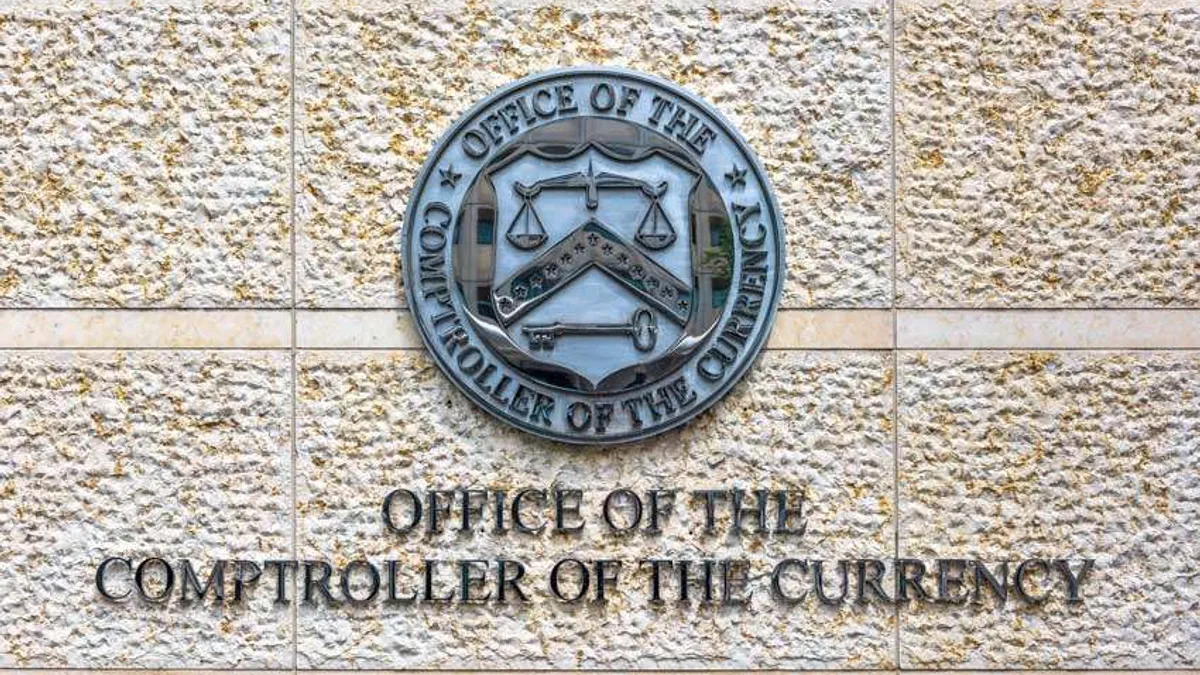
Laser Digital, the digital-asset spinoff from Japanese banking giant Nomura, has applied for a national trust bank charter with the Office of the Comptroller of the Currency, the company announced Tuesday.
The company plans to offer custody of digital assets and U.S. government securities, spot trading and staking. It will not, however, take direct deposits or trade securities.
The charter would eliminate the need for Laser Digital to obtain custody licenses state by state.
The application adds to skyrocketing demand for charters from U.S. regulators among nonbanks. (Nomura spun off Laser Digital in 2022.)
The OCC saw 18 de novo charter applications filed in 2025 – a prospect the agency’s chief, Jonathan Gould, called a “return to the norm” after several sparse years.
The OCC in December conditionally approved national trust banking charter applications for five digital-asset firms, including Circle, Ripple and Paxos.
Since then, World Liberty Financial, which counts President Donald Trump as co-founder emeritus, has applied for a national trust bank charter. Fintech Mercury has applied for a national bank charter. Dutch neobank Bunq has re-applied for a national bank charter, after withdrawing previous paperwork. Buy now, pay later company Affirm has applied for a state banking charter in Nevada. And automakers Ford and GM have been conditionally approved for industrial loan company charters by the Federal Deposit Insurance Corp.
“Institutional digital asset markets are entering a new phase defined by scale, regulation and durability,” Steve Ashley, Laser Digital’s co-founder, said in a statement Tuesday. “For several years we have invested in building infrastructure that meets the standards of the world’s most demanding institutions. Pursuing a National Trust Bank charter is a natural advancement of that journey.”
Ashley said the application “reflects Laser Digital’s global ambitions.”
“The U.S. is the most important financial market globally, and we believe the next chapter of digital finance will be written by firms that are prepared to operate at that level of scrutiny and permanence,” he said.
Michele Alt, co-founder of regulatory consultancy Klaros Group, estimates the OCC will see 25 novel charter applications in 2026.
Freshfields partner David Sewell called the rise in novel charters “a bit of a wake-up call that a lot of the franchise value of being a bank has been challenged.”
Fintechs’ access to charters is “a competitive threat,” he told Banking Dive.
But compared to the roughly 4,000 established banks, the fintech-native banks set to vie for charters in 2026 are still such a “tiny” part of the market that Alt doesn’t see the competition uprooting incumbents any time soon.
“None of these banks are, out of the gate, going to be going toe-to-toe with the megabanks. But the thing to watch for is how they grow over the next, say, five years,” Alt said.
A big takeaway, though, may be that the fintech sector is “finally being encouraged and welcomed into the regulatory fold, seeking the benefits of having a banking license and also being willing to meet the very high standards that go along with that privilege,” Alt said.