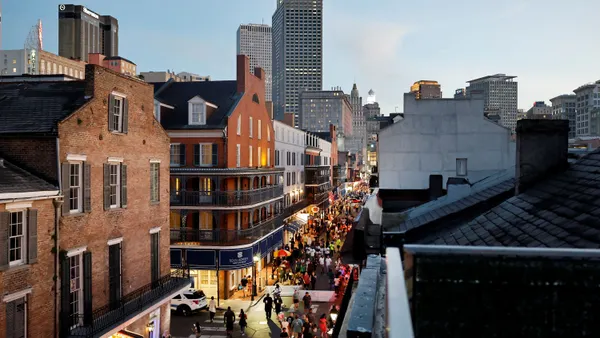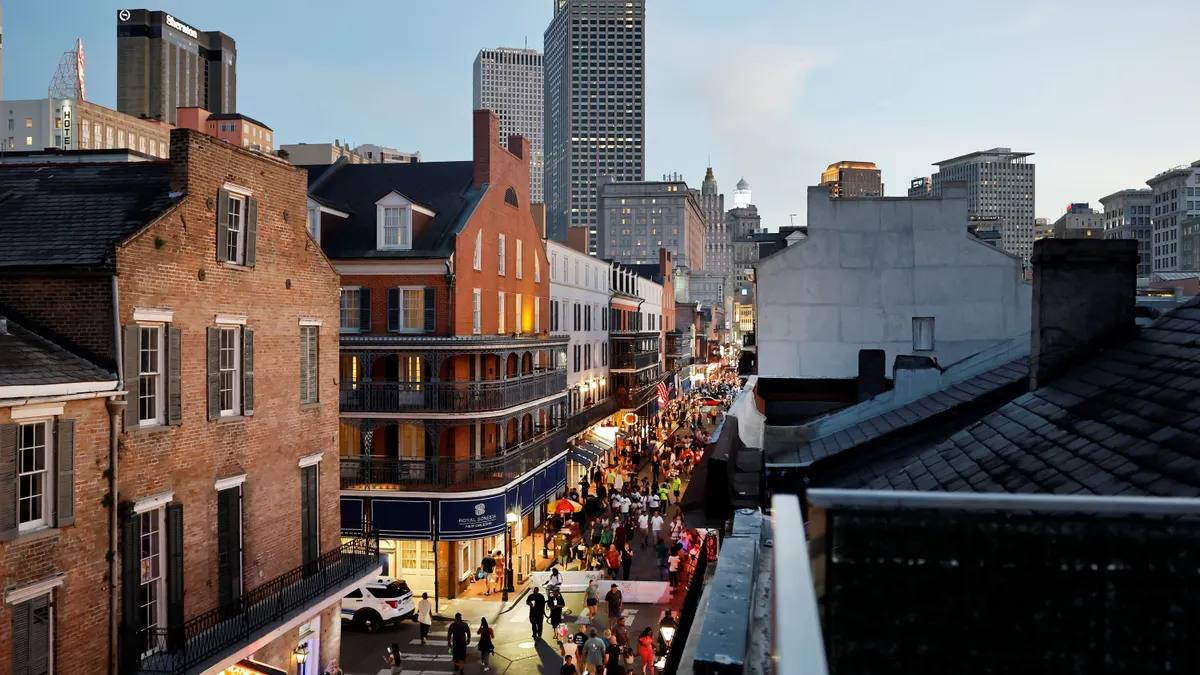
Nola Bank, Louisiana’s first new lender in 16 years, has opened for business.
The New Orleans-based de novo received final approval from regulators Sept. 11, and opened Sept. 14, CEO Joe Omner said. Nola Bank, the eighth de novo to open this year, raised $29.2 million in capital from investors.
Hurricanes that have slammed the city took a toll on the business climate in the region. Omner referred to an old New Orleans saying: “Ain’t dere no more.”
“Not just banks, but across the footprint of businesses, there’s been consolidation,” he said in an interview. “Regionals have come in here and just gobbled up the community banks.”
Capital One – which in 2005 bought New Orleans-based Hibernia National Bank – has the largest deposit market share in New Orleans, at about 35%, followed by Gulfport, Mississippi-based Hancock Whitney Bank and New York City-based JPMorgan Chase at about 21% each, according to Federal Deposit Insurance Corp. data from June.
First Horizon Bank, based in Memphis, Tennessee, and New Orleans-based Gulf Coast Bank and Trust Company each have smaller shares of the New Orleans deposit market, at about 8% and 4%, respectively.
Regulators “really see the need for additional bank charters,” Omner said.
The devastation wrought by Hurricane Katrina in 2005 went beyond the immediate physical damage from the storm, Omner said, since some residents who left the area never returned. That stalled new bank formation.
“That was one of the major driving forces in banks not being able to find the capital,” he said.
Other groups, over the years, have tried and been unable to raise the funds required to start a new bank, Omner said.
“We were so fortunate that we were able to find investors that believe in our mission, that are interested in serving the communities that we're going to serve,” Omner said.
The state-chartered bank, which offers retail and commercial banking services, is applying to become a minority depository institution with a multiracial designation, Omner said, adding that the bank doesn’t expect any roadblocks in that pursuit, particularly since the Federal Deposit Insurance Corp. “encouraged” the lender to seek MDI status.
Majorities of both the bank’s board – chaired by Henry L. Coaxum Jr. – and its investors are racial minority individuals, and about 40 of the bank’s 78 investors are entrepreneurs or own their own companies, said Chris Shah, Nola’s chief banking officer.
MDI status would benefit the bank, since other lenders could receive Community Reinvestment Act credit for doing business with Nola Bank, and the community it serves, since the bank could qualify for programs aimed at offering financial literacy education and similar services to the market, Omner said.
The bank’s mission is to help the underbanked in the region, and aims to be the preferred bank for small businesses across the New Orleans area, Shah said.
“The small business community prefers to work with a smaller institution like ours because they know they'll get better service, they’ll get local decision-making,” Shah said. “We can sit down and understand the need of that borrower and try and help them.”
At bigger banks, “most of their underwriting and decision-making is centralized. So when you're sitting down with the bank personnel, they are generally just taking your information, but the decision is being made by somebody that’s never actually met the client,” he said.
Omner likened big banks to barges that take miles to turn around, where Nola Bank is “a speedboat.”
“If something needs to change, it is done here with the decision makers, and we can react very quickly to any customer's needs,” Omner said.
Among requirements attached to Nola’s charter, the bank must maintain a tier 1 leverage ratio of at least 8% for its first three years of operation. Although the de novo process was long and “difficult,” the group felt the FDIC and the Louisiana Office of Financial Institutions were responsive and “in our corner,” Omner said.
He’s encouraged by the FDIC’s recent effort to streamline the de novo application process.
Nola Bank tapped Jack Henry & Associates as its technology provider.
It’s crucial for Nola Bank to have products, services and a web presence on par with bigger banks – to serve customers in the desired way, Shah said.
“Community banks can compete now because technology is going so far, and we have the same capabilities, if not more” than some regionals, Omner said.
Community ties, too, are essential to win business. “We've got to have connections to the community, and every one of our employees has bought into our mission and are engaged with the community,” he said.