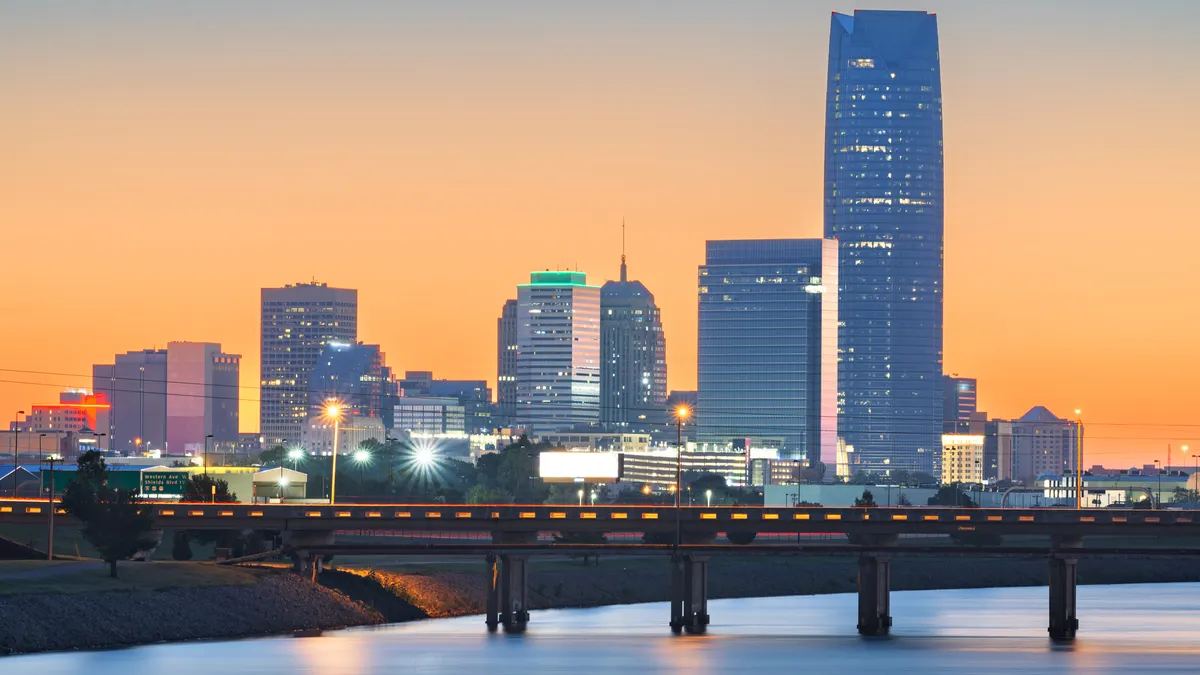
Oklahoma City-based BancFirst has agreed to acquire Tulsa, Oklahoma-headquartered SpiritBank for an undisclosed sum in a deal set to close in the fourth quarter, the banks said Wednesday.
The acquisition would mark BancFirst’s second advance on the Tulsa metropolitan area in roughly a year. BancFirst announced in May 2025 it would buy American Bank of Oklahoma, based in Collinsville, about 20 miles north of Tulsa. The Federal Reserve approved the transaction last October.
Acquiring SpiritBank would add five branches to BancFirst’s footprint: three in Tulsa and two in areas southwest of the city.
“Oklahoma is our home and we are excited to bring two outstanding communities, Bristow and Sapulpa, into our family,” BancFirst CEO David Harlow said in a statement Wednesday. “Expanding our Tulsa base is equally valuable.”
BancFirst already touts 109 locations in Oklahoma, and counts roughly $15 billion in assets as of March. SpiritBank would add another $939.6 million in assets, along with $847.2 million in deposits and $618.4 million in loans.
“We had choices for partners and chose BancFirst because they reflect our own customer and community commitment,” SpiritBank CEO Rick Harper said. “This transaction will be a win-win for everyone.”
SpiritBank reported $2.8 million in profit in the first quarter. BancFirst, by comparison, saw roughly $63 million in net income over the same three months. The combined company is expected to hold a roughly 6.5% share of Tulsa's deposit market, according to American Banker.
It may be premature to call Tulsa a banking boomtown. But the city is home to major operations for MapleMark Bank, a lender Scotiabank targeted for acquisition just two weeks ago.
The BancFirst deal comes amid a relative slowdown in combinations between financial institutions. Roughly 181 U.S. bank deals were announced in 2025, including 76 in the first half, according to S&P Global Market Intelligence. By comparison, banks announced 69 tie-ups between Jan. 1 and June 5, according to Laurie Havener Hunsicker, an analyst with Seaport Research Partners.
“Bank stocks – acquisition currencies – are front-line for economic woes, real or perceived,” Hunsicker wrote Monday in a research note seen by Banking Dive.
The conflict with Iran and further worries over inflation contributed to banks’ relative reluctance to pursue deals, Hunsicker said.