Six years into his banking career, Quincy Miller – then a regional retail branch manager at M&T – had his mind on growth and education.
“Before you decide to do your MBA, it may be more beneficial to do something that's industry specific,” his boss at the time, Bob Rivers, told him. It was 2002. “Why don't you go see what's out there?”
Miller’s search led to the Consumer Bankers Association’s Executive Banking School, a three-year continuing education program geared toward retail banking.
Now the president and chief operating officer at Boston-based Eastern Bank, Miller knows “unequivocally” that the experience was “transformational for my understanding of our industry, and ultimately [made me] able to grow my career.”
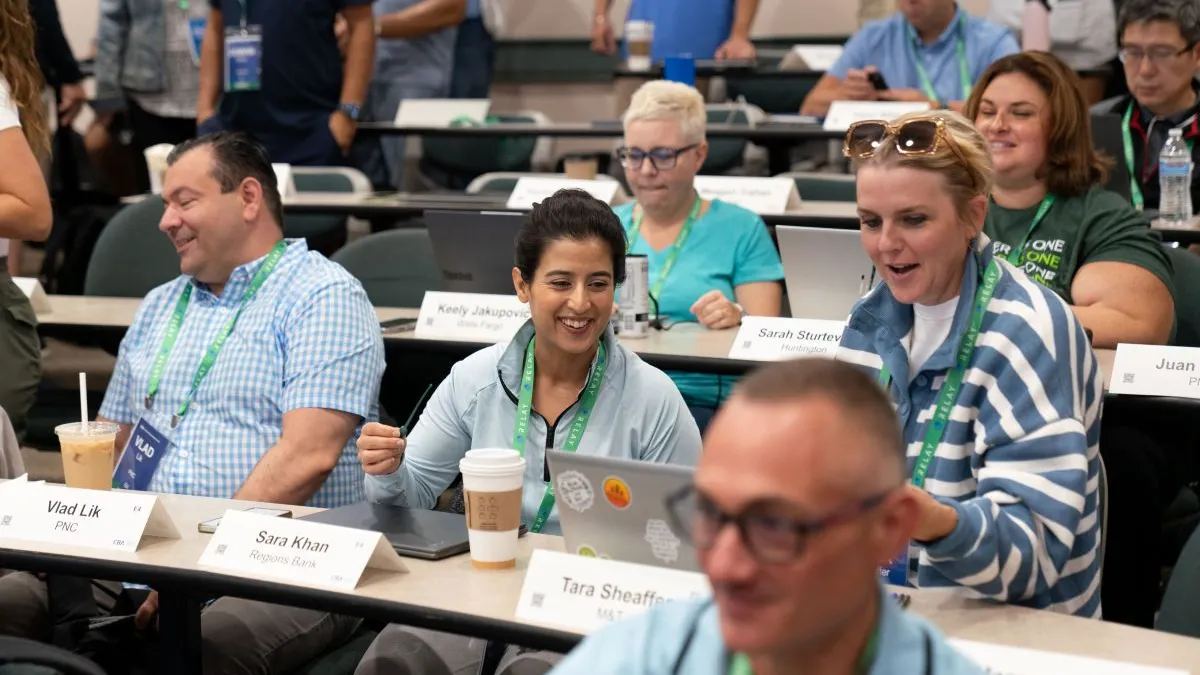
EBS is a three-year program, with one 10-day summer session in person annually, held at Furman University in Greenville, South Carolina. This year’s session is underway.
Each year’s curriculum varies. The first year focuses on how to manage the retail segment of a bank, including sessions on acquiring, segmenting and retaining customers, designing products and tailoring marketing.
In the second year, students focus on bank profitability, with sessions on financial data analysis and how to assess and manage risk. The third and final year focuses on managing a bank from the top down, with sessions on C-suite level decisions including how to consider analysts’ recommendations.
Roughly 130 students, sponsored by their employers, are in each EBS class.
Miller’s experience as a student led him to maintain involvement in EBS to this day.
“I loved the fact that I had this immersive opportunity, that was an executive-level learning, but it was very specific for banking, and that the learning was coming from actual bank executives and leaders who have done the jobs and lived the experience,” Miller said in an interview. “I never really needed to get my MBA.”
A pillar of the program is its exclusive use of two simulations where students can see how their decisions would play out in the real world.
In one, MarketSim, students focus on their simulated bank’s retail strategy, building networks of branches, ATMs, call centers and digital delivery methods.
The other, BankCom, allows students to simulate complex financial situations and see their bank’s performance in various market situations.
EBS also emphasizes students working in parts of the bank they’ve not worked in before, and working collaboratively with those in bank divisions they’d otherwise never work with.
“You just don’t get the experience to work collaboratively across divisions [elsewhere]. Those learnings really help you,” Miller said.
Last year, Miller said he sent Eastern’s data analytics and sales reporting lead to EBS to help him understand “more holistically” how the bank operates.
“If you're in charge of data analytics, you don't spend a lot of time thinking about the regulatory environment except protecting your data,” Miller said. “But you'll come out of this program with a completely different perspective on the importance of working together with our regulators, as an example.”
Additionally, students learn directly from C-suite executives during the in-person part of the program, with speakers this year including Simmons Bank CEO Jay Brogdon and Jimmy Stead, Frost Bank’s chief consumer banking and technology officer.
Last year, Commerce Bank CFO Chuck Kim, EverBank CEO Greg Seibly and Mastercard U.S. Co-President John Levitsky spoke to EBS students.
Miller is far from EBS’s only C-suite alum. CBA has hosted some 6,000-plus students over 75 years – typically senior-level bankers with an average of 18 years’ experience.
First Financial CEO Archie Brown graduated from the program in 1996, and Associated Bank CEO Andy Harmening graduated 10 years later. PNC’s former chief corporate responsibility officer, Rich Bynum, completed his in 2012.