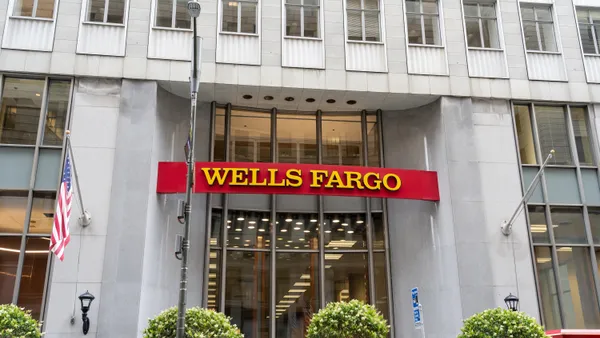
LAS VEGAS – Artificial intelligence may be everywhere, but value isn’t, according to Wells Fargo executive Faraz Shafiq. To get there, the bank is taking a deeper, strategic look across workflows with transformation in mind.
Shafiq, head of AI products and solutions at Wells, joined the bank in February to oversee the roadmap and development of AI-powered products to be used across the company. He was previously a leader at Amazon Web Services.
“The year started off by making sure that we have the right tools enabled for our employees,” Shafiq said in an interview. From there, Wells began to identify targeted uses and is seeing tangible benefits from those.
In 2027, rethinking workflows and integrating AI into those is “the biggest area of focus” for Shafiq.
“That is something I'm going to spend a lot more time and energy on [in] the remainder of the year, as well as next year,” he said.
The $2.3 trillion-asset bank’s effort to derive value from AI goes beyond the application of a single tool or focusing on a few use cases, he said.
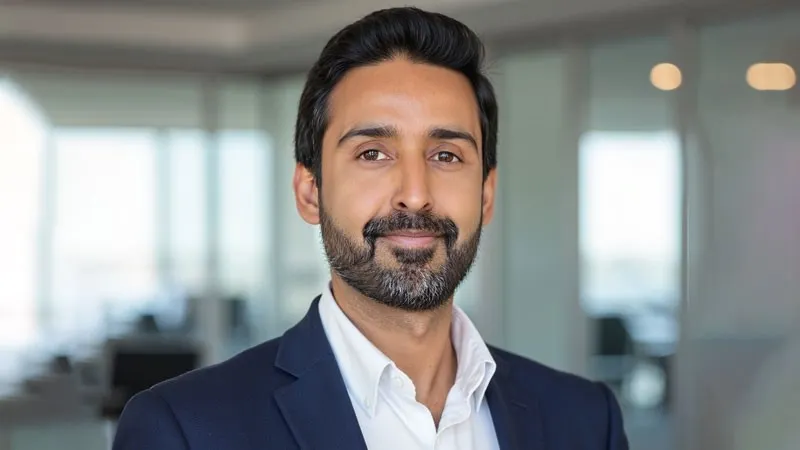
“Our goal here is to use AI to fundamentally transform how our bank operates,” Shafiq said.
Shafiq, speaking Tuesday at the Money20/20 conference in Las Vegas, said San Francisco-based Wells Fargo sees four core components to achieving that goal:
- Hub-and-spoke model. That means one central team at Wells works on elements of AI integration that affect the entire bank, delivered by teams that own the specific applications, he said. “Governance, security, controls, prioritization – all of that is centrally controlled because one team can build that out more efficiently, and then everyone can use it,” he said. And the spoke element is crucial, because “domain expertise is what will matter a lot.”
- Focus on highest impact uses. “Every project, every initiative suddenly has become AI, or AI-enabled, or AI-first, or AI-native, depending on the definition,” he said. To zero in on applications that will move the needle, Wells is emphasizing effort and attention on highest impact uses, he said. “There's going to be a disproportionate amount of value being created by a small number of use cases, and so we want to make sure that we're working on the right use cases, and we're not stretched thin or boiling the ocean,” he said.
- Speed with discipline. “The pace of change is remarkable, and so we do want to have a faster operating model, but not at the expense of safety, control, guardrails, governance,” he said. That means enabling the right controls, establishing an appropriate governance framework and having risk conversations at the outset. The bank’s approach “doesn't mean that we're not going to move fast. It just simply means that we're going to move fast with the appropriate guardrails,” he said. The bank may be highly regulated, but Shafiq said Wells has shifted the conversation – instead of “we can’t do that,” the approach is, “what do we need to do to do this safely, effectively?”
- Upskill and enable the workforce. Wells strives to empower its 197,000 employees across the company to tap AI tools to “become superhuman,” he said. “Having structured learning, training, development is super key.” At Wells’ size, driving adoption may take a bit longer, he noted.
As proof points of AI’s impact on the bank’s products and services, Shafiq pointed to virtual assistant Fargo, which has collected a trove of data through some 1 billion customer interactions, and banker intelligence capabilities that enable advisers to better prepare for client meetings. The latter is boosting product sales rates by 40%, he said.
Additionally, Wells Fargo’s model risk management team has built a small language model that delivers better results than off-the-shelf models when it comes to debit card fraud detection, he said. And leveraging AI to design curated marketing campaigns can result in “broader reach, better reach, and gain much better propensity of engaging with our customers at the right time through the right channel,” Shafiq said.
The bank’s move from No. 6 to No. 5 in this year’s Evident AI index was driven largely by an 11-point increase in leadership. In joining the bank, Shafiq sought to bring “better, stronger leadership” around AI and a “stronger point of view,” he said. The bank’s AI proof points make it easier to hire other leaders, he added.
Wells Fargo last week said it has hired Cayetano Gea-Carrasco as head of AI and data for consumer banking and lending.
With every big bank racing to weave AI into operations to drive meaningful value, Wells seeks to differentiate through its proprietary data and insights, and recognizing the most impactful applications, Shafiq said.