LAS VEGAS – A top banking regulator couldn’t escape one of the biggest artificial intelligence-related questions in the banking world over the past week.
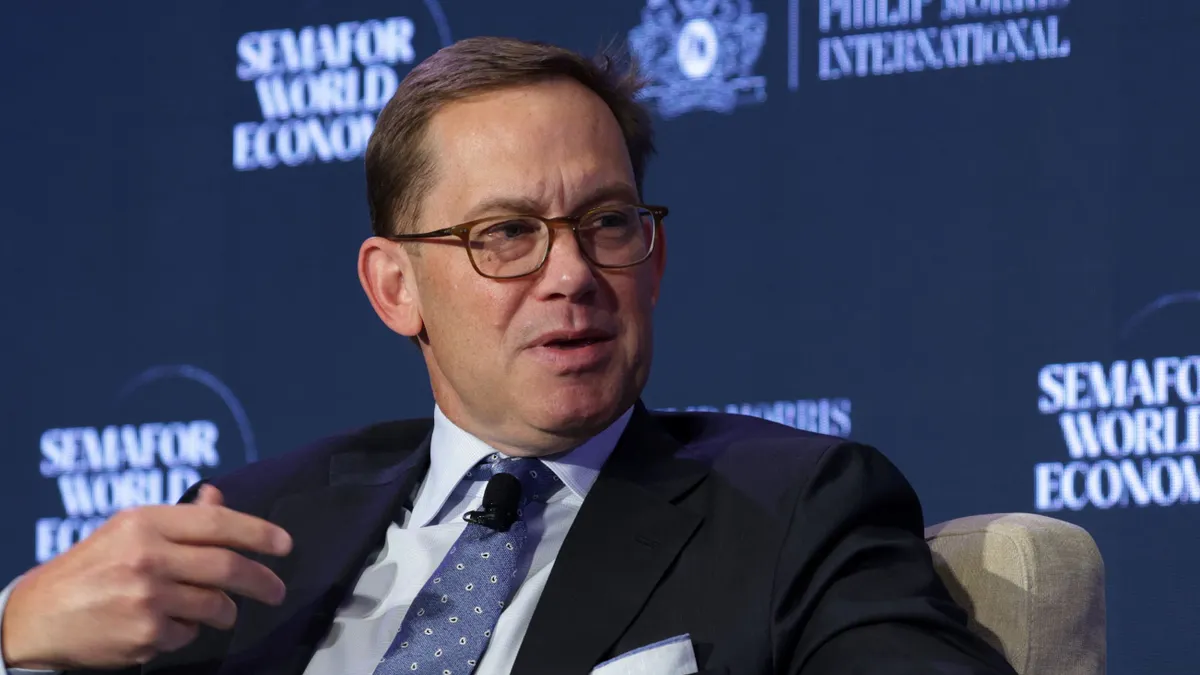
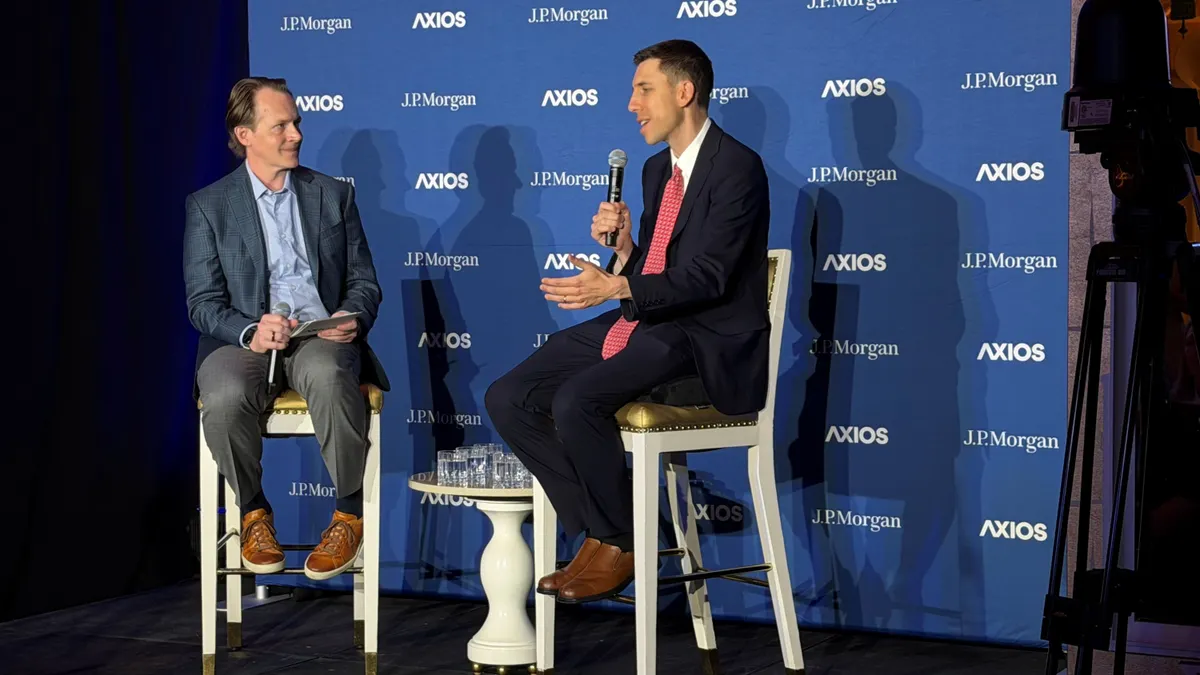
AI agents moving deposits on behalf of customers is “the big thing that we're thinking about,” and “that a lot of the banks are thinking about,” Federal Deposit Insurance Corp. Chair Travis Hill said Tuesday at an Axios event on governing the agentic economy in Las Vegas.
“There's just a big question of, to what extent are depositors going to delegate that type of decision-making authority to these types of agents?” Hill said.
“There certainly will be some,” he said. “The question is, how many and how big of an impact is that going to have on the overall landscape?”
The launch of Meta’s AI assistant Muse and the addition of Stripe’s Link wallet to enable Muse to transact on behalf of consumers have reignited conversation around agentic AI cash sorting concerns for lenders and the threat such activity could pose to their deposit businesses.
Big banks have pointed to safety and soundness concerns related to AI agents’ access. Citi and Bank of America have joined JPMorgan Chase in blocking customers’ external AI agents from accessing customer bank accounts. JPMorgan CEO Jamie Dimon said consumers need to understand the risks of using AI agents, because “there’s a liability transfer.”
Other bank executives, such as PNC CEO Bill Demchak – who spoke Monday at the Money20/20 conference – and Fifth Third CFO Bryan Preston have indicated accountability questions need to be settled before agents carry out transactions on behalf of their customers.
Hill on Tuesday also pointed to “a long-standing progression” over decades of simpler money movement, particularly if customers are interested in maximizing the rate they receive on deposits.
Still, many bank customers earn close to zero interest. “Oftentimes, it's that depositors value other things,” he said.
About half of deposits in the system are corporate, Hill said. “A manufacturing company might have sophisticated needs that a bank is providing that justify why they're earning a small return on the deposit account,” he said.
At the Axios event, Hill was also asked why revised model risk management guidance issued by the FDIC, the Office of the Comptroller of the Currency and the Federal Reserve earlier this year didn’t address generative and agentic AI.
The FDIC chair said the guidance both in its prior form and current form doesn’t “work well for agentic AI and generative AI, which is a very rapidly evolving technology.”
“We are continuing to think about future guidance in that area,” Hill said. “We are considering soliciting information from the public about how we should think about it from a supervisory standpoint.”
Regulators are trying to make sure they’re staying current as the technology changes, while being thoughtful and deliberative, he said.
Much like industry players, the FDIC is adopting AI in the pursuit of efficiency, although Hill said he would like to see the agency move a bit faster.
“We do have a couple of tools that we're using right now,” Hill said during an earlier appearance Tuesday, at the Money20/20 conference in Las Vegas. “We are trying to be, I'd say, more strategic in how we build out those tools, to ensure that we're making progress and going to achieve some of our longer-term goals in a reasonable amount of time.”
Hill said he sees potential for AI to help the FDIC in some aspects of supervision and failed bank resolution. On the supervisory side, AI tools can help the agency be more efficient in conducting loan reviews and safety and soundness exams.
With failed bank resolutions, AI can enable the FDIC to handle deposit insurance determinations in a timely manner, he said, and review trust documents, which can be a time-consuming component of receiverships.
There’s “a lot of promise there, and I'm trying to get us to move faster to achieve that,” Hill said during a conversation with Financial Technology Association CEO Penny Lee. “Like any government agency, we're a lot less nimble than maybe most … organizations in the audience here, so that's been a little bit frustrating.”
Lee referred to Hill’s plans in coming days to meet with companies on the West Coast, to hear the latest on agentic AI in the financial world.
Hill indicated he has plenty of questions, including “what kind of capabilities do the tools have today? What kind of adoption are we seeing? What are the costs involved? What are the reactions from different players within the ecosystem?”
“We're certainly thinking a lot about what it means for the banking system,” he said.
Hill noted a push during the second Trump administration for a more open-minded attitude toward innovation.
“The last administration, I think, was very close-minded in their approach to innovation, and I think that was detrimental to the United States as a country and being a leader on a lot of these issues,” he said.