
Dive Brief:
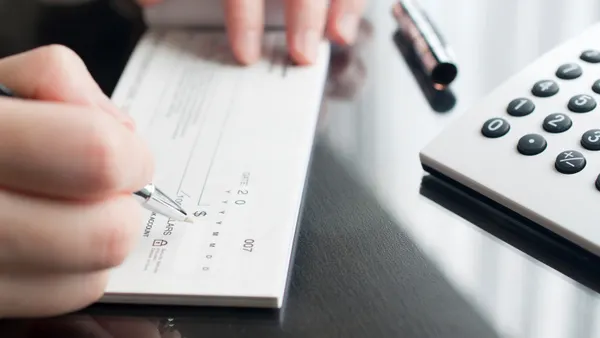
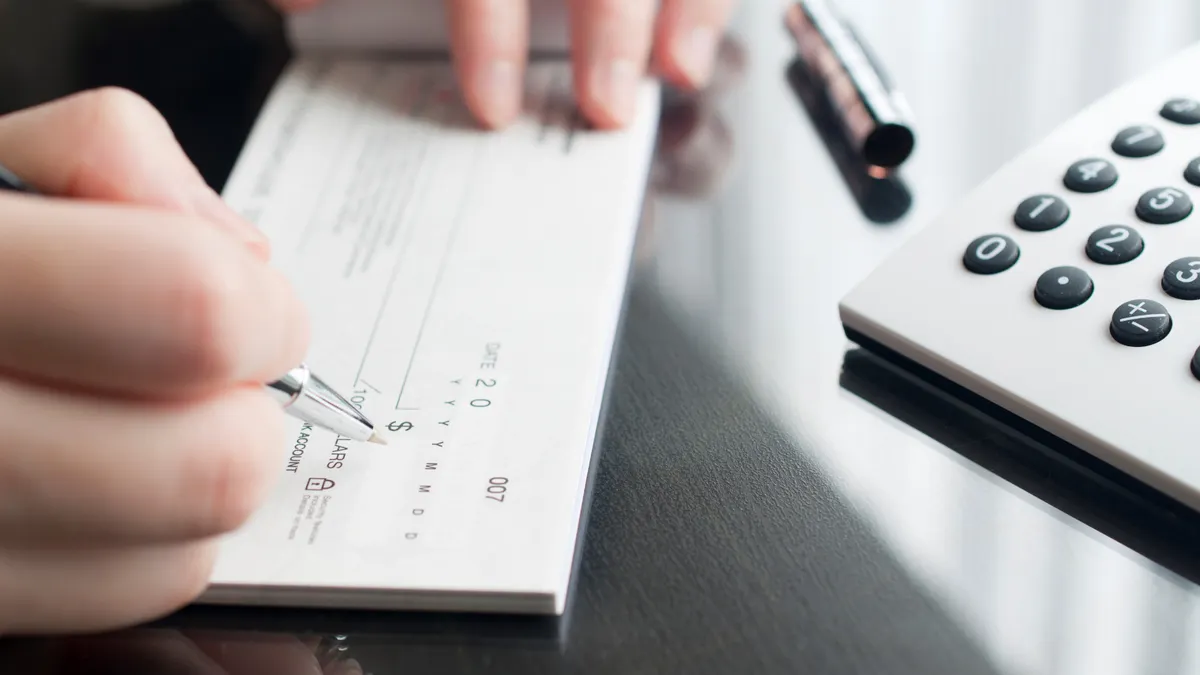
- Payment companies generally agreed that paper checks should be phased out in comments submitted in response to a Federal Reserve request for input, but the industry has many different ideas about how to get there, or what should replace them.
- In comments submitted to the Fed in response to its December request for information about check processing, firms like payment processor Fiserv, Zelle parent Early Warning Services and bank-owned The Clearing House acknowledged that some Americans still rely on paper checks and should be given time to transition away from them.
- "The shift to electronic payments has become particularly important as check fraud increases, the cost to operate check services rises, and check-processing infrastructure ages," a comment from the bank-owned TCH said. "We therefore encourage the Federal Reserve to develop — in close collaboration with the private sector and other stakeholders — a longer-term plan to transition the industry away from checks in favor of safer electronic payment alternatives."
Dive Insight:
When the twilight of paper checks should arrive, however, was not something the companies found consensus on in their comments to the Federal Reserve.
President Donald Trump last March ordered the Fed to gradually phase out paper checks, arguing they are prone to fraud and more expensive to process compared to digital alternatives.
In December, the Fed asked for public comments on how it should handle check-processing in the future. The window to submit comments ended March 9.
The Clearing House recommended setting a definitive end date for the use of paper checks "so all stakeholders can prepare for an orderly transition to safer electronic payments over time."
Although, the New York-based company did not provide a specific date for ending paper check use.
"There need to be appropriate plans for the future on how to continue to support this product in the United States," Rodney Abele, associate general counsel and director of regulatory and legislative affairs for The Clearing House Association, said in an interview. "Ultimately, the Fed is probably going to, at some point in the future, be unable to recoup the cost of the services that it provides banks from the per-item fees that it recovers for processing checks."
Since the outbreak of the COVID-19 pandemic, The Clearing House — which processes checks in partnership with several banks — has seen between a 5% and 9% year-over-year decline in check usage, Nadeane Ballantine, a vice president of product management at The Clearing House, said in the same interview.
Early Warning Services, which operates the digital payment provider Zelle as well as the peer-to-peer player Paze, recommended phasing out check use gradually.
"Check usage in the United States continues to decline in volume, but checks remain meaningful by value and for certain users and use cases, including specific business-to-business workflows and populations facing barriers to digital adoption," the company said in its comment.
Scottsdale, Arizona-based EWS asked the Fed to establish "clear benchmarks" for the transition away from paper checks in order to "enable the adjustment of the pace of service reductions — slowing or accelerating the phase-out as needed — based on observed risk trends."
The company’s own peer-to-peer payment service Zelle is a potential alternative to paper checks, Ben Chance, the firm’s general manager of identity and payments risk, said in an interview.
“We’ve already passed the inflection point where Zelle is growing and checks are declining,” he said. The service was “intentionally designed to replace checks and cash.”
Processing giant Fiserv suggested leaving check processing to the private market or hiring a third-party to process checks for the Federal Reserve banks.
"While supporting this orderly transition, the Federal Reserve must preserve the reliability of key Reserve Bank check services in the near term," the company said in its comment. "These services remain critical operational infrastructure for the time being, providing nationwide reach and standardized processing for forward collection, returns, and adjustments."
Image-based check processing is among the services provided by the Milwaukee-based company, a spokesperson said in an emailed statement.
"We believe significant investment in the Federal Reserve Banks’ check services system is unnecessary because private networks can continue serving this market effectively and efficiently," the spokesperson said.
The Innovative Payments Association — a trade group representing digital payment companies — offered several electronic alternatives to paper checks, including the use of prepaid accounts.
"Prepaid accounts are often used as a substitute payment method for paper checks," the organization wrote in its comment to the Fed.