The Securities and Exchange Commission proposed rules for the cryptocurrency industry Tuesday while related legislation remains stalled through mid-September in Congress.
The SEC’s Regulation Crypto Assets proposal will establish a framework for crypto firms to raise capital under federal securities laws and also includes a conditional safe harbor from being deemed an investment contract.
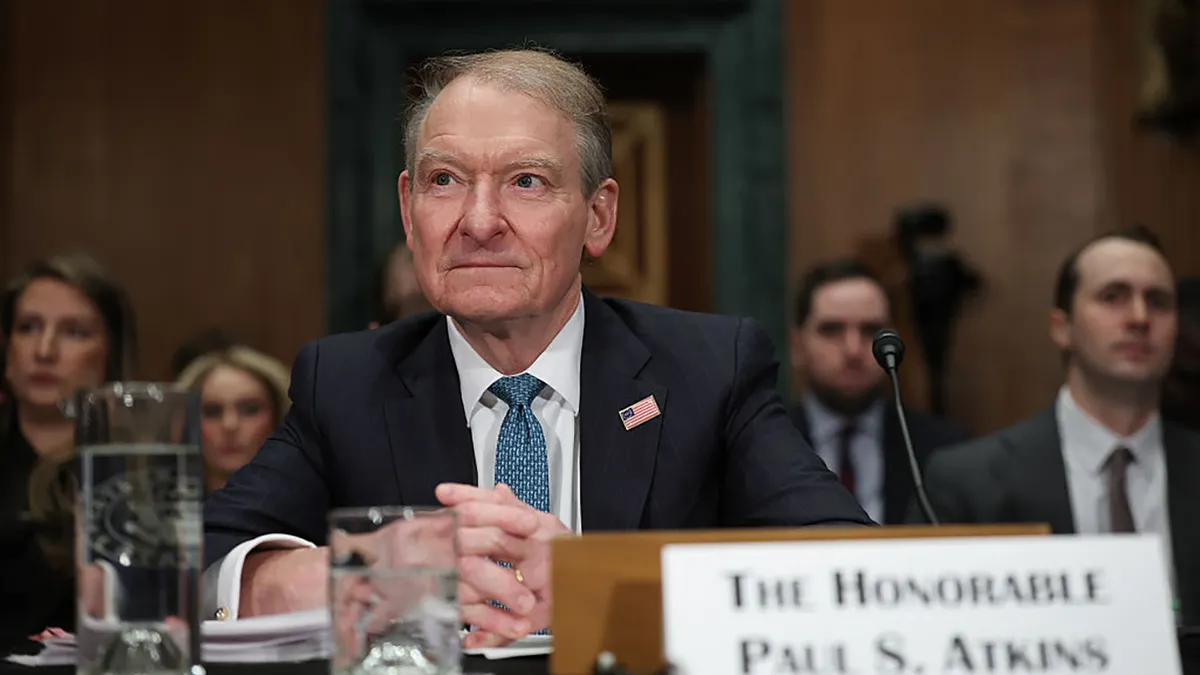
“Congress designed our securities laws to amplify – within specific guardrails – opportunities for entrepreneurs to innovate and build new products,” SEC Chair Paul Atkins said in a prepared statement. “Advancing this regulatory framework is a key element in our strategy to advance the rule books for the modern era and another step by the Commission to onshore innovation in crypto asset markets for generations to come.”
The proposal builds on guidance the SEC and Commodity Futures Trading Commission released in March clarifying how federal securities laws apply to digital assets and transactions involving them.
Cryptocurrency framework legislation has been moving through Congress since earlier this year, but it remains stalled until lawmakers return from summer recess. Longtime crypto champion Sen. Cynthia Lummis, R-WY, said at the SALT Conference on Tuesday that a vote on the Clarity Act is scheduled for Sept. 15, according to a video published by Cointelegraph.
“This is a very direct response to the stuttering of the Clarity Act. The SEC is going to drop thoughtful, direct regulation to enable digital assets to continue to flourish,” said Louis Froelich, partner at Womble Bond Dickinson, in an interview with Banking Dive. He said he views the proposal as “part of a broader mosaic” including recent legislation and several pieces of guidance issued by the SEC and CFTC.
Under the leadership of Biden administration SEC Chair Gary Gensler, companies that created and offered tokens for sale were “between a rock and a hard place,” Froelich said.
“Under the Gensler era, the SEC was like, ‘No, that's a security offering. You can't do that,’ [leading companies to] launch their project outside the United States because they couldn't legally raise money in a way that suited the nature of their business,” Froelich said.
The new proposal isn’t “greenlighting” all-things crypto in the U.S., he said, but rather “solving or proposing to solve for another meaningful leg in the economy to allow crypto to flourish in America.”
Public comments on Regulation Crypto Assets will be accepted for 60 days.