Two lawmakers want nonbank lender OppFi to ditch its quest to buy Arizona-based bank holding company BNCCORP and its subsidiary, BNC National Bank, according to a letter sent Wednesday.
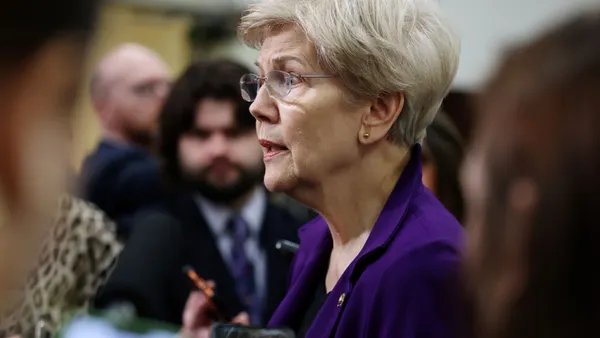
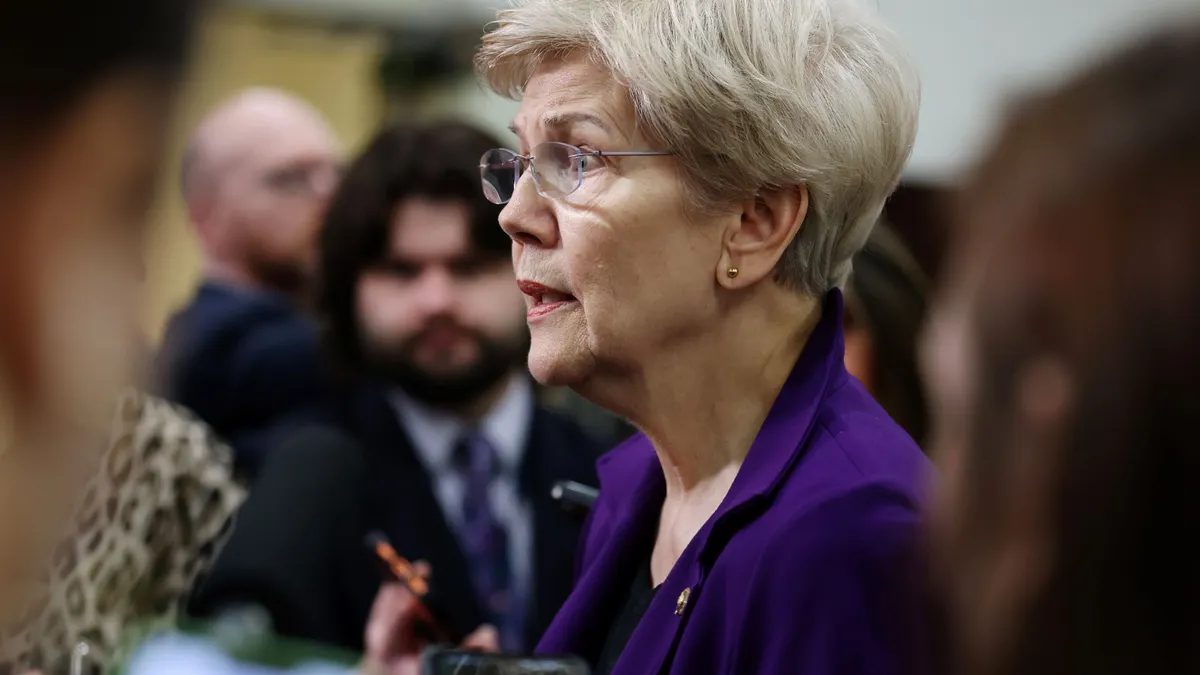
Sens. Chris Van Hollen, D-MD, and Elizabeth Warren, D-MA, allege that OppFi’s business model is “built on predatory lending practices,” including interest on personal installment loans as high as 195% annual percentage rate.
Weeks ago, Enova – another nonbank lender that sought to acquire a bank and, therefore, a banking charter – terminated its bid to buy Grasshopper Bank over a lack of “clear standards for nonbanks that want to become banks” that then allowed for “political pressure,” according to Enova CEO Steve Cunningham.
Now, Van Hollen and Warren want OppFi to follow suit.
“OppFi – a nonbank lender that provides financial services to consumers through installment loans – brands itself as a lender that ‘empower(s) everyday consumers to overcome financial hurdles and build long-term financial stability,’” the senators wrote. “But, a closer look into its business model reveals persistent, predatory financial strategies.”
OppFi and Enova are similarly structured, the lawmakers wrote. Both lenders are geared toward consumers they bill as “underserved” by traditional banks due to credit reasons.
“Paired with the mounting opposition it has received to date in regards to its application and Enova’s appropriate decision to change course, we believe OppFi should withdraw its application to acquire a national bank, immediately,” they wrote.
A spokesperson for OppFi pushed back against the senators’ characterization of OppFi’s lending business.
“Politicizing and attacking OppFi's bank charter application does a disservice to consumers who need access to credit, hurting the very people the lawmakers claim to want to protect,” the spokesperson said. “Transitioning into the regulated banking system will subject OppFi's already proven and fully compliant business model to rigorous federal oversight - reinforcing OppFi's commitment to fair and responsible lending for those who need it most.”
Among other things, Warren and Van Hollen allege that OppFi’s charge-off rate exceeds 55%. They cite a 2021 lawsuit filed by the D.C. attorney general which alleged that “OppFi’s underwriting model anticipates that up to one third of their borrowers will fail to repay their loans and default.” The lawmakers also allege the lender “aggressively pushes borrowers to refinance in order to extend their debt and increase borrowing costs.”
OppFi’s spokesperson pushed back against the data used in Warren and Van Hollen’s letter. The average OppFi loan duration is roughly four months and, according to the spokesperson, annualizing quarterly charge-offs “makes it appear as though actual charge-offs are up to three times greater than they really are.”
The lifetime charge-off rate for such loans over the past three years has been 18% to 25%, the spokesperson said.
The Enova-Grasshopper and OppFi-BNC National deals were the subjects of a letter from 20 state attorneys general in July who urged the Office of the Comptroller of the Currency, Federal Deposit Insurance Corp. and Federal Reserve not to approve the deals.
Enova and OppFi partner with banks chartered in states with no interest rate caps, allowing them to offer loans with interest rates well beyond 36%, which is the limit in most states, the attorneys general wrote.
“These arrangements are deliberate efforts to avoid state usury laws and to extract profit from those that are in desperate need of money,” the AGs wrote in July.
Editor’s note: This story has been updated to include comments from OppFi.