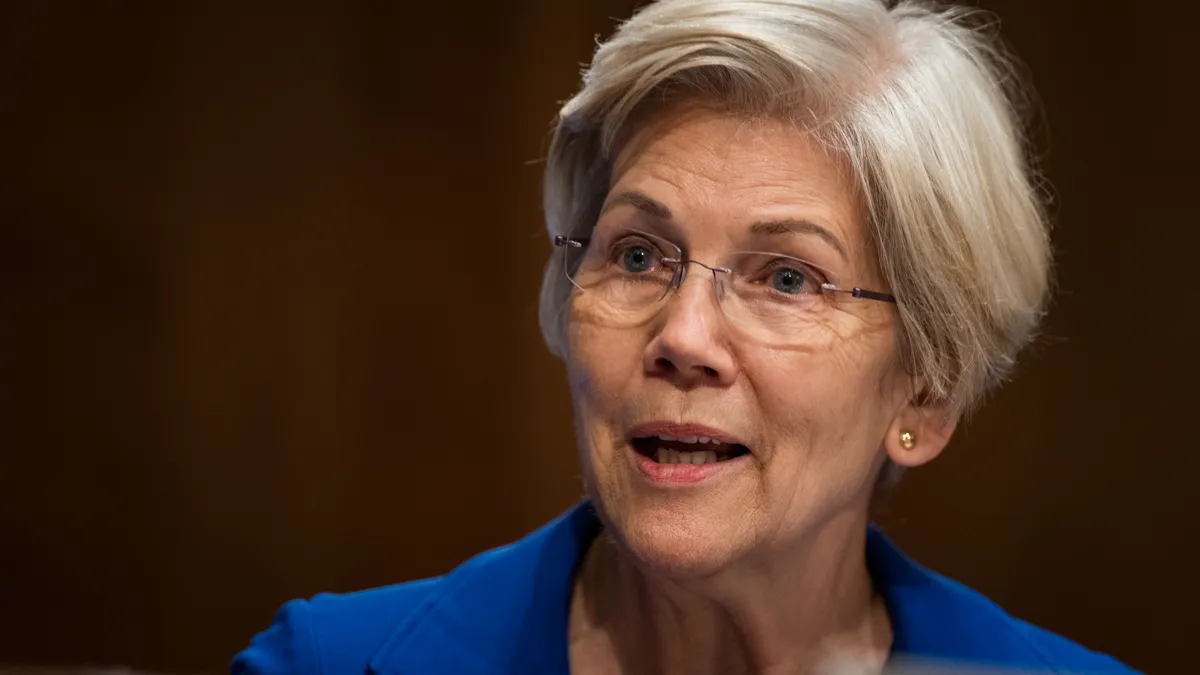
Three Senate Democrats pressed 21 credit unions on their allegedly “predatory” overdraft and non-sufficient funds fees in a letter Monday.
“Overdraft and non-sufficient fund fees are one of the most common exploitative mechanisms big banks use to extract money from low-income consumers,” wrote Sens. Elizabeth Warren, D-MA, Cory Booker, D-NJ, and Richard Blumenthal, D-CT. “The CFPB found nearly twice as many consumers with incomes between $35,001 and $65,000 were charged overdraft and NSF fees (35%), versus consumers with incomes between $100,001 and $175,000 (18%).”
Banks, they note, are not exclusive in charging overdraft and NSF fees, of which the average consumer pays $225 per year. Less than 10% of customers account for almost 80% of overdraft fees, Consumer Financial Protection Bureau data shows.
“[C]redit unions –– despite being created to serve individuals of modest means –– also collect significant overdraft and NSF fees,” the senators wrote.
The letter follows the National Credit Union Administration’s March decision to stop publishing overdraft and NSF data for individual credit unions and Republican lawmakers’ repeal of the CFPB’s rule which would have capped overdraft fees at $5.
“Charging excessive overdraft fees when almost 40% of American households have less than $400 to cover an emergency expense, prices for food, utilities, and other essential items are rapidly rising, and Trump’s chaotic, half-baked policies are wreaking havoc on the economy is inexcusable,” the senators wrote.
“These fees are not necessary for a credit union’s survival: one of the largest credit unions, Alliant Credit Union, eliminated overdraft fees and still had a record dividend payout to members in 2023, proving that credit unions can protect consumers without sacrificing their financial health,” they wrote.
Chicago, Illinois-based Alliant killed its overdraft fees in 2021.
The senators seek answers from the CEOs of 21 credit unions across 12 states — Randolph-Brooks Federal Credit Union and Security Service Federal Credit Union in Texas; Members 1st Federal Credit Union and Police and Fire Federal Credit Union in Pennsylvania; Desert Financial Credit Union in Arizona; Frontwave Credit Union, California Credit Union and Golden 1 Credit Union in California; VyStar Credit Union, Suncoast Credit Union and MidFlorida Credit Union in Florida; Everwise Credit Union in Indiana; Idaho Central Credit Union in Idaho; CommunityAmerica Credit Union in Kansas; State Employees’ Credit Union in North Carolina; Municipal Credit Union and Broadview Credit Union in New York; Mountain America Credit Union and America First Credit Union in Utah; Eastman Credit Union in Tennessee and Navy Federal Credit Union in Virginia — on the ins and outs of their overdraft programs by Dec. 14.
Each letter specified how much the respective credit union brought in from overdraft fees in 2024. However, the senators did not mention why they reached out to these credit unions specifically.
Warren has long rallied against overdraft fees. In September, she, Blumenthal and Sen. Bernie Sanders, I-VT, pressed more than two dozen banks on their overdraft practices.
“Overdraft fees are the source of tens of millions of bank account closures, meaning this law will likely increase debanking, running counter to President Trump’s stated goal of reducing debanking,” the senators wrote at the time of the $5 cap being repealed.