More than 140 businesses, including banks such as BNY, U.S. Bank, Huntington and Citizens, partnered Tuesday on the launch of a stablecoin its founder bills as “open, low-cost, high-throughput, broadly accessible, and aligned to [partners’] interests.”
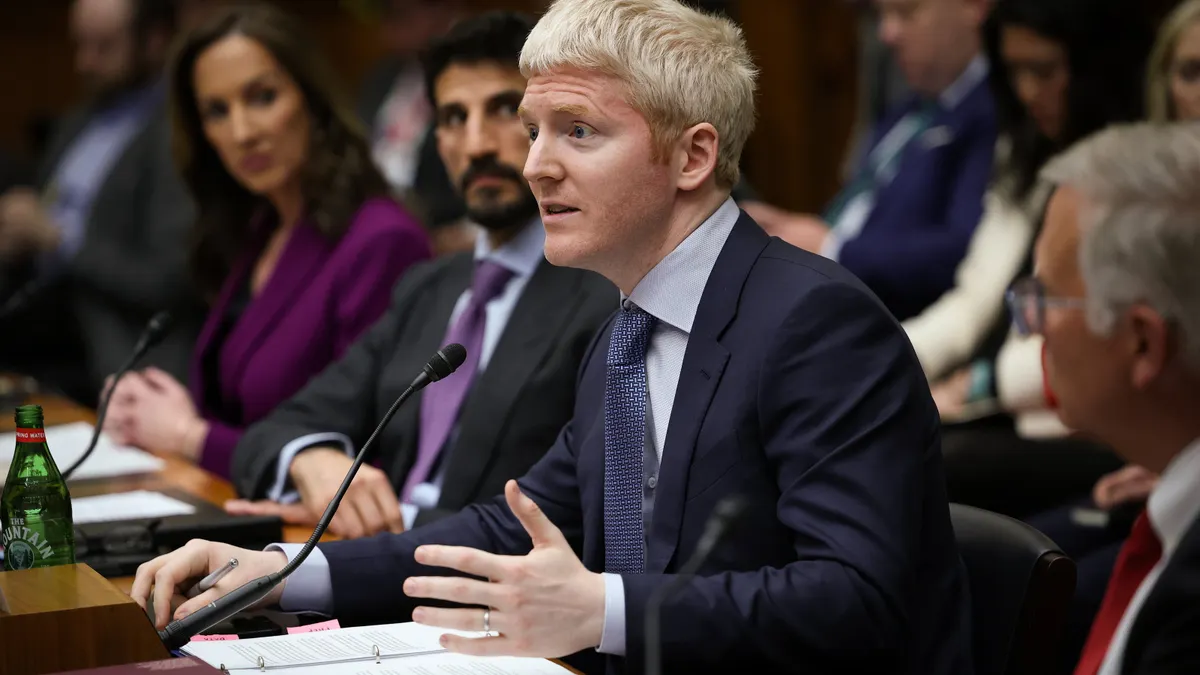
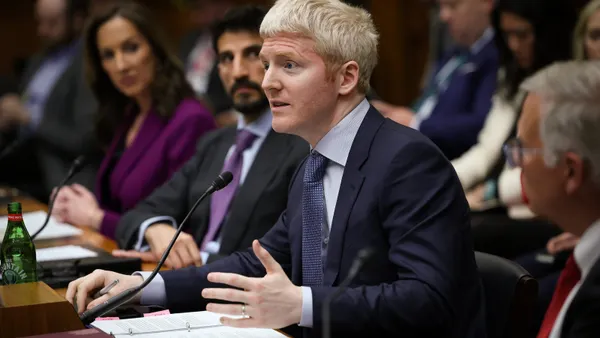
Fintechs such as Chime and Stripe, cryptocurrency firms such as Coinbase and Ripple, and credit card networks Visa, Mastercard and American Express joined a consortium to back Open USD, the stablecoin brainchild of Open Standard, led – at least in the interim – by Bridge CEO Zach Abrams.
In its launch announcement, Open Standard noted three “key design principles” it aims to solve with its stablecoin. First, businesses face prohibitive fees to mint and redeem stablecoins at scale, the consortium said. Open USD would allow users such access at no cost and with no artificial volume limits, the organization said.
Second, earnings from Open USD’s reserves would be split among partners, minus a management fee for operational costs, the consortium said.
And third, Open USD would be run “collaboratively” because Open Standard’s board would be composed of partner members, “ensuring decisions are made for the collective interest, not a single entity,” according to Tuesday’s announcement.
Stablecoins are digital assets that are typically pegged on a one-to-one basis with fiat currencies. They can offer 24/7 market access and near-instant settlement of cross-border payments.
U.S. lawmakers have been working to forge guidance surrounding the regulation of stablecoins following passage of the Genius Act last year providing a framework for that oversight.
Carolyn Weinberg, BNY’s chief product and innovation officer, noted that her bank expects stablecoins to account for $1.5 trillion in value by 2030.
“A stablecoin with neutral governance and shared economics is a unique combination that has potential to unlock the next phase of digital assets growth,” Weinberg said in Tuesday’s release.
Abrams noted Tuesday that Open USD would be live “later this year.”
The CEO’s other business, Bridge, received conditional approval in February for a national trust bank charter from the Office of the Comptroller of the Currency. Stripe bought stablecoin platform Bridge early last year in a deal worth $1.1 billion.
“Businesses need a stablecoin designed to work … not at the scale of the 2026 economy, but of the 2040 economy, with flurries of activity we can only begin to imagine,” Stripe’s president of technology and business, Will Gaybrick, said in a statement, adding that Open USD will be the “default stablecoin” for the payment processor’s partner businesses.
Other executives projected Open USD’s impact on the payments segment.
“The more great infrastructure this industry builds together, the faster we close the gap between what payments are today and what they should be,” Shan Aggarwal, Coinbase’s chief business officer, said in a statement.
“In payments, scale only comes with trust,” Jack Forestell, Visa’s chief product and strategy officer, said in a statement. “As stablecoins evolve, the focus must shift from speed to reliability, governance and interoperability.”
Forestell said Visa would bring “the same discipline, risk standards and operational rigor” to Open USD that it applies to its card network.
An executive from Visa’s chief rival, Mastercard, focused on what he saw as a universal tenet of innovation.
“The technologies that changed the world, from the internet to mobile networks, succeeded because they became shared infrastructure that anyone could build on,” said Jorn Lambert, Mastercard’s chief product officer. “As stablecoins become a new way to move value globally, we believe the infrastructure behind them should follow the same path: open, interoperable and broadly accessible.”
Still other partners appeared to have their eyes trained on end users.
“As commerce evolves, so do the expectations of our customers and merchants,” Tom Adams, Adyen’s chief technology officer, said in a statement. “We need to continue to adapt and provide them with clarity, which is why we’re joining OS to help shape an open, merchant-first foundation for stablecoin utility.”