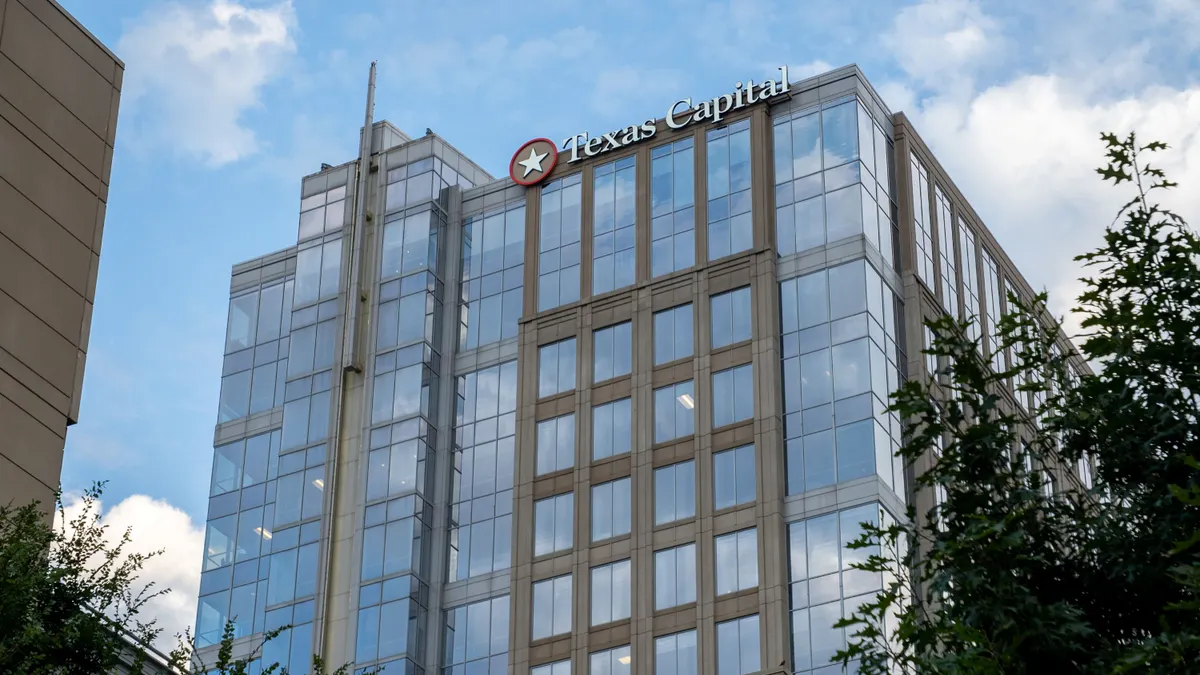
Having recently completed a multi-year transformation that bolstered the services Texas Capital Bank offers and its profitability, the lender’s CEO acknowledged the company may be “attractive” to larger banks looking to buy.
Rob Holmes, president and CEO of the $31.5 billion-asset bank, views Texas Capital as unique among a crowded field of competitors in the state, in that it’s a Dallas-based player with top-bank capabilities.
“We can do anything a money center bank can do, except hedge commodities, and I don’t want to hedge commodities,” Holmes, also the bank’s chairman, said in a recent interview.
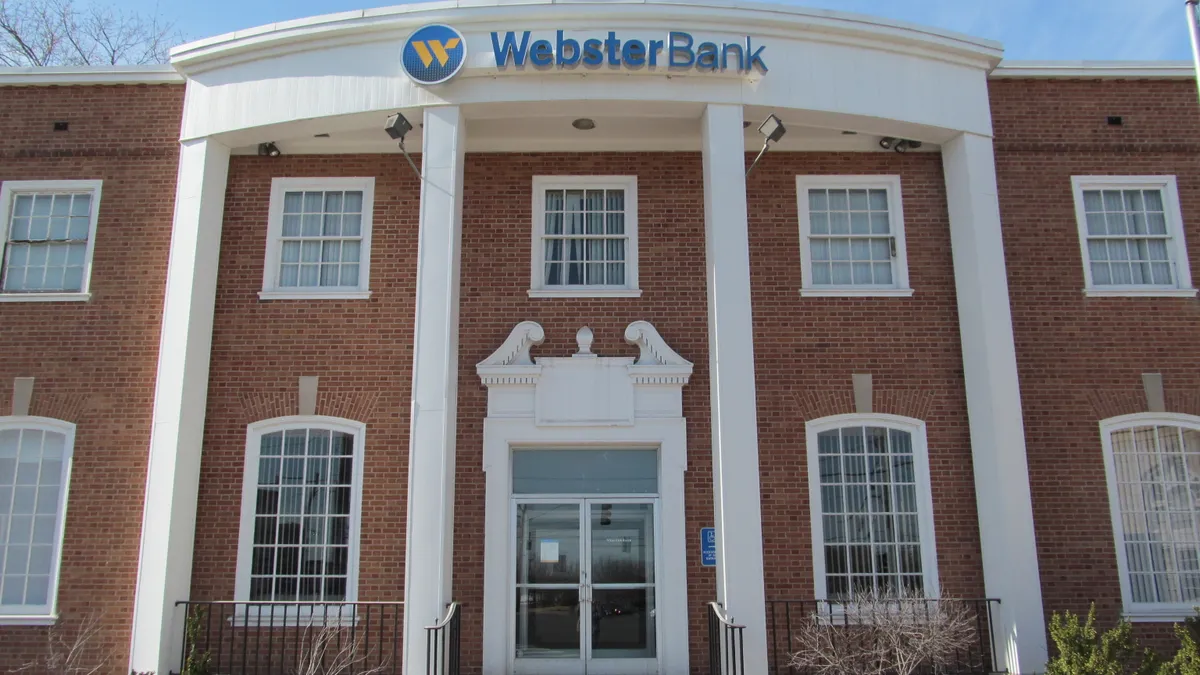
Recent big-ticket M&A activity has fueled additional deal speculation. Last week, Spanish lender Santander said it would buy Connecticut-based regional Webster Bank for $12.3 billion. And some of last year’s biggest deals – Fifth Third’s $10.9 billion acquisition of Dallas-based Comerica, and Huntington’s $7.4 billion purchase of Houston-based Cadence – recently closed after relatively quick regulatory approvals.
That environment, with the “‘green light’ from bank regulators,” has some big bank analysts, such as Wells Fargo’s Mike Mayo, suggesting Texas Capital may be a top takeover target. Mayo anticipates more acquisitions among banks in the $20 billion- to $100 billion-asset range.

Holmes declined to comment Friday on whether Texas Capital has fielded acquisition interest from larger lenders. “We talk to a lot of people in the market very often, about a lot of things,” he added.
“We're going to do whatever is best for the shareholders,” Holmes said.
But given investments made to transform the bank, “if somebody was to offer something for the franchise, you would have to take in and compare it vis-à-vis that,” he contended.
“The real M&A transaction for Texas Capital was the transformation, which created a lot of revenue and cost synergies that are yet to be realized,” he said.
Holmes, who joined the bank in 2021 after more than three decades at JPMorgan Chase, has changed the composition of the company, diversifying revenue and bolstering profitability and capital ratios, noted D.A. Davidson analyst Peter Winter.
After selling its mortgage correspondent business, tied to a $14 billion portfolio, in 2021, Texas Capital reinvested funds in the business, building out its investment banking and trading unit, hiring commercial bankers and adding products and services.
The bank also sold its insurance premium finance unit to Truist for $3.4 billion in 2022.
Texas Capital’s niche is serving corporate clients in the state, or those with a tie to Texas. About 90% of the bank’s 1,790 employees are new since 2021, the CEO said. And the bank has completed a major technology overhaul, including rolling out new payments and treasury management platforms.
The lender has about 2.5 times more client-facing employees than when Holmes arrived at the bank, he said.
As the transformation wrapped up, Texas Capital reported net income of $100.9 million in the third quarter, compared to a $65.6 million loss the same quarter a year earlier. And the bank’s profit jumped 44% in the fourth quarter, to $96.3 million.
From here, scale is the plan, Holmes said. The lender is projecting mid- to high-single digit revenue growth for 2026, after reporting 2025 full-year revenue of $1.26 billion.
Texas Capital has picked up teams of bankers in Los Angeles and Chicago and opened offices in those cities for those staffers. Holmes said he wants to hire more technology and private wealth bankers.
“We're finally getting to the fun part of the transformation,” Holmes said. “The transformation’s over. Now you just use the toys you got.”
Holmes indicated he’s not concerned about achieving desired growth even as more banks have circled Texas as an area for expansion, changing the competitive landscape.
Holmes believes some lenders “have zero mandate to be here.”
“They don't have differentiated products and services,” he said. “They don't have any tie to Texas. Their policies and decision-making are made in other states.”
“There's a lot of banks here that I hold in super high regard, that are unbelievable competitors, that we're proud to compete with, and others, I just don't think have a mandate to be here,” he said.
Texas was among the most targeted states for bank M&A last year, and Holmes expects deal activity in the state to continue.
Still, Winter, who covers Texas Capital, thinks there’s low likelihood of the company being an acquisition target.
Texas Capital has a “very branch-light strategy,” and a high cost of deposits, although it’s working to address the latter, Winter said.
“A big driver for M&A is having a strong core deposit franchise,” he said.
Given its commercial bent, Texas Capital’s high-quality wholesale deposits are more expensive than consumer deposits, Holmes said. The lender, which has a small consumer bank and about 10 locations in Texas, doesn’t have an “aggressive campaign” to add branches, he said.
“It would take a very long time to create an efficient, strong branch network,” the CEO said. “If we were going to do that, that would probably be through acquisition.”
Although an acquisition is something the bank can now do, where it wasn’t possible before hitting its return targets last year, buying another lender is low on the list for Texas Capital, Holmes said.
“There's not really a compelling reason for us to do M&A unless it's additive in some way,” he said.