Artificial intelligence and robotics trends observed at this year’s Consumer Electronics Show are set to further raise the bar for customer service experiences, said Don Relyea, U.S. Bank’s chief innovation officer.
That includes helping customers handle tasks in seconds rather than minutes, he said.
“That expectation of the bank just taking care of stuff for you with zero friction, it's only going to increase,” said Relyea, who attended last week’s show in Las Vegas with his team.
After the U.S. Bank team observed agentic AI innovation at last year’s CES, “do it for me” has “become a key pillar of our digital strategy,” Relyea said during a recent interview. He declined to comment on innovations the lender is planning to launch.
“The new bar for digital excellence is, what can we do for our customers, as opposed to having them do it themselves,” he said. “Everybody’s working on how we’re going to execute on that.”
The Minneapolis-based super-regional bank is also working with partners on the agentic commerce front, after scouting developments at CES in recent years, Relyea said. He’s attended the show each of the six years he’s been at the bank.
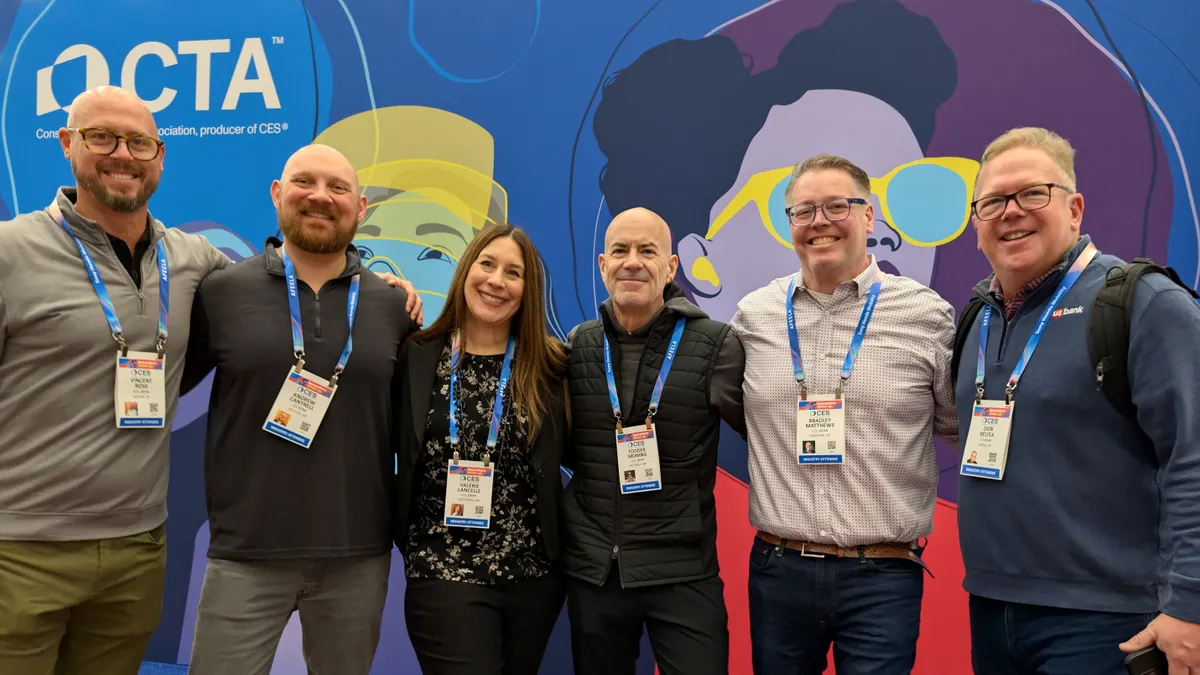
This year, Relyea brought along a digital risk vice president, which was “useful and fun,” and an old friend who’s a bank customer, which “made me think about things through a slightly different lens,” and afforded in-the-moment feedback on whether an innovation would appeal to a bank customer.
Editor’s note: This interview has been edited for clarity and brevity.
BANKING DIVE: What struck you at this year’s show?
DON RELYEA: AI was still the big theme this year. The thing that was most interesting about it: it was everywhere and in everything, but it wasn't always up front. We saw it in so many different form factors, everything from rings to credit cards, to sneakers, golf clubs, robots, robotic components.
There are little wearables that could be transcribing a call. While that consumer utility is going to be everywhere, it raises a lot of privacy concerns for individuals, as well as companies. When I think about our security folks, how are they going to be able to keep these rings and things out of secure areas? That's going to be a thing we're going to have to figure out.
Last year, we saw janky user interfaces with some of the AI stuff. This year, it’s definitely gotten to a better level of polish and interaction.
The other giant trend was robots and automation. This is the year of “rise of the robots.” And not all of them are ready for prime time. Some are only applicable for large-scale commercial applications.
The health, wellness and longevity tech is interesting. I can get all this information about my health. If you have money, you can basically invest in more to extend your life, and that's coming. What if you could look at your financial health and longevity and marry it up with your health timeline? So new tech comes out, OK, I'm going to live for another 20 years. What's the financial conversation that needs to happen there?
A friend who’s a customer was interested in being able to have a data-driven conversation with his portfolio in a graphical format, similar to what you can get with all of your health vitals. There's an opportunity for something interesting there, beginning to think holistically about health and financials and have a combined, data-driven conversation. Not all the data is there yet for this stuff, but I think it's coming.
Last year, you talked about the importance of not crossing the “creepy line” with AI-powered “do-it-for-me” tasks. Where does that stand a year later?
The market's definitely moving toward, “if an AI can automate something for me, I want that,” in the consumer space. It doesn't feel as creepy anymore to people, and I think it's just going to get less creepy.
My concern is, can we move fast enough to meet those expectations, which I think we can, but we've got to start early. We can test with actual customers, make sure that our hypotheses are accurate.
What are you most excited to talk through with your team?
The bank’s AI Center of Excellence came out of our group a few years back. We just launched our Digital Assets and Money Movement organization out of innovation this past fall. The team is now thinking about, what is the next big business unit or product features and sets that we can get another enterprise win like those we’ve had over the past five years? And while we didn’t find it, we found a lot of really good fishing holes, with tons of ideas. This one, we came back with a lot of work to do, to get these products and ideas to the next level.
I found companies that are going to save the innovation team money. And we found some great partners that are going to help us explain the value of some of the things that we’re doing better.
When we look across the team, we’ll probably have a dozen or so potential partners and opportunities we’ll vet. We found a bunch of interesting companies in the fleet technology space, where embedded AI sensors and the Internet of Things concept allows you to track the health of that physical asset, like a truck or rental car. The bank finances and insures these things, so there’s an assurance component to it: Are the assets still worth what we think they’re worth? Or did somebody drive it off a cliff and then refurbish it? So we’re bringing all that tech back to our fleet partners, as well.