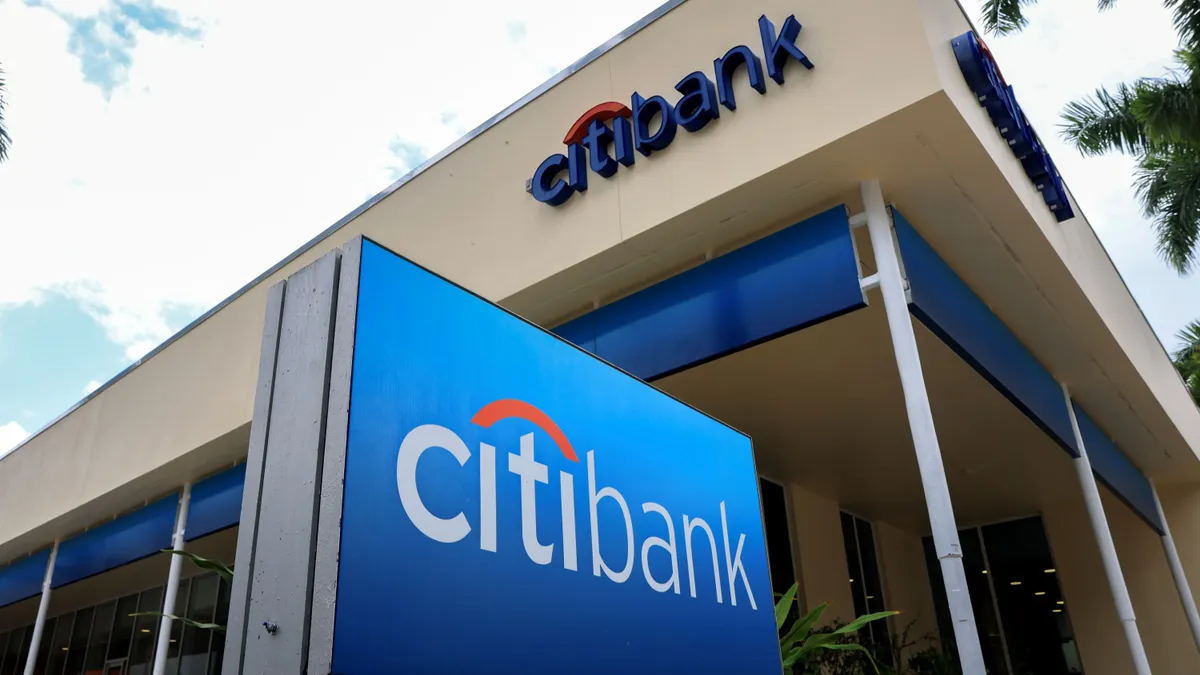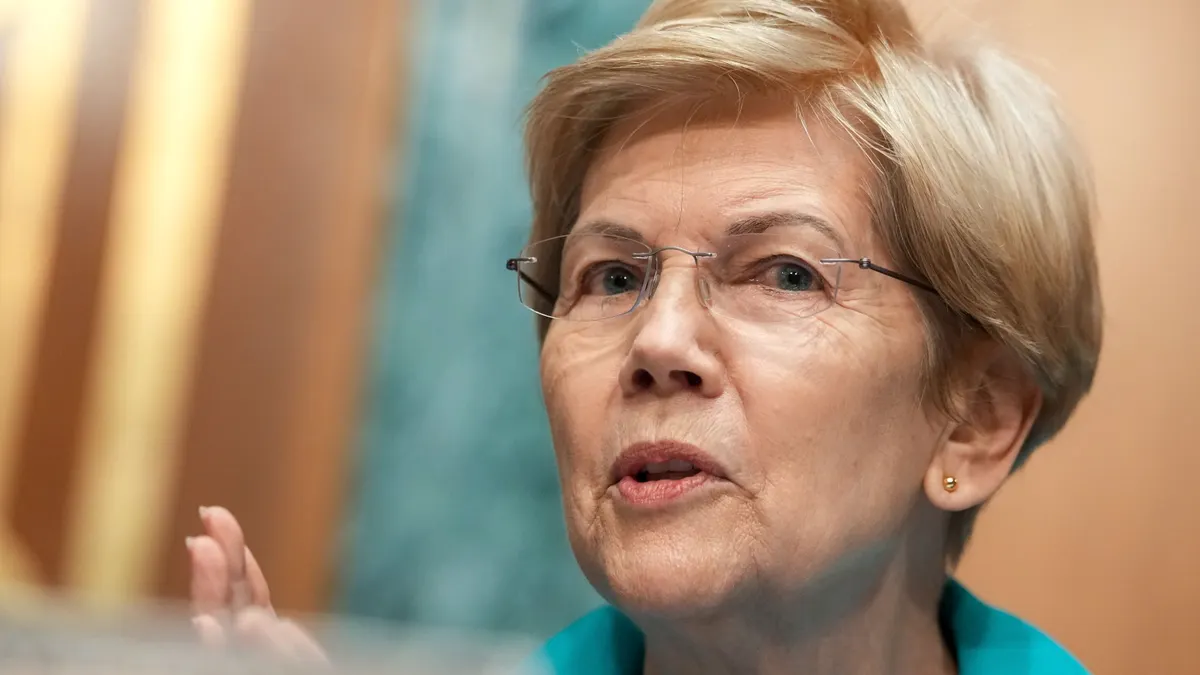
Sen. Elizabeth Warren, D-MA, asked Capital One CEO Richard Fairbank on Monday to give her copies of any correspondence between bank executive Brian Johnson and the Consumer Financial Protection Bureau – specifically regarding the agency’s decision to drop its lawsuit against the bank just a month after suing.
Johnson has been a vice president and U.S. card compliance officer at Capital One since November 2024 but previously served as deputy director of the CFPB during President Donald Trump’s first term, according to his LinkedIn profile. Johnson was nominated this month to lead the agency.
Warren also wants Fairbank to detail, by July 7, any advice Johnson gave Capital One internally about CFPB enforcement actions.
The CFPB in January 2025 – six days before Trump returned to the White House – sued Capital One, alleging the bank “cheat[ed] millions of consumers out of more than $2 billion in interest.”
At issue is a savings account offering that stemmed from Capital One’s acquisition of ING Direct USA in 2012. ING Direct offered a high-yield savings account, and following the acquisition, those account holders became 360 Savings account holders at Capital One.
Although Capital One touted the 360 Savings account as offering one of the nation’s “best” and “highest” interest rates, the bank lowered and froze the interest rate between 2019 and 2024, the CFPB said. Around the same time, Capital One rolled out an almost identical product, the 360 Performance Savings account, which offered a higher interest rate than the 360 Savings account.
At one point, the new account paid more than 14 times the 360 Savings rate, the CFPB said. But Capital One didn’t notify its 360 Savings account holders about the new offering, “and instead worked to keep them in the dark about these better-paying accounts,” the CFPB asserted.
The bank obscured that the new account was a distinct product with a higher rate than the legacy account, and “eliminated nearly all references” to the older product on its website and replaced them with references to the newer product. The bank also “forbade its employees from proactively telling” 360 Savings customers about the newer offering, the CFPB said.
A month later, however, the CFPB, under Trump-era leadership, dropped the lawsuit.
In May, New York Attorney General Letitia James sued Capital One over the savings accounts, essentially picking up where the CFPB left off. Days later, as Capital One’s acquisition of Discover was about to close, the bank agreed to pay $425 million in restitution to customers who held the savings accounts.
“Mr. Johnson’s role at Capital One, given the CFPB’s inexplicable and seemingly ill-considered decision to drop a major enforcement action against the bank, raises significant concerns related to his nomination, including questions about whether he was directly or indirectly involved in the enforcement action or in advising Capital One how to avoid responsibility for its alleged misconduct,” Warren wrote Monday.
Johnson’s nomination serves as his “second pass through the revolving door” between the CFPB and the financial industry, Warren said, and any information Fairbank can give will help the Senate Banking Committee “fulfill our responsibility to provide advice and consent about the president’s nomination.”
“Mr. Johnson is no stranger to the CFPB and its operations,” Warren wrote. “These details may inform potential recusal obligations [he may have].”
Warren asked whether Johnson, as a compliance officer, was “involved in any way, directly or indirectly, with assessments made regarding the legality of the allegedly false representations Capital One made regarding their 360 Savings account.”
Further, she asked whether Johnson had “any role in developing Capital One’s strategy to create a two-tier savings account structure,” or to “obscure the new product’s existence from current account holders.”
She asked for email correspondence between Johnson and any CFPB employees – particularly about the terminated lawsuit – and records of any meetings or calls between the executive and any bureau officials.
“It is critical for Congress to better understand the role Mr. Johnson may have played in the dropping of that lawsuit, given his prior role as Deputy Director of the CFPB, his current role as an executive at Capital One, and President Trump’s nomination of him to lead the CFPB,” Warren wrote Monday.