
Dive Brief:
- Wells Fargo’s investment and wealth management arm has launched an internal proxy voting system to reduce its reliance on third-party advisers during this proxy season, the bank announced Wednesday.
- The proprietary system for Wells Fargo Wealth & Investment Management’s client assets will be housed on a platform provided by global fintech Broadridge Financial Solutions, according to a press release. Broadridge’s system will support the administration of the service and vote processing.
- Wells Fargo becomes the second major asset management firm to ditch third-party proxy advisory services. Earlier this month, JPMorgan Chase announced it would switch to an internal artificial intelligence-powered tool to aid in its proxy voting decisions at U.S. companies.
Dive Insight:
Wells Fargo said the internal proprietary service has “investment discretion and proxy voting authority,” which the bank’s wealth and investment management team will lead based on custom policy and voting instructions, according to the release. The change comes after President Donald Trump issued an executive order in December targeting proxy advisers – namely Institutional Shareholder Services and Glass Lewis – for their diversity, equity and inclusion and environmental, social and governance policies.
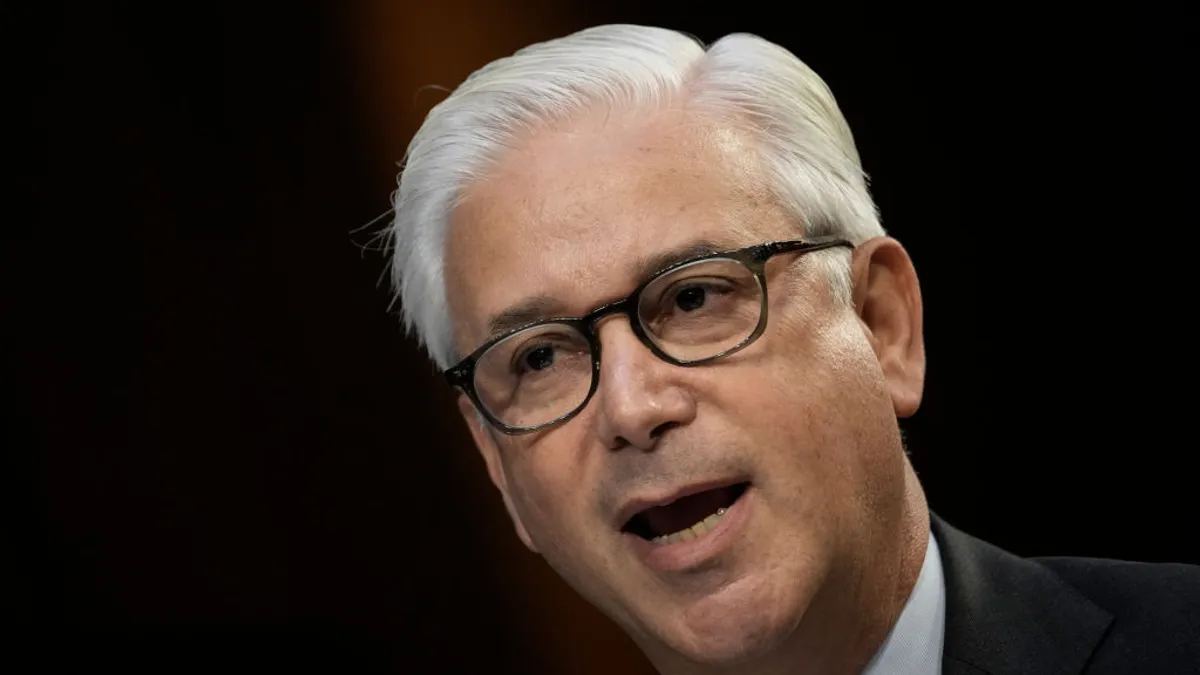
Darrell Cronk, chief investment officer of Wells Fargo’s investment management arm, said the internal proxy service sets “new standards for stewardship.”
“We recognize the vital role our clients play in the companies they invest in,” Cronk said. “Offering an in-house proxy voting service allows us to take more direct responsibility for our proxy voting approach and underscores our dedication to delivering the most innovative and effective solutions for our clients.”
Wells Fargo, which manages $2.5 trillion in client assets, said the internal advisory service is live and being used for the current proxy season. The bank believes it will streamline the proxy voting process, in addition to decreasing its reliance on outside advisers. Broadridge said the tool will deliver independent data and research and is able to execute votes.
Trump’s December order decried the influence of ISS and Glass Lewis and directed the Securities and Exchange Commission, Federal Trade Commission and Department of Labor to review whether proxy advisory firms should be required to register as investment advisers and if there is a “probable link” between the firms’ conduct and violations of federal antitrust laws.
Last year, Wells Fargo dropped its goal of pursuing net-zero financed emissions across its portfolio by 2025 and discontinued 2030 targets it set for sector-specific financed emissions. The bank’s decision to recalibrate its sustainability strategy came shortly after it exited the United Nations-backed Net-Zero Banking Alliance, a sector coalition whose members committed to aligning their financial activities with the aim of reaching net-zero emissions by 2050.