No financial institution has been punished by federal regulators for serving cannabis-related businesses, according to a report published this week by the Government Accountability Office.
The GAO also said it found “no indication” that banks or credit unions had been subject to civil or criminal penalties for serving such businesses. That’s based on interviews and focus groups with 74 financial institutions and 51 cannabis businesses, plus agency interviews and data from the Financial Crimes Enforcement Network.
Still, perceived regulatory risk is one of the reasons most banks still “just say no” to banking cannabis businesses, the GAO found.
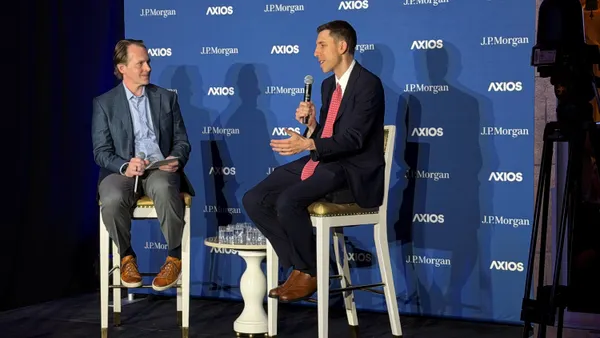
There’s an “uncertainty around … how the legal and regulatory environment around cannabis-related businesses is going to evolve,” particularly with respect to how state law and federal law differs, said Courtney LaFountain, the GAO director who led the report, which was published Tuesday.
Rather than highlighting a specific concern, cannabis-wary banks that participated in the GAO’s report had an “uncertainty” around “an amorphous situation,” said LaFountain – an evolving regulatory landscape.
“Maybe they wanted to see other banks’ experience, to make sure that the banking regulators really were going to behave the way they said,” LaFountain said in an interview. “It's a reasonable perspective to have on an uncertain landscape and a new potential business line.”
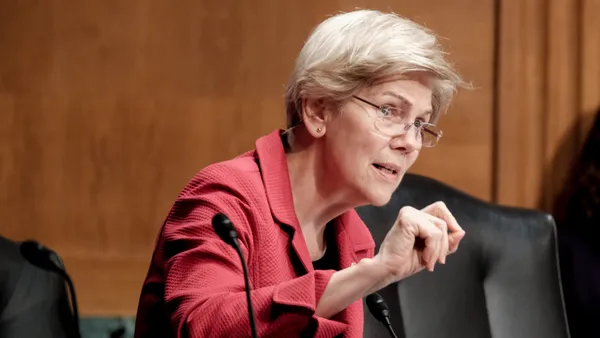
The GAO executed the report following requests from Sens. Raphael Warnock, D-GA, Elizabeth Warren, D-MA, Tina Smith, D-MN, and John Fetterman, D-PA, who sought information on the state of cannabis banking. Cannabis-related businesses have long struggled to access banking services due to the plant’s status as scheduled by the Drug Enforcement Agency.
Still, cannabis is legal in 41 states for medical purposes, and in 24 for recreation.
Roughly 1,000 banks and credit unions filed cannabis-related suspicious activity reports in 2024, according to FinCEN, representing about 11% of insured depository institutions nationally.
But that doesn’t mean all 1,000 accept cannabis companies as ongoing customers. Some may only serve these companies occasionally. Others may only serve ancillary businesses, rather than plant-touching ones.
Operational cost and compliance burden keep banks out of the cannabis business, too.
“One focus group participant said that their current staff levels are insufficient to begin serving CRBs due to the required onboarding and monitoring activities,” the report said.
Owing to these reasons, some banks charge cannabis-related businesses “high fees” to keep their bank accounts, representatives of these businesses told the GAO. Participants in seven of eight focus groups argue that banks require monthly or annual account fees, with two participants saying that they pay upward of $100,000 per year.
The GAO didn’t unpack the $100,000 figure, LaFountain said. But banks told the agency that serving cannabis-related businesses costs more, she said, in part because of added due diligence.
“Consistent with these reports, participants in all focus groups with institutions that serve CRBs said their institutions charge CRBs higher fees than other types of customers,” the report said.
Some banks told the GAO they choose to serve cannabis-related businesses with community need in mind.
“[O]ne participant noted that reducing the amount of cash CRBs hold would improve public safety, while another expressed a desire to meet local businesses’ demand for financial services,” the report said. “Another participant noted that their institution’s state regulator suggested that it serve CRBs because those businesses were having difficulty accessing banking.”
Some banks cited financial opportunity and other business considerations. One financial institution chose to continue serving existing customers who entered the cannabis sector rather than close their accounts, the report said. Another banker saw serving such businesses as “inevitable given the prevalence of these businesses in their communities.”
What needs to change?
There is no silver bullet that would get more banks to work with cannabis-related businesses overnight, LaFountain said. Some institutions told the GAO outright they won’t touch the sector until it’s fully descheduled.
Others said that they’d prefer cannabis be rescheduled to a Schedule III. (Cannabis now has a split schedule, with medical cannabis products classified as Schedule III but recreational ones designated Schedule I.)
Still other respondents said safe harbor protections for financial institutions would move the needle.
Of the options, it’s “hard to tell how big” their effects will be, LaFountain said. But until changes are made, cannabis-related businesses are navigating a bumpy road. Participants in all focus groups reported access issues, like account closures, and high bank account fees. Participants in seven of eight reported timeliness issues in opening a bank account.
The roadblocks impact lending as well, as cannabis-related businesses turn to nontraditional lenders and private investors when banks won’t lend to them. Multiple focus group participants told the GAO that “potential investors structured contracts in ways that could allow them to take control of the business.”
Employees of these businesses also faced trouble. The GAO didn’t focus too much on employee experience, but “we learned some things,” LaFountain said, and “we don't want to leave the employees out of the story.”
Employees of cannabis-related businesses face challenges getting a bank account or accessing financial tools based on their source of income, the GAO found.