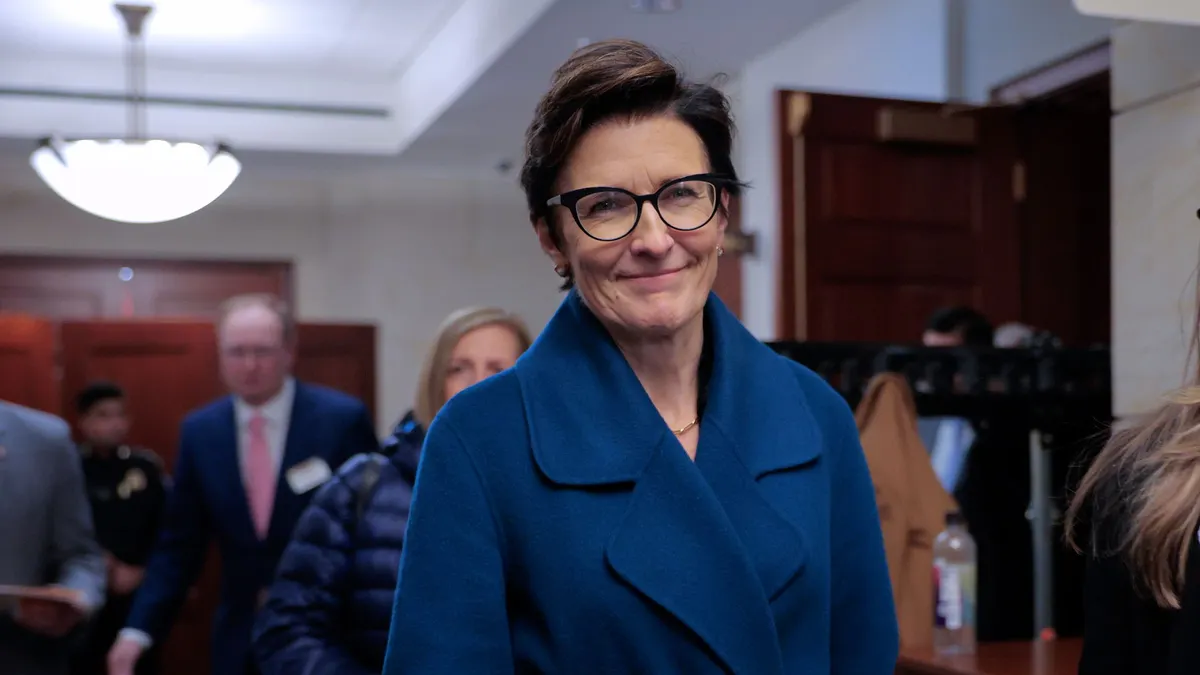
Citi CEO Jane Fraser sought to be “crystal clear” Tuesday in rejecting reports the bank is interested in making an acquisition.
“We are only interested in and focused on organic growth,” Fraser said during the bank’s first-quarter earnings call. “Period, end of story. For the whole firm.”
The bank has sizable organic growth opportunities across all five of its businesses, and “that is what we’re focused on,” she said.
“If you walk away from this call thinking of nothing else, let it be this: Citi has a lot of momentum. And we’re not going to be distracted from it,” she said.
Fraser was asked about Citi’s M&A aspirations in the wake of a late March Bloomberg report that the New York City-based bank is interested in acquiring a U.S. regional bank to bolster its deposit base.
Citi has about 650 branches across the U.S. and a deposit base of about $284 billion across retail and wealth, Fraser said Tuesday.
Late last year, the $2.7 trillion-asset lender said it would integrate its retail bank into its wealth segment. Citi aims to “continue improving its profitability and its performance and realizing the synergies between [retail] and wealth, organically,” Fraser said.
When an analyst asked for confirmation that Citi is not mulling a deal and that the idea is definitively off the table, Fraser reiterated her desire to be “crystal clear.”
“We are not interested in anything other than organic growth,” she said.
The M&A question has been top of mind recently, since the probability of a sizable bank deal gaining regulatory approval has increased materially, while the time to secure approval has dropped. That’s led to increased speculation that big banks may pursue acquisitions while they can.
The topic also came up during Wells Fargo’s first-quarter earnings call Tuesday. Analysts have speculated Wells could see a window of opportunity to do a deal, which the bank’s CEO, Charlie Scharf, acknowledged in December. The bank doesn’t feel pressured to make an acquisition, he said, but that “doesn’t mean that we’re not thinking about M&A,” given regulators’ openness to sizable deals.
On Tuesday, however, Scharf indicated that there's more chatter around the idea than there are real conversations on the part of the bank's executives.
“We spend more time answering the questions about it than we do actually thinking about doing deals,” Scharf remarked.
He emphasized that Wells is focused on growing organically. He wouldn’t write off the acquisition possibility entirely, but “we’re not spending time on it. We’re not focused on it.”
And PNC CEO Bill Demchak, during the bank’s first-quarter earnings call Wednesday, said “the noise and activity levels” on M&A seem “to have died down.”
“I just don’t think there’s going to be a lot of activity, particularly with us,” Demchak said. “We’re focused on growing our company organically.” PNC last year acquired Colorado-based FirstBank for $4.1 billion.
The Citi deal chatter comes as the bank inches closer to completing its multiyear transformation work. The lender is about 90% done with that effort and has begun reducing spending on it, Fraser said Tuesday. Remaining work is mainly related to data use in regulatory reporting, she said.
Citi has been working to address data, risk and control deficiencies regulators have flagged; bank executives are optimistic that work needed to satisfy consent orders will be completed this year, Reuters reported in February.
For each major body of work, Citi has defined a target state and the work needed to get there. The lender is at or nearly at target states for all areas except its data programs, Fraser said.
Once the bank has reached a target state, an independent audit team must validate the work before it’s handed over to the bank’s regulators. Regulators make their own assessment and move through their closure process when satisfied with the work, she said.
“Let's be very clear: they control the timeline,” Fraser said. Bank executives plan to share more details on transformation benefits at the company’s May investor day.
Echoing some of JPMorgan Chase executives’ comments earlier Tuesday, Fraser also indicated Citi would speak up on recent Basel III and global systemically important bank surcharge proposals. The re-proposal doesn’t fully account for significant economic growth that’s occurred since the original framework was created, so “we’re going to be very active in advocating for that” with regulators, Fraser said.
Additionally, “material duplication” remains among the re-proposal and the current stress capital buffer as it relates to operational and market risk, she said, adding that Citi’s risk profile has evolved.