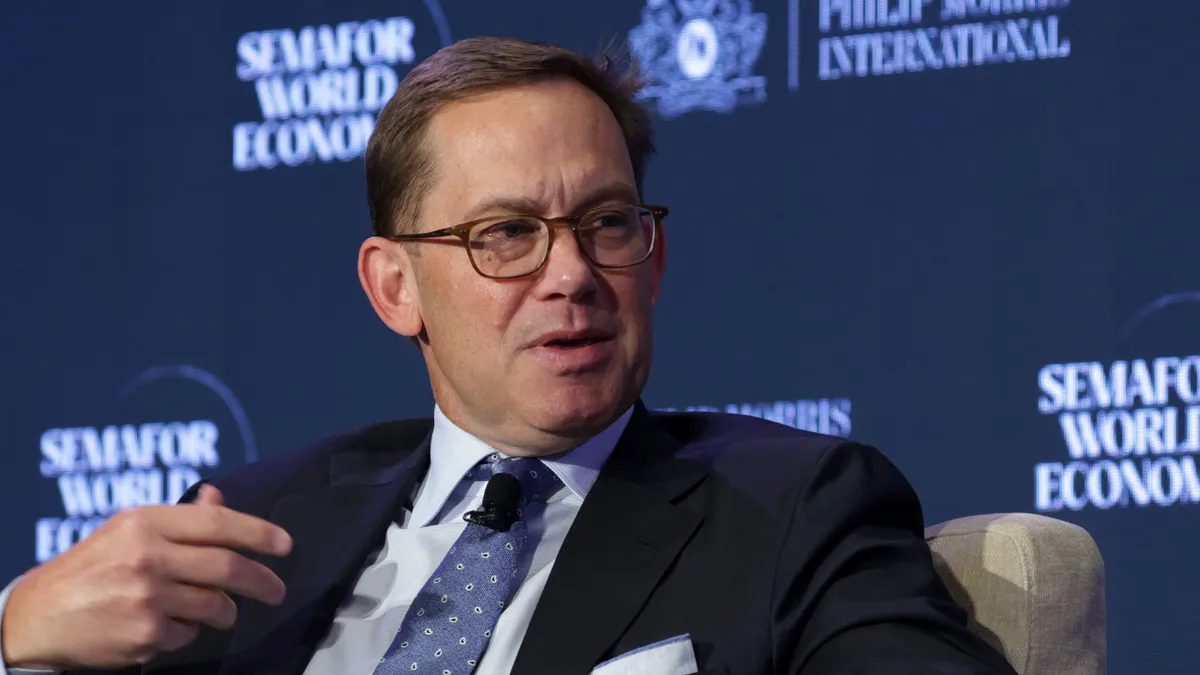
Establishing proprietary rights over its technology platform and artificial intelligence system give Flagstar Bank optionality, said Chris Higgins, the lender’s chief information and operations officer.
After a technology modernization overhaul, the $87 billion-asset lender said last week it has applied for a branding trademark for its enterprise technology transformation platform, dubbed Flagstar S2 Platform, for “simple and sophisticated.”
S2 is the product of the bank’s tech effort to swap the Flagstar and New York Community Bank infrastructures with one modern foundation.
Flagstar has also filed for a provisional patent application for StarIQ, its proprietary generative AI system. Rolled out earlier this year, StarIQ is a component of the S2 platform and was built for the regulated bank environment, with security and compliance at the forefront, Higgins said. It leans on multiple large language models including Anthropic’s Claude, Meta’s Llama and French company Mistral.
The Hicksville, New York-based company’s pursuits go beyond legal defensibility, and show the market, regulators and customers that Flagstar is building something modern and unique, Higgins said in a recent interview.
The bank noted StarIQ “was built specifically for regulated financial services environments.” When asked whether the S2 platform may become a revenue stream itself, if Flagstar licenses it to other lenders, Higgins declined to comment, but said his job is “to create optionality.”
“When we say [we want to drive] accretive business outcomes, we're very commercially minded. We're very selective, we're very disciplined in the product, services and partners we select,” he said.
There’s no shortage of competition in that arena. Capital One, for one, built technology for its own use before commercializing it to sell to other banks and businesses.
Flagstar may pitch its technology to smaller banks without the resources to build such platforms and tools, said Mike Kirk, a senior director at financial services advisory and investing firm Klaros Group.
“I have always thought an industry solution to this problem is the only viable solution for community and de novo banks,” Kirk said in an email. “If successful, it may also boost [Flagstar’s] multiplier, as investors prefer fee income to other sources because it's more predictable and stable.”
Lenders are racing to secure AI patents, with patents filed by major banks rising 78% over the past 10 years, according to Evident AI. Still, just three banks – JPMorgan Chase, Bank of America and Capital One – are responsible for about three-quarters of all patents, the firm said.
Digital bank Ally last year rolled out a proprietary AI platform to its employees. The platform’s embedded banking controls enable the eradication of personally identifiable information.
Flagstar’s StarIQ patent application is titled “Techniques for Secure Enterprise Generative Artificial Intelligence Orchestration.”
Higgins declined to detail the size of the investment Flagstar has made in S2 and StarIQ, although he said “it’s significant for a company of our size.”
The bank’s first-quarter software expense rose 12% year over year, to $47 million.
“When I joined Flagstar, it was for the intent purpose of recruiting an exceptional technology team to, honestly, rebuild the bank,” said Higgins, who worked at U.S. Bank, MUFG Americas and Bank of America before joining Flagstar in October 2024.
Once he landed at Flagstar, colleagues he’d worked with at other banks called, saying “you're reassembling the band; we want to come and play,” he said.
The bank declined to comment on the number of hires Higgins has brought on.
More lenders may pursue a similar proprietary tech path “if they can recruit the talent,” Higgins said.
The bank’s security focus is based on the caliber of talent Higgins said he recruited from bigger banks. Flagstar’s approach to build from the ground-up – rather than turn to vendors or third parties – differs from other banks of its size, he said.
“The doors are locked, the windows are sealed, the alarm systems are on. It’s protected,” Higgins said. “It's really around the protection of customer data and information, so we really wanted to have a very safe, highly controlled space.”