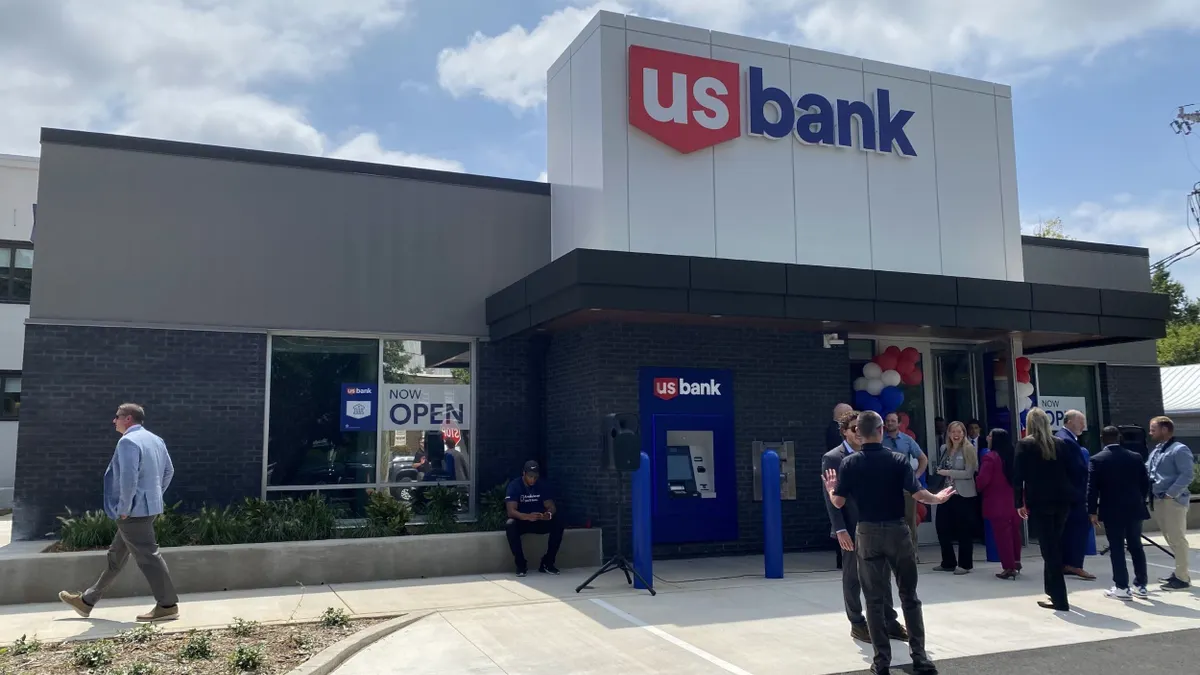
As banks battle for deposits, U.S. Bank is leaning into a particular product suite to woo Gen Z customers.
Gen Z thinks about banking as “the place where they have their primary payment vector,” which might be a peer-to-peer payment platform or a credit card, rather than where they have a checking account, said Arijit Roy, the Minneapolis-based lender’s head of consumer and business banking products.
“They identify with banking almost with their payments vehicle as the lead-in,” he said. That’s inspired the bank to make its Bank Smartly credit card quick and easy to apply for and tie it to other products so customers are incentivized to do more with the lender.
The super-regional launched its Bank Smartly checking account in 2022. A Smartly savings product and credit card followed in 2024, and the savings offering has amassed nearly $50 billion in deposits since then, CFO John Stern said at an investor conference last month.
CEO Gunjan Kedia, at that same conference, said U.S. Bank has been intent on improving the quality of its deposit base, cultivating deeper relationships and appealing to all generations of consumers.
With Smartly’s spend-and-save combination, the $700 billion-asset bank is betting younger generations will also be drawn to the ability to access rewards sooner, not just after reaching an affluent tier or depositing a large sum, Roy said.
U.S. Bank sees “a fair amount of halo” for users who pay off their credit card balances rather than letting them revolve, Roy said in a recent interview.
“People may not be switching their primary checking relationship to us, but because they transact on the card and they’re paying off their balances on a pretty regular basis, they’re actually parking more balances in the Smartly checking account,” Roy said.
Since U.S. Bank doesn’t pay any interest on those accounts, it’s cultivated a low-cost funding base, he said. “You've got highly engaged clients that are unlocking their reward structure by bringing more deposits in, where we don't have to pay up on high rates,” he said.
In the first quarter, the bank’s average consumer deposits rose 2.7% year over year, although they remained flat quarter over quarter, at $270 billion.
The Smartly products are giving the bank a leg up over peers, “to weather deposit wars that everybody’s running into, by having a liquid product,” Roy said.
He said the lender is attracting younger customers and has seen a reduction in its cost of acquisitions, although the bank declined to provide figures around either, or detail any growth targets related to Gen Z retail customers. A bank spokesperson pointed to partnerships with a few dozen colleges and universities as an avenue to connect with Gen Z.
Still, U.S. Bank is “deliberately not planting a flag and saying we're going after a segment,” Roy said. “We're a lot more focused on being multi-decade in nature,” and the bank wants to attract and retain customers for the long haul, he said.
Of course, U.S. Bank faces fierce competition from other lenders and fintechs, particularly in courting younger customers. Peer-to-peer payment player Cash App seeks to expand its relationship with customers, as do fintechs and buy now, pay later firms including Chime and Klarna.
Whether U.S. Bank’s products are sufficient to compete with fintechs is a frequent topic of conversation within the bank, Roy indicated.
“We have a lot of debate on this topic internally,” he said. “It’s something that we pay a lot of attention to.”
Fintechs have taught banks to be client-centric and “relentless about making it as seamless as possible for clients to engage,” and banks still have work to do there, he said.
But banks have trust and longevity on their side, he asserted, which sets them apart from “a group of individuals whose credo is ‘move fast and break things.’”
Plus, many fintechs have succeeded with just one solution, rather than a comprehensive roster, Roy said.
One way U.S. Bank keeps the pulse on what customers want: Within its app, clients can state a money-related goal, such as saving for a wedding, and the lender uses that information to consider what may be of strongest interest to its customers.
“This has been particularly helpful as we’ve leaned into Gen Z,” Roy said. With different products and features typically competing for capital expenditures, the bank uses such client intel to organize its to-do list.
“Is it more helpful for them to use insights to get better with cash flow prediction on an everyday basis, or are they seldom going to that particular app or tile on the screen because they feel very confident and they never think that they're going to have any issues with cash flow?” he said. “That type of thing is what helps us be a little bit more granular in how we think about prioritization of new features.”