Pittsburgh may soon be home to its first de novo bank in roughly two decades.
A group led by former BNY executive Brian Tabb is seeking federal approval to establish Sagehaven Bancorp, a proposed community bank focused on small and mid-market companies and mid- to high-net-worth individuals in Pittsburgh’s central business district.
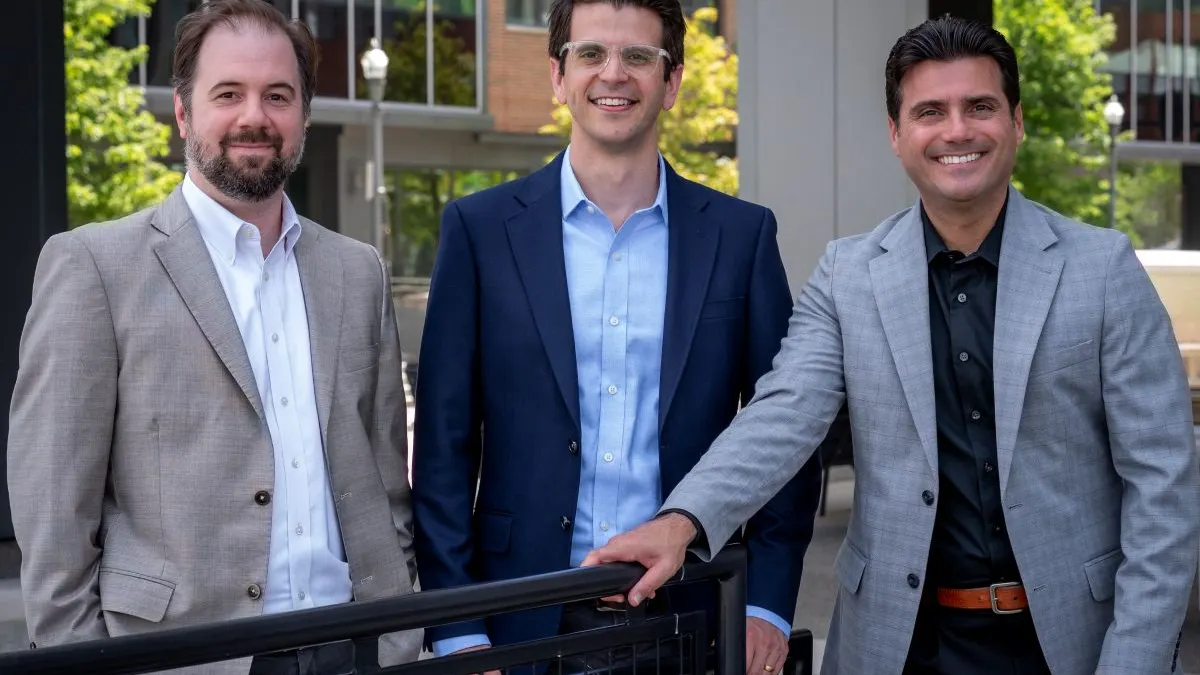
Tabb, who departed BNY as its SVP of corporate treasury in March, is the proposed bank’s CEO. Former BNY and Huntington executive Angelo Innamorato and former Houston Harbaugh partner Jared Leland will work alongside Tabb, as chief operating officer and chief counsel, respectively.
The Steel City, as the home to PNC headquarters and BNY’s largest U.S. office, has long been a banking hub. For Tabb, locating Sagehaven in Pittsburgh is personal. He's not originally from the city, but it's become home.
“I really, truly want to immerse myself in this community and make an impact across this community, particularly given that my daughters are going to be raised here,” he said in an interview with Banking Dive.
What appeals to Tabb about banking, he said, is “the level of impact you could have.”
Starting a new bank enables Tabb’s team to employ modern rather than legacy technology, which is like “entering at mile 20 of a marathon instead of mile two,” he said.
The decision to opt for a national charter over a state charter was geographic. Pittsburgh is close to Ohio and West Virginia, and somewhat close to upstate New York. Prospective clients have business in multiple states, Tabb said.
“I don’t want to close the door on anyone,” he said.
Under Comptroller Jonathan Gould, the Office of the Comptroller of the Currency has seen (and welcomed) an uptick in de novo applications. Last year saw a total of 18 applications, as much as the prior four years combined. The OCC has received more than two dozen charter applications so far this year. Several have been granted.
But Tabb said the OCC’s recent shift in chartering had no impact on his decision to apply for a charter.
“We're starting a community bank. We're not necessarily really going into any of these niche products, like digital assets,” he said. “But I think the timing of all of this is helpful because the regulators are sticking to a 120-day [window in] making the decision on whether it needs improvement or whether the conditional approval happens.”
Regulators' faster decision-making is a positive in Tabb's eyes.
Spending the past four years at BNY was “absolutely instrumental” in developing the skills and confidence to be able to start a bank, he said. “I couldn't see myself doing it any earlier.”
BNY CEO Robin Vince is a major proponent of artificial intelligence, in October calling it “for everyone, everywhere, everything at BNY.”
BNY’s focus on AI heavily impacted Tabb, he said.
“It was ingrained in our everyday life at BNY. [Now it’s part of] how we can make things more efficient, more seamless, instrumental, and how we're launching and thinking about our strategy for a much, much, much smaller scale, at least initially outside the gate,” he said of Sagehaven.
Tabb, who submitted Sagehaven’s application to the OCC and the Federal Deposit Insurance Corp. on Tuesday, aims to open the bank in April 2027.
An FDIC spokesperson confirmed the agency’s receipt of Sagehaven’s application for deposit insurance.
Sagehaven's charter application was not yet posted on the OCC's website Thursday. An OCC spokesperson did not immediately respond to a request for comment.