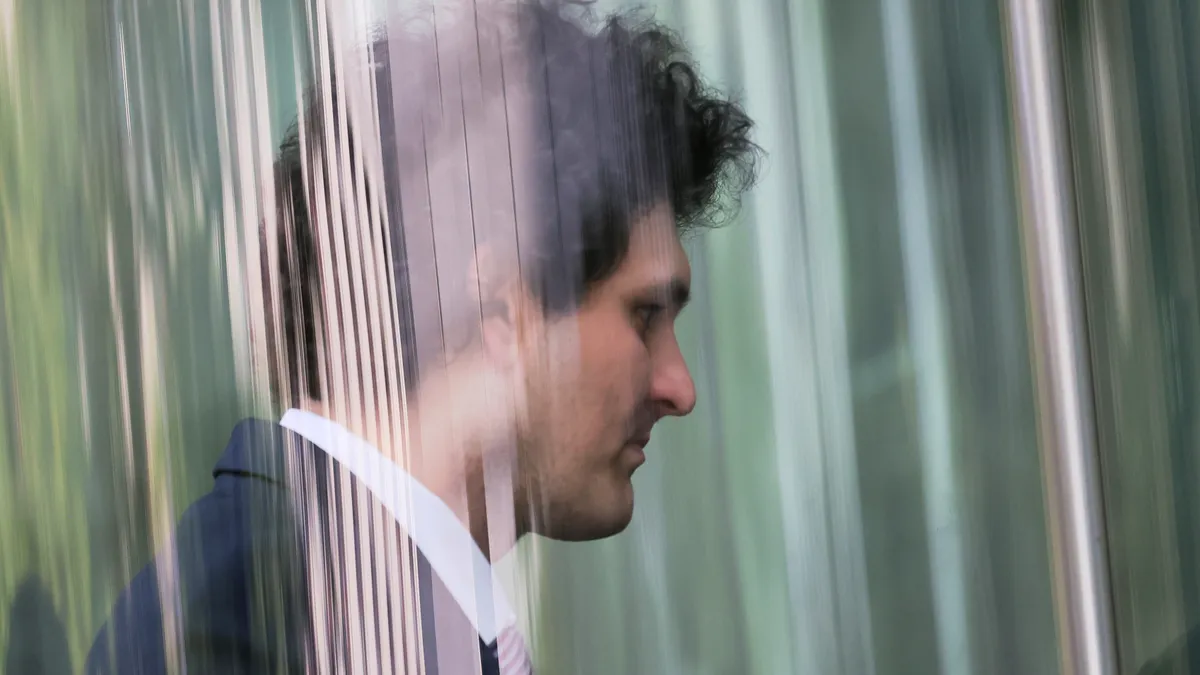
Former FTX CEO Sam Bankman-Fried is seeking a new trial, roughly two years after he was convicted of seven counts of fraud in connection to the crypto exchange’s 2022 collapse.
“Mr. Bankman Fried's trial was fundamentally unfair because the jury only got to hear one side of the story — the prosecution’s side, which was demonstrably false,” said Alexandra Shapiro, his attorney, in front of a panel of appellate judges Tuesday.
“In a series of evidentiary and procedural rulings, the district court deprived Mr. Bankman Fried of the most basic principle of due process, the ability to rebut the government's case and present his defense to the jury,” she said.
The government’s principal theme at trial, Shapiro noted, was that customers and lenders were forever out billions of dollars.
“This was false, but it was an extremely powerful story with moral force and undoubtedly had great impact on the jury's judgment,” she said, and it applied to what the Supreme Court calls “the human significance of what happened.”
The prosecution was allowed to present a “morally compelling” — but false — tale, according to Shapiro. Creditors are ultimately set to receive more than they lost.
Additionally, Shapiro said that Judge Aaron Kaplan forbidding Bankman-Fried from mentioning attorney involvement in certain aspects of business was unfair. Had he been able to discuss that, jurors would have had a fuller picture of his decision making and actions while at FTX’s helm, Shapiro suggested.
The judges were skeptical of her assertions, however.
“Are you seriously suggesting to us that if your client has been able to testify about the role attorneys played, the ‘not guilties’ would have rolled in?” said Judge Barrington Parker, one of the judges on the appellate panel.
Ryan Lee O’Neill, a white collar criminal defense attorney at Stevens & Lee in New Jersey unaffiliated with the trial, said it’s important to know that courts “allow some unfairness in trial.”
“The best analogy I can use for this is, if you just ran a race with your buddy and he goes, ‘You know, that race was unfair. I should have won that race. You shouldn't have won, because I had to stop and tie my shoes.’ And you say, ‘But I beat you by two miles. It’s maybe slightly unfair that you had to stop, but I beat you by two miles. I would have won anyway,’” O’Neill said. “A lot of what the judges were getting at with Ms. Shapiro, over and over again, was, ‘OK, but do you really think the jury would have come back with a different answer?’”
The standard for fundamentally unfair, O’Neill said, is “a really, really high bar.”
“We don't want to be retrying cases for small errors,” she said.
The judges have six months to reach their decision. O’Neill expects they may deliver one as early as next week. Successful criminal appeals are rare, however: between 2011 and 2015, roughly 6% of federal criminal appeals succeeded.
Last spring, Bankman-Fried was sentenced to 25 years in federal prison for his crimes.
Federal prison does not offer parole. However, it does offer 54 days per year off one’s sentence for good behavior, meaning Bankman-Fried could potentially shave more than three-and-a-half years from his sentence.