Following the conditional approval of a national trust bank partially owned by the Trump family, lawmakers unveiled a bill intended to thwart “presidential corruption in banking.”
Nine Senate Democrats and one independent senator said the Ending Presidential Corruption in Banking Act would “ensure that no President, Vice President, their immediate families, or other senior government officials can exploit their positions to own or control a bank.”
The bill was introduced Saturday, one day after the Office of the Comptroller of the Currency approved World Liberty Financial’s application to create World Liberty Trust Co., a national trust bank.
The OCC took more than seven months to conditionally approve World Liberty’s charter application, well outside the 120-day window the agency aims for, according to its handbook. Several other national trust charters have been conditionally granted in that time. None, however, were partially owned by the president or members of his family.
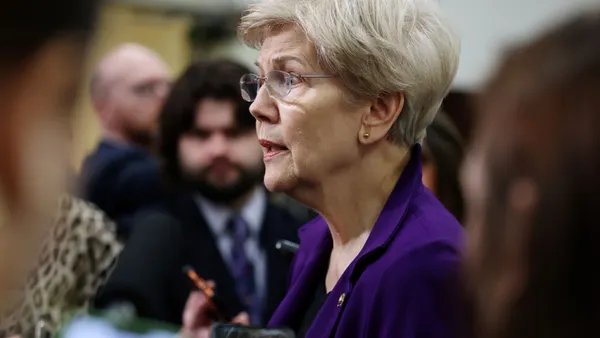
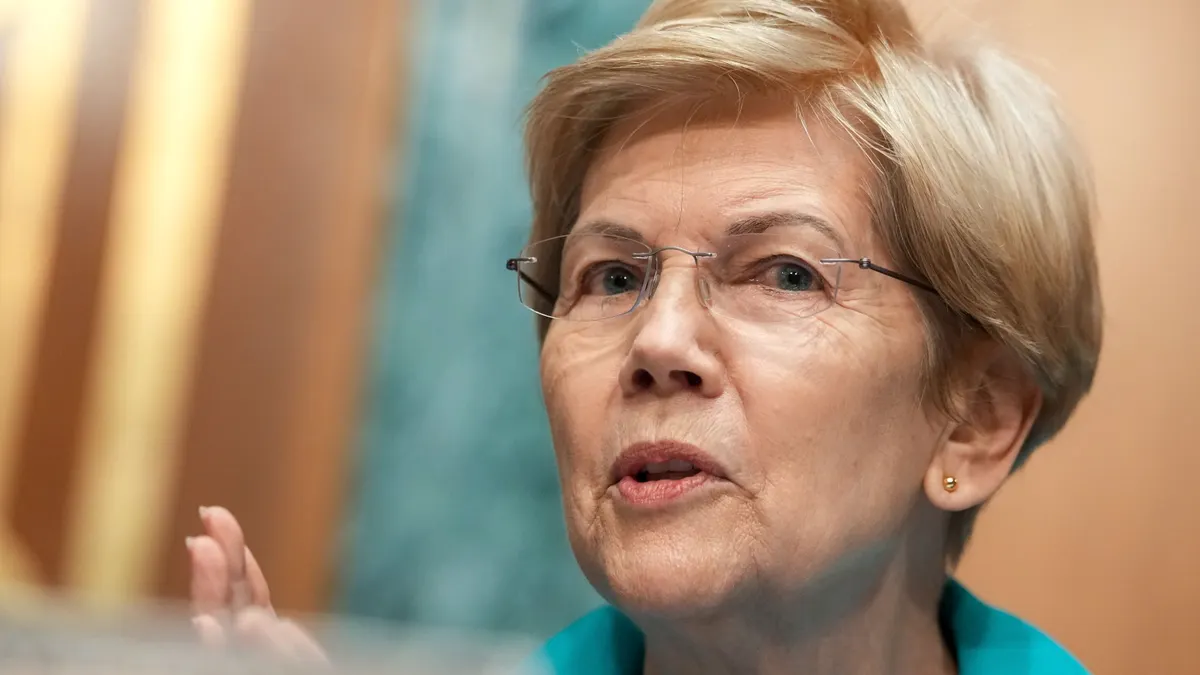
“President Trump is now the first President in history to approve, operate, and supervise his own bank,” Sen. Elizabeth Warren, D-MA, said in a prepared statement. “This is the most brazen act of self-dealing our financial system has ever seen — and Congress cannot allow it to stand. The Ending Presidential Corruption in Banking Act will close the door on this kind of unprecedented corruption.”
Sens. Chris Van Hollen, D-MD; Angela Alsobrooks, D-MD; Chris Murphy, D-CT; Bernie Sanders, I-VT; Richard Blumenthal, D-CT; Jack Reed, D-RI; Andy Kim, D-NJ; Tammy Duckworth, D-IL; and Ruben Gallego, D-AZ, also sponsored the legislation.
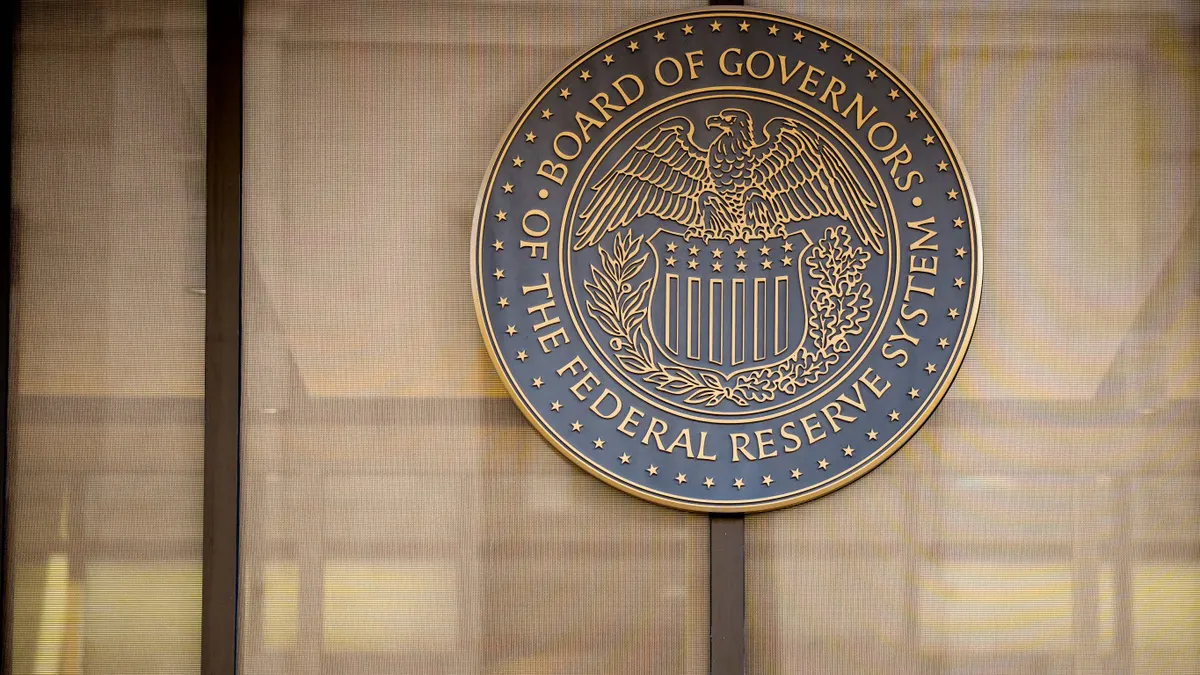
Under the proposed bill, the Federal Reserve Board, Office of the Comptroller of the Currency and Federal Deposit Insurance Corp. would be prohibited from approving banking applications, including charters, deposit insurance and master accounts if the applicant is owned or controlled by the president, vice president, a spouse or child of the president or vice president, a member of Congress, a presidentially appointed executive branch official or a special government employee.
The bill would require agencies, within 60 days of enactment, to review all banking applications granted after Jan. 20, 2025, terminating applications that fall under the previous description.
“[President] Trump’s hand-picked regulators at the Treasury Department have granted World Liberty Financial a banking charter,” Blumenthal said in a prepared statement. “This latest act of self-dealing puts our banking system in danger by legitimizing a company that has proven to be unscrupulous. Our measure would strengthen the integrity of our banking system by barring Presidents, their families, and other trusted government officials from controlling their own banks while in office.”
In February, Warren pressed Comptroller of the Currency Jonathan Gould on the OCC’s consideration of World Liberty’s charter application.
“If you follow the law, you will reject the president’s application,” Warren told Gould during a Senate Banking Committee hearing. “As soon as you approve that application – and we all know you’re going to approve it – you go from being a cheerleader for President Trump to an accomplice in his corruption.”
The Trump family owns 38% of World Liberty, Reuters reported, citing the company’s website. Nearly half – 49% – is owned by an investment firm in the United Arab Emirates, The Wall Street Journal reported in January.
Warren, the Senate Banking Committee’s ranking member, pressed Gould on the UAE firm’s ownership, asking if World Liberty disclosed in its charter application that the UAE company was a principal shareholder in the proposed trust bank. Gould declined to discuss the application’s details.
Graham Steele, the former assistant secretary for financial institutions at the Treasury Department, criticized the OCC’s decision in an email to Banking Dive, calling it “a move that would be considered a major scandal in any other administration.”
World Liberty’s chartering is “rife with conflicts of interest, presents obvious risks of corruption, and creates an unlevel playing field for honest businesses who aren't connected to — or don't want to pay off — the President and his family and friends,” Steele said.
A spokesperson for World Liberty pushed back on the evaluation, Newsweek reported.
“Critics are missing the point: World Liberty Financial is running towards regulation and continuous oversight, not away from it,” David Wachsman said. “World Liberty Trust Company's national charter will ensure robust and permanent regulatory supervision from the OCC, a federal banking regulator, that will outlast the Trump administration,”
Michele Alt, co-founder of regulatory consultancy Klaros Group and an OCC alum, called the conditional chartering “big enough news that not even a Friday in August announcement can obscure,” in an email to Banking Dive.
“Observers will be scouring the WLF application and approval and comparing them to the recent OCC denials of Wise and Bunq,” she said. “The comparisons among the proposed banks’ capitalizations, management teams, regulatory histories, and paths to profitability will be very interesting.”
On Warren’s legislation, Alt said the chances for passage seem “dim.” But it “may be a preview for what legislative oversight of the banking agencies could look like after the midterms.”