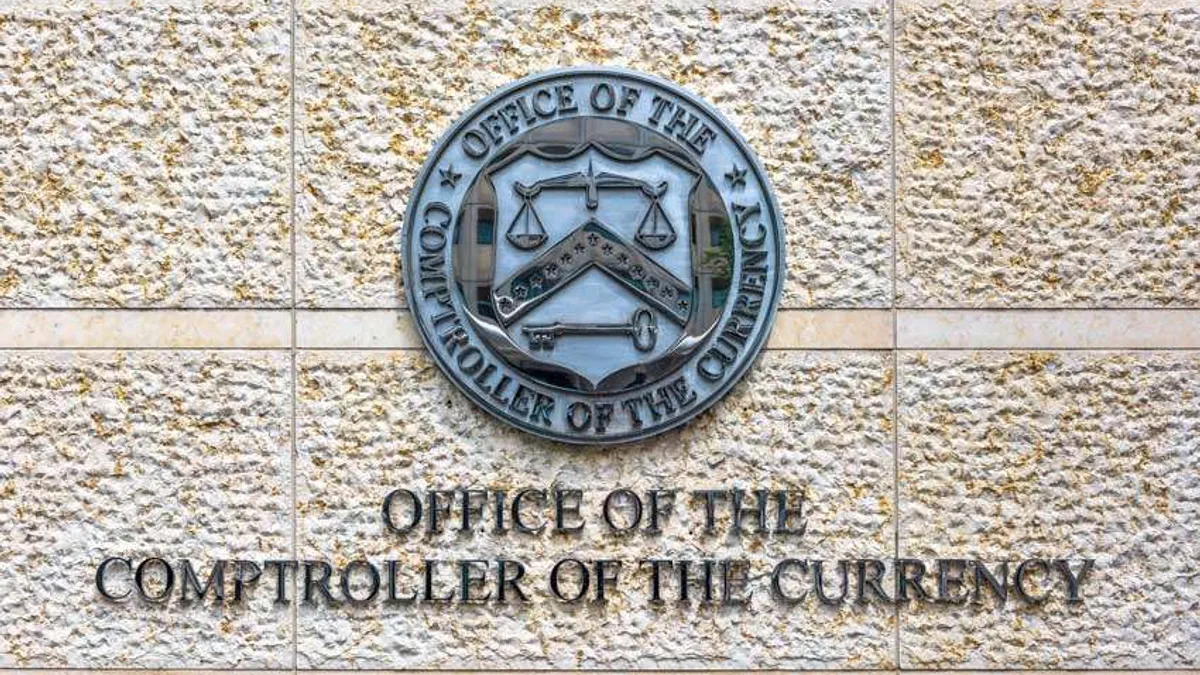
Mission Lane has applied with the Office of the Comptroller of the Currency for a credit card bank charter, according to a filing seen Monday on the social media platform X.
The company is targeting “an estimated 70 million Americans geographically dispersed across the country who are systematically underserved by traditional financial institutions and have a demonstrated need for affordable access to credit,” according to the filing.
Mission Lane plans to “enhance competition in the target market by providing credit marginalized consumers with fair, transparent and affordable credit card options,” the company said, by offering “a diversified suite of credit card products tailored to consumers at different stages of their credit journey.”
The credit card bank charter is a relatively seldom-used cousin of the industrial loan company charter. Both were created through the Competitive Equality in Banking Act of 1987. But, unlike the ILC, which has seen an uptick in popularity in recent years, no company has applied to become a credit card bank in roughly 20 years, according to Klaros Group co-founder Michele Alt. Klaros acted as an adviser on the Mission Lane application.
Like ILCs, credit card banks avoid supervision by the Federal Reserve.
CEBA charter holders may not accept demand deposits or savings or time deposits of less than $100,000 unless they are used as collateral for secured credit card loans.
They also may not make commercial loans other than credit card loans offered to small businesses.
The national nature of the charter, though, allows them to affix home state interest rates to credit card loans offered to customers in any state.
The charter would also let Mission Lane originate and hold loans, cutting out middlemen such as partner banks. TAB Bank and WebBank act as Mission Lane’s sponsor banks. Visa is its card network.
Mission Lane is also applying for deposit insurance through the Federal Deposit Insurance Corp. The company plans to establish its bank offices in Richmond, Virginia, but will not open any other branches, according to the filing seen Monday.
The charter application shines a light on yet another avenue allowing companies to reach de novo status. Since President Donald Trump retook office more than a year ago, both the OCC and FDIC have emphasized the need for new banks, as means to boost competition.
Much of the charter activity in recent months has centered on a surge of national trust banking applicants, though traditional national banking charters and ILCs have seen upticks in interest, too.