Dive Brief:
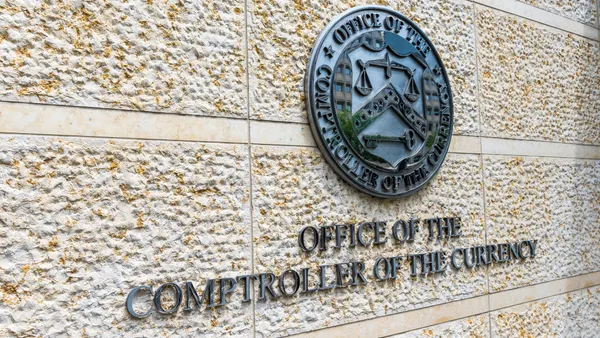
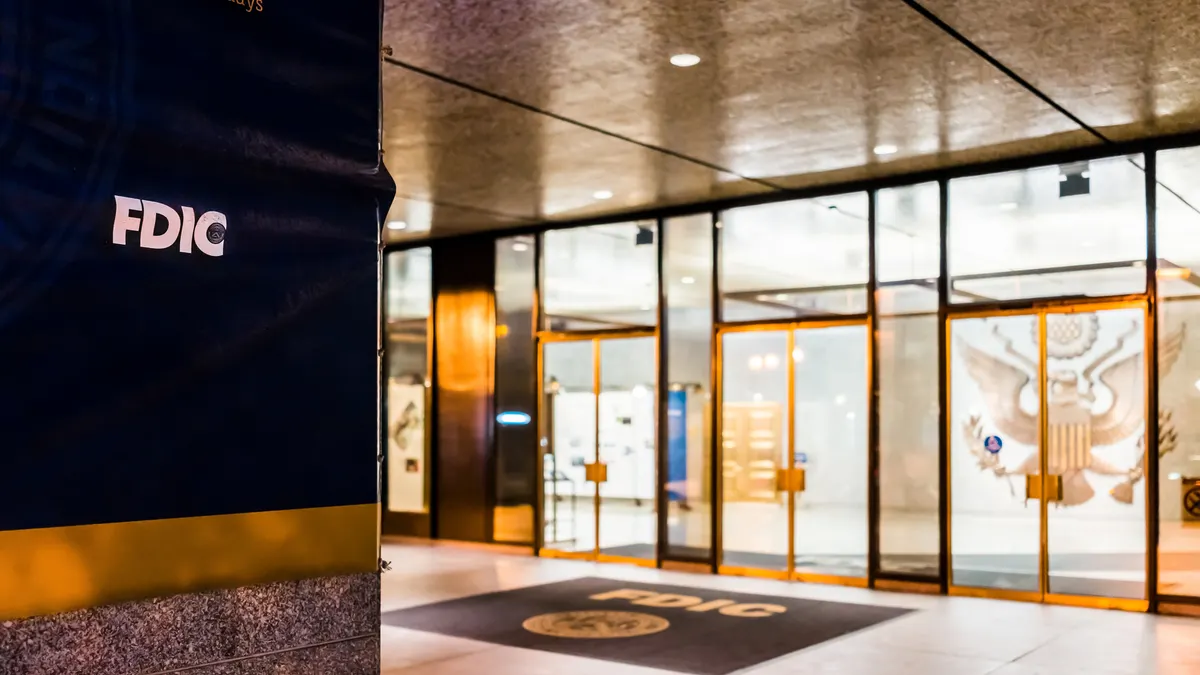
- The Office of the Comptroller of the Currency and the Federal Deposit Insurance Corp. issued a memo Friday withdrawing 2013 leveraged lending guidance, calling it “overly restrictive” for banks.
- The guidance and advice on implementing it, issued in 2014, prevented banks from applying their standard risk management principles to leveraged lending decisions, the agencies said. “This resulted in a significant drop in leveraged lending market share by regulated banks and significant growth in leveraged lending market share by nonbanks, pushing this type of lending outside of the regulatory perimeter,” the agencies said in a statement.
- Instead, banks should apply the agencies’ general principles for prudent risk management of commercial loans and other types of lending to such activities. “Each bank should determine its own definition of a ‘leveraged loan,’” and use it to assess and control its exposure to such lending and whether the bank is abiding by its risk appetite, the OCC and FDIC said.
Dive Insight:
The “significant” change could accelerate commercial and industrial loan growth, “potentially sharply at some banks,” Vivek Juneja, a JPMorgan Securities analyst, wrote in a Monday note.
The “overly broad” guidance issued in 2013 captured loan types not intended to be covered, including loans to investment-grade companies, the OCC and FDIC said. It largely sought to restrict banks’ ability to issue riskier loans to firms with higher debt levels or provide funding for transactions involving leveraged buyouts or acquisitions. That retreat opened the door for direct lenders or private credit firms to move in.
The regulatory rescission gives banks more freedom to make their own decisions around the type of lending they want to engage in. Moving forward, the OCC and FDIC “expect banks to manage leveraged lending exposures consistent with general principles for safe and sound lending,” the regulators said in the release.
The agencies advised banks to effectively manage the credit and liquidity risks associated with such lending, ensure such lending activities align with the bank’s defined risk appetite, and affirm effective risk controls are in place.
Regulators also recommended that bank underwriting criteria consider a loan’s repayment sources and be consistently applied; that banks analyze a leveraged borrower’s past and current performance compared to projections; that banks keep taps on leveraged loans throughout their life cycles considering the risk that refinancing is unavailable to a borrower; and banks purchasing participation in leveraged loans use the same credit assessment and underwriting criteria as if they were originating the loan.
Examiners will assess banks’ underwriting, risk ratings and loan loss reserves, tailoring oversight to the size, complexity and risk of leveraged lending activities. Agencies “will consider issuing additional guidance related to leveraged lending as appropriate.”
Treasury Secretary Scott Bessent has pointed to the rise of the trillion-dollar private credit market as a sign that banks have been overly burdened in recent years. Nonbank firms such as Apollo Global Management, Blackstone, Ares Management and KKR aren’t heavily regulated like banks, and some are highly leveraged and have deep connections to the banking system, former FDIC Chair Martin Gruenberg noted.
The Federal Reserve, involved in issuing the 2013 guidance, declined to comment Monday. The central bank has not yet weighed in on the matter, “but we expect it would do so given the overall tone in Washington,” Juneja wrote.
Giving banks greater leeway in this area is expected “to have a meaningful impact on financing for non-sponsored transactions,” said Dan Sullivan, PwC's financial markets and real estate and risk modeling solutions practice leader. “We expect many institutions to reassess their lending strategies, policies, and risk frameworks as they consider how best to utilize this expanded flexibility.”
Although the change is set to give banks more autonomy over their leveraged lending choices, that could carry consequences.
“Though we are supportive of less regulation, rescinding the guidance on leverage lending will initially lead to more rapid loan growth but eventually we expect it will also lead to higher credit losses in the next credit cycle,” RBC Capital Markets analyst Gerard Cassidy wrote in a Friday note.