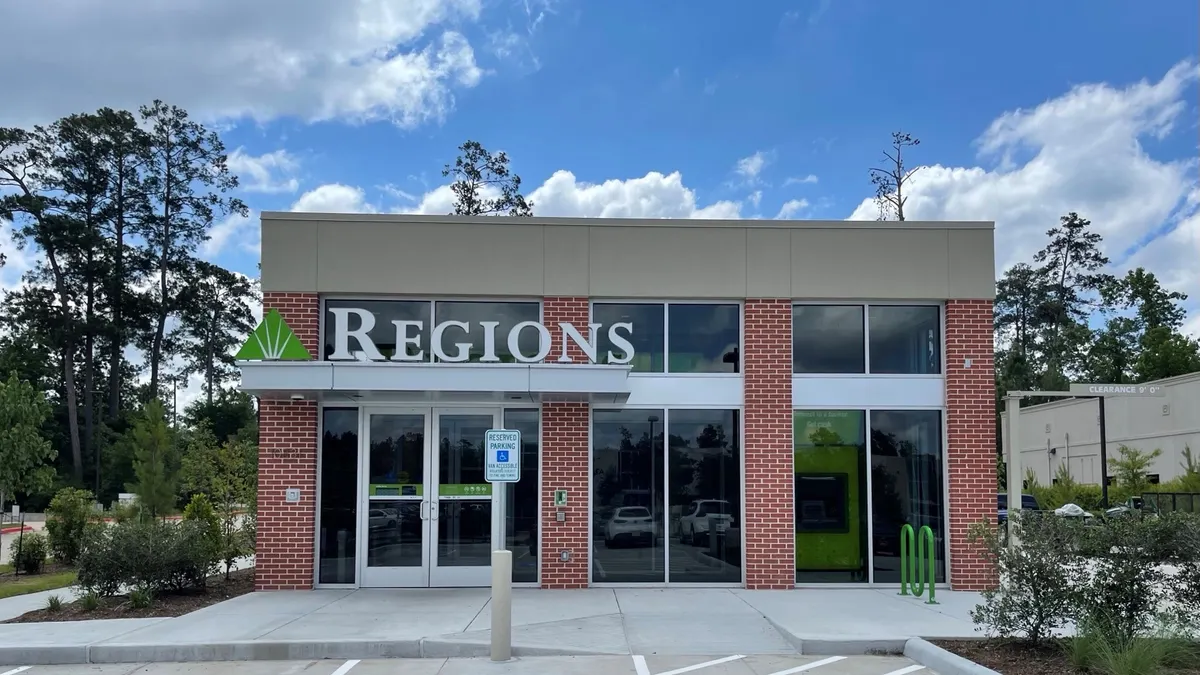
At a moment when “everyone sees Texas as an opportunity,” new Regions executive Christina Clemmons plans to lean on her roots in the state to drive growth for the bank.
Having lived and worked in Texas her entire life, Clemmons said she understands the nuances of the state’s various markets.
That and the size and scale of the state are “what trips people up sometimes,” said Clemmons, Regions’ Texas consumer banking executive.
“You have micro-markets within these big markets,” she said in a recent interview.
Clemmons, who’s based in Dallas, recently joined Birmingham, Alabama-based Regions after spending 31 years at Bank of America. Clemmons will lead operations across Dallas-Fort Worth, Houston, Austin, Tyler and east Texas.
An area of particular focus for Clemmons: expanding the regional bank’s reach in serving small-business owners in the state.

Fast-growing Texas continues to benefit from population growth and business relocation, creating “tremendous opportunity” for the $161 billion-asset bank to go after, she said.
To be sure, Regions faces a raft of competitors racing to capture more business within Texas, from locally based Frost Bank and Texas Capital, to bigger lenders such as Bank of America, PNC and Truist, to Ohio-based regionals Fifth Third and Huntington.
Regions’ deposit market share for the county in which Dallas is located was 0.74% as of the most recent Federal Deposit Insurance Corp. data from June 2025. In the county that covers Fort Worth, it was 0.83%. In Austin’s county, it was 0.88%; in Houston’s, 0.54%.
Regions’ Texas-based subsidiary, Ascentium Capital, which provides small businesses with lending options for equipment purchases, is a notable component in the bank’s ability to serve entrepreneurs, Clemmons said.
Regions is also upskilling some retail bank staff to meet the needs of small-business clients, she noted. And in April, CEO John Turner said the bank is deploying a small-business digital origination platform at the end of the month, which brings a “fairly significant improvement in our digital offering” for small businesses.
Additionally, Regions wants to serve more business-owner clients in a personal capacity, too, Clemmons said. “That will be very important, that we're doing that in every opportunity that we have to sit in front of the business owner,” she said. “Our small-business owners are also household decision-makers.”
To drive that, the bank is doubling down on efforts to coordinate its approach in local markets. Regions already has an initiative that unites its consumer, wealth and commercial leaders in specific markets to consider customers in a more holistic and less siloed way.
This month, the bank is tweaking its local leadership structure and plans to develop more tailored marketing and information campaigns for each market, said bank spokesperson Jeremy King.
Regions is also embarking on a branch network overhaul: Over the next five years, the bank will build between 135 and 150 branches and modernize about 1,000 locations. Regions sped up those plans as it’s faced “intensifying” competition within its Southeast footprint, Turner said in March.
The lender’s overall branch count – 1,246 across 15 states – is expected to remain relatively flat, since some locations will close.
The bank has about 84 branches in Texas, and nearly all of those will be refurbished, relocated or enhanced. Clemmons declined to specify how many new branches markets such as Dallas and Houston will get, saying the bank is reviewing data to determine that.
In assessing its branch network, Regions considers customer trends, traffic and development patterns, and aims to provide financial services across communities, King said. The bank has a number of banking customers in south Dallas, which he said tends to be an underserved part of the market, and Regions plans to maintain that presence.
In Houston, Regions’ presence has been mostly west of Interstate 45, King said. The bank is considering where it can introduce the Regions name for those new to the area, he said.
Given the number of banks bolstering their presence in Texas, those migrating to the state from other parts of the country might find their existing bank has a physical presence there.
But Clemmons said she’s “not afraid.” She’s focused on Regions bankers getting out and engaging with the community.
“What really differentiates Regions is our people,” Clemmons said, adding that she wants to reinforce that in her role at the bank. “We have to capitalize on that.”
“Banking will always be a people business. Technology matters, but trust matters more,” she said.