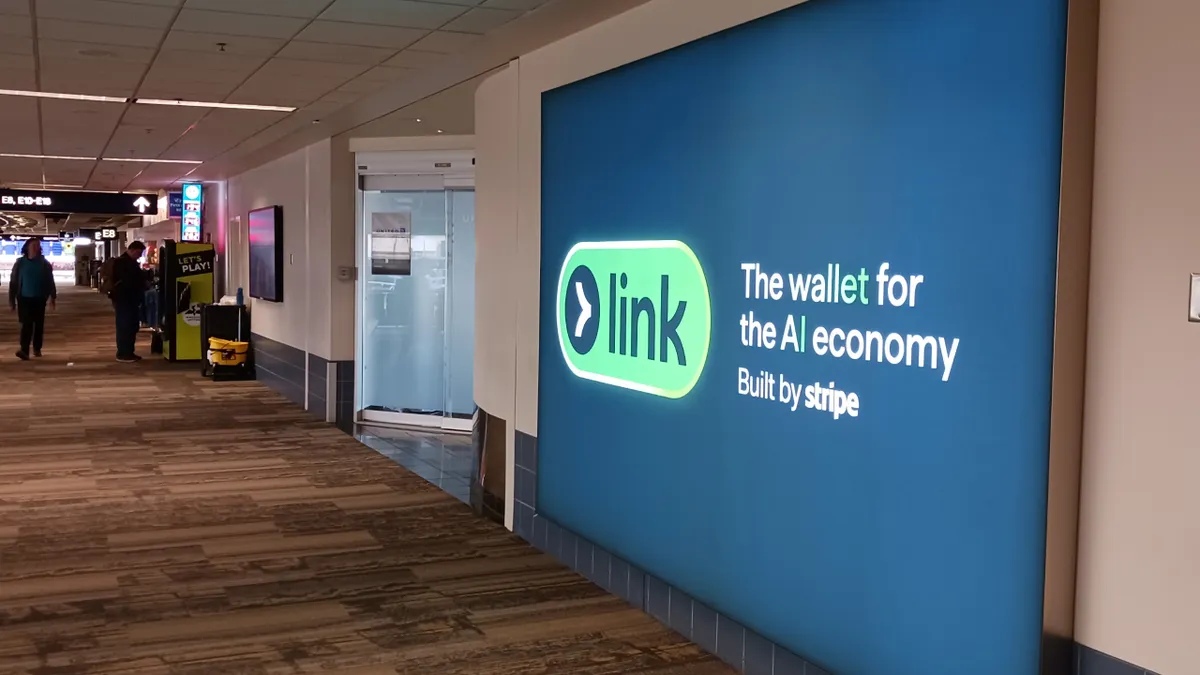

Stripe is maneuvering its digital wallet to capitalize on agentic commerce, joining recently with a trio of big artificial intelligence players to facilitate payments by their bots.
Meta Platforms has added Stripe’s Link wallet to its new Muse personal agent, giving the personal assistant the ability to complete payment transactions on behalf of consumers, the parent of Instagram and Facebook said in a Sept. 8 press release.
That partnership followed Link integrations announced last month with xAI’s Grok Bot from Elon Musk’s SpaceX; and Instinct, a phone-texting-based AI assistant from Spear Street Technology.
For a payments processor like Stripe – which generally services businesses – a closer link to consumers is critical as agentic commerce grows, said Richard Crone, CEO of Crone Consulting LLC, a payments advisory firm based in San Carlos, California.
“Essentially, the way to think about this is that the agent will be the wallet or the wallet will be the agent,” Crone said Thursday in an interview.
Stripe says its Link wallet, which is integrated with about 1 million merchants for checkout, has amassed 300 million global users in the five years since it was launched. The wallet speeds the checkout process and can improve merchants’ conversion and payment authorization rates, according to Stripe.
Stripe spokespeople did not respond to emails seeking comment about where its Link users are located geographically, and how the company attracted them.
The company, which has dual headquarters in south San Francisco, California and Dublin, debuted Link payments for AI agents in April as part of its annual conference for developers and customers.
Link functions as a “card on file” solution for online checkout and competes with autofill tools, such as those from Apple Pay, Google Chrome and Paze, the digital wallet from Early Warning Services, Crone said.
Meta is likely to monetize Muse by charging merchants a percentage for delivering a sale and to take a cut of any savings its bot reaps for consumers, such as finding applicable discounts or ending outdated subscription charges, Crone said.
Meta’s agent carries Link’s “free coverage for damaged or lost items, price drops, no-fee returns and a return guarantee on eligible purchases,” the company said in its press release. The wallet conceals payment information from the Muse bot, creating a one-time-use card for purchases, Meta said.
“The agent never sees your real card,” Simon Taylor, a fintech blogger and head of market development for the Stripe-backed blockchain Tempo, wrote in a recent LinkedIn post about Stripe’s wallet integration with Instinct.
Instinct is an AI assistant that interacts with users via text message and email. The San Francisco-based company was founded earlier this year and is in talks to raise an additional $1 billion, which would give it a $10 billion valuation, The Information reported Sept. 15.
“Link is becoming the wallet agents default to,” Taylor said, noting Stripe’s partnerships with OpenClaw, the open source AI agent, and Claude, along with merchant checkout tasks within ChatGPT, Gemini and Microsoft’s Copilot. “Stripe now sits on both ends of an agent transaction.”
As these new personal bot corps shop for humans, a consumer wallet connection is critical given that large players such as Apple, Google and PayPal Holdings already have these consumer ties, he said.
San Jose, California-based PayPal has long had a two-sided network, with consumers on one side using the company’s technology to buy goods and services, and merchants on the other side selling to them.
Stripe “desperately needs this kind of functionality in order to compete in agentic commerce,” Crone said. “This is so important to them that they were willing to put together a desperate attempt to buy PayPal for $59 billion because they know they need the consumer side as much as the merchant side to compete in agentic commerce.”
PayPal has forged ties with all of the large language models that underpin AI commerce tools, such as Google’s Gemini and OpenAI’s ChatGPT, noted Crone, who has had PayPal as a consulting client.
The company also has access to nine distinct funding accounts, including debit cards, reloadable prepaid cards, Venmo, buy now, pay later and stablecoins, he said, compared to Stripe’s credit, debit and pay-by-bank option.
For a consumer confronting nine payment options, “that’ll make your head spin as a buyer,” Crone said. An AI agent, however, will assess all of them and decide which is best for the purchase.
“You have to have access to that agentic consideration as part of agentic shopping,” he said. “That can be existential to Stripe if they don’t have a consumer-facing digital wallet and a merchant acceptance network.”