Banks that don’t own their compute – their own data centers and graphics processing units – will fall behind as artificial intelligence progresses, and that will drive an uptick in mergers and acquisitions, PNC CEO Bill Demchak said.
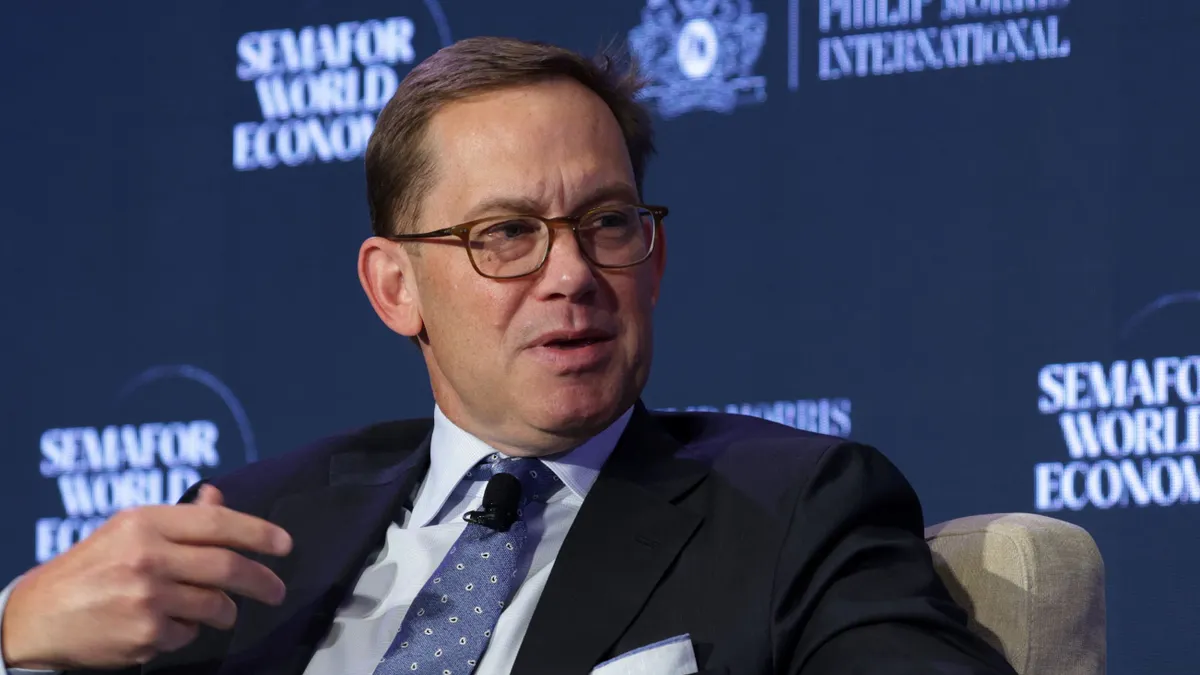
“We want our own compute and our own data,” Demchak said last week in an interview at the Money20/20 conference in Las Vegas. “I don't want to share it with anybody else. Once you do that, you know the efficiencies that come out of that are fast.”
Many banks won’t be able to reach those efficiencies, Demchak said, because they’re “still running mainframes.” Others have made big bets on the cloud.
“Some people just don't have the investment dollars,” he said. “I think this transformation is going to cause a lot of mergers over the next handful of years, particularly with small banks. A target-rich environment would be my expectation.”
Until then, Demchak’s eyes are trained far away from M&A and strongly on PNC’s AI growth plans, which he said will cost “hundreds of millions to save billions” annually.
“If we did a large deal and spent two or three years vetting everything onto the same platform … at that point you'd have to take a timeout on AI. You run the risk of waking up a couple years later and just being out of date,” he said. “This game could be over in two years.”
“I'm fearful of this transformational change – which is happening, it's no longer theoretical – taking place without us,” he said, adding that he doesn’t want PNC “to get caught doing busy work on that journey.”
While it’s possible a competitor could make a big M&A move in that time, Demchak said, “I think our speed of adoption and efficiency and ability to invest while they're in stasis trying to put two companies together will eventually pass them.”
“Meaningful progress” from AI should come in the next three years, Demchak said. He plans to share a roadmap before then to let stakeholders in on PNC’s specific goals. But part of his reluctance in sharing more details now, he said, is the human impact.
“The hardest part of all this is the organizational design around it, retraining people, picking the right people. A lot of this will be offshore contractors no longer being employed with us, which doesn't impact our employees in the U.S.,” he said. “But it's going to be a lot of people over time, not just in PNC, but in the technology space, coders in particular, which I think is going to be really disruptive.”
Still, a human will always be in the loop, he said – a sentiment he echoed in his Money20/20 keynote. “You’re never going to turn this stuff loose,” he said. Those who remain as the human in the loop “become more valuable,” he said.
PNC will build and own AI-related applications, but the bank is open to buying parts of its tech stack that offer a direct fit with no risk of being locked in, he said
But “when a vendor shows up and they try to sell you this, you only want that, and they try to charge you a price for this, you only want to pay that, then you build it yourself,” he said. For instance, PNC put a third-party user interface on its mortgage application system that was such a good fit, we “turned it on in a weekend.”
“We could have built the thing ourselves, but they had a good product and they had a good price point, and it was easy,” he said. “So why do I go through the effort?”