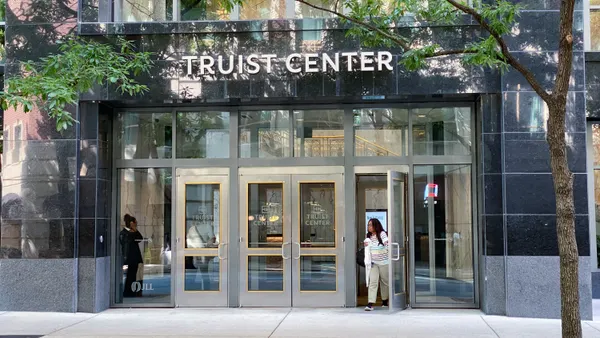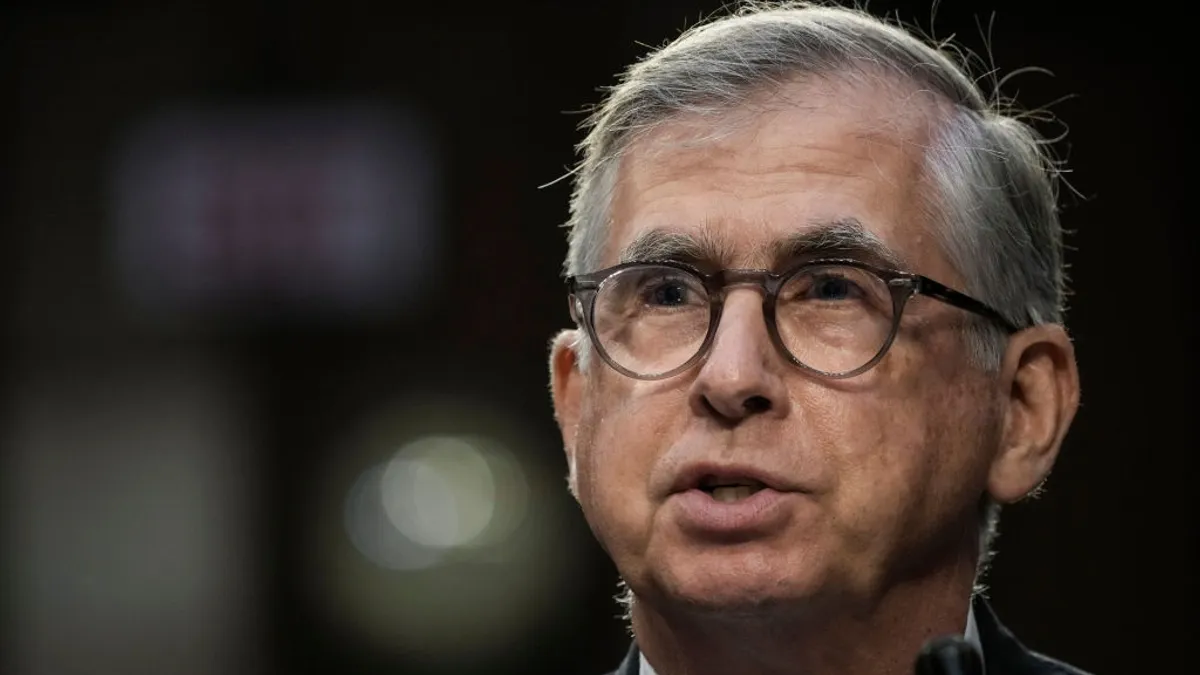
Incoming Truist CEO Mike Lyons will inject fresh energy into the bank’s pursuit of improved performance, outgoing CEO Bill Rogers indicated Friday.
Lyons, who takes the helm of the bank Sept. 1, will provide “some acceleration, some assurance, some – in fairness – intensity” against the Charlotte, North Carolina-based lender’s objectives to bolster profits and rev up growth, Rogers said.
Once Lyons joins the bank, Rogers, who has been Truist’s CEO since 2021, will become the $550 billion-asset bank’s executive chair through April 2027, when he plans to retire.
Lyons was most recently the CEO of payments firm Fiserv and president of PNC before that. When his appointment was announced in June, analysts covering Truist dubbed Lyons “a welcome outsider” providing “a fresh perspective” at a time when the bank needs a boost.
“Mike’s an accomplished and respected financial services leader with a proven ability to drive growth, improve performance and create long-term shareholder value,” Rogers said during the bank’s second-quarter earnings call. “Throughout the selection process, it was clear to our board that he's the right leader for his future.”
Rogers said Lyons and the super-regional bank’s board are strongly aligned on Truist’s opportunities.
“We’ve been at this for well over a year,” Rogers said of the succession planning process, “thinking about my timeline, but more importantly, thinking about what's the right time for the company, and are we hitting on cylinders, and is this the right time for transition?”
Then the board mulled the ideal profile of the next leader of the company, prioritizing deep understanding of the bank’s core business, but also around technology, payments and “where the proverbial puck is going,” Rogers said. Lyons fit that profile “perfectly.”
When UBS analyst Erika Najarian asked about Lyons’ expectations of achieving the bank’s long-term target of 16% to 18% return on tangible common equity, Rogers said, “Mike came in here to lead and run a high-performing company, and I don't think there'll be any doubt on that.”
Najarian noted an outsider CEO appointment can be “a little bit jarring” for top bank talent and wondered if those employees have been reassured in the wake of Lyons’ appointment.
“We re-recruit everyone every day,” Rogers said. “We’re on that journey.”
“Also, certainty helps,” he added. There was “probably a little uncertainty of my timeline, and now we have a lot of certainty.”
Competition for talent, particularly in a banking hub such as Charlotte, has ramped up as the likes of JPMorgan Chase, Citi and Sumitomo Mitsui Banking Corp. add to or establish a presence in the city.
“The best thing for top performers is an incredible platform, career opportunity and a lot of certainty,” Rogers said.
Rogers likened the situation to a relay race and the passing of a baton, “so they can run the last lap at a lot of speed,” although he shied away from providing more detail on what Lyons will look to do once he’s in the role.
“Hopefully, no one drops the baton,” said Wells Fargo analyst Mike Mayo.
The bank’s second-quarter net income jumped about 27% year over year, to $1.5 billion, on a 5.5% rise in revenue, to $5.3 billion. Truist trimmed its full-year revenue growth guidance slightly, from 4% previously to 3.5% to 4%, according to an earnings presentation.
On the deposit front, the bank is seeing some increased rate-seeking behavior and migration into higher-rate products, CFO Mike Maguire said.
The bank’s average deposits increased 1.1% year over year, to $405 billion, with average interest-bearing deposit costs rising 1 basis point over the prior quarter, to 2.1%, and average total deposit costs increasing 1 basis point, to 1.56%, he said.
“The deposit migration to higher-yielding is more client behavior than competitive pressure,” Rogers said. “This is a trend that we've seen that's continued.”