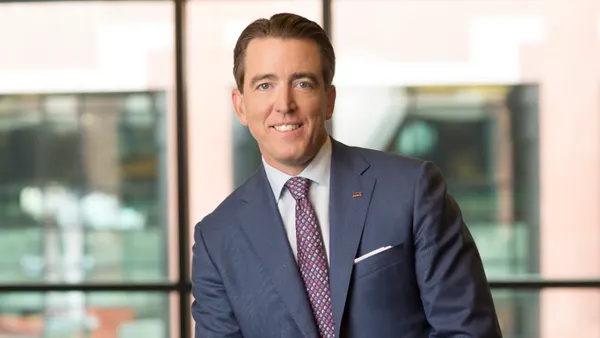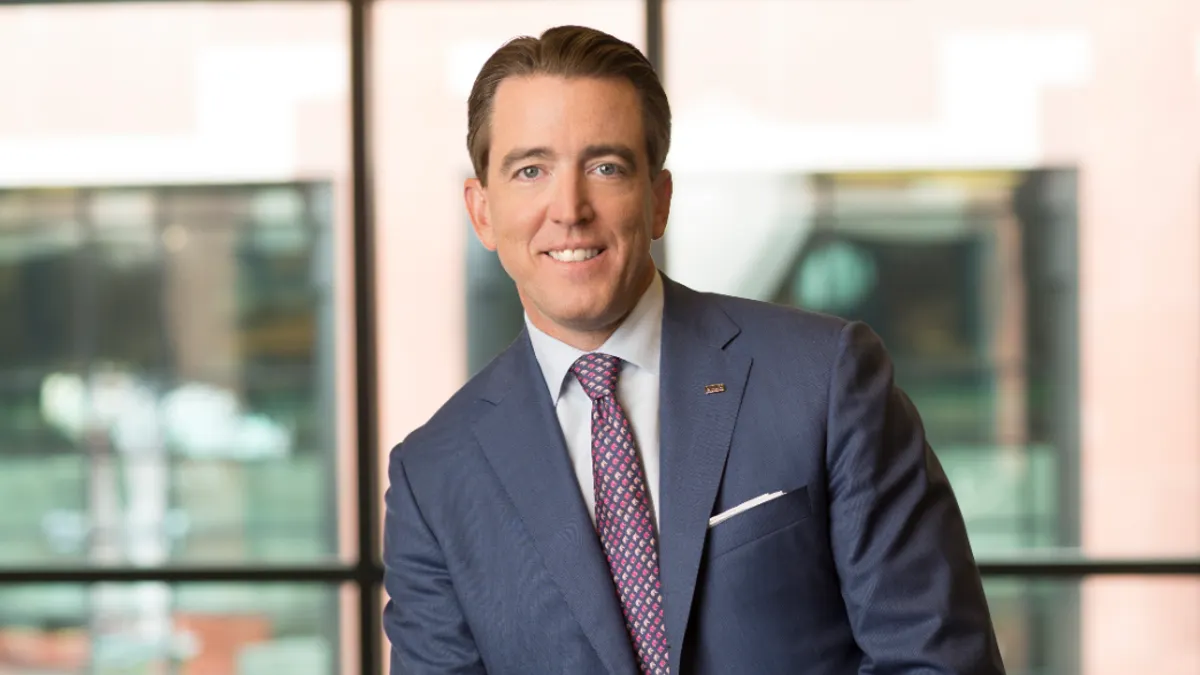
UMB’s appetite for M&A will remain “measured” and executives are keeping an eye out for tuck-in deals, CEO Mariner Kemper emphasized Wednesday.
“Organic growth is, and always will be, our top capital priority,” Kemper said during the bank’s fourth-quarter earnings call.
However, bank executives believe UMB is “adept at evaluating and integrating acquisitions” to bolster growth, Kemper said.
“We’re still answering our phones, building and maintaining relationships, and we expect that tuck-in acquisitions that make financial and strategic sense can be part of our ongoing strategy,” he said.
A year ago, UMB closed the largest deal in its history, a $2.8 billion acquisition of Denver-based Heartland Financial.
As for the size of deals $73.1 billion-asset UMB might pursue, Kemper didn’t provide specifics, but said the bank would be “wary of transactions that would put us close to the $100 billion mark.”
The boundary line Kemper noted would seem to imply banks with assets between $5 billion and $10 billion would be potential targets for the Kansas City, Missouri-based lender, Truist Securities analyst Brian Foran said in a Wednesday note.
Kemper seemed to strike a more cautious tone than he did this time last year: In an interview last February, just after the HTLF deal had closed, the CEO noted the U.S. can expect fewer banks over time. “We’re one of the consolidators,” and “always looking for the right opportunity,” Kemper said.
Bank M&A activity soared in 2025, as greater confidence in regulatory approvals and a far shorter wait time to receive such green lights has made deals more attractive, and 2026 is expected to see the pace of deals continue, analysts have said.
Still, investor attitudes toward acquirers have some bank CEOs expressing more reluctance around making acquisitions.
Last month, PNC CEO Bill Demchak bemoaned speculative chatter around industry M&A and its effect on shareholder sentiment.
“There’s way too much focus on” guessing the next bank buyers and sellers, Demchak said in December. He complained that Pittsburgh-based PNC’s stock lags other banks’ despite the lender’s financial performance, “all because people think I will do something stupid.”
Boston-based Eastern Bank, for one, has pledged not to do another deal, after it faced pressure from activist investor HoldCo Asset Management, which critiqued its acquisitive history. Cleveland-based KeyBank, another HoldCo target, has also said it’s not interested in bank acquisitions.
HoldCo co-founder Vik Ghei has said the firm wants to see banks employ more rigor in assessing potential acquisitions. “A management team will have to be prepared to defend an acquisition,” and that “is probably going to dramatically lessen the number of acquisitions that otherwise would have happened,” he said of this year’s bank M&A outlook.
Some other bank leaders this earnings season have expressed hesitancy around engaging in M&A, or stressed that the bar is incredibly high. Phoenix, Arizona-based Western Alliance executives this week said organic growth is their focus, and they’re not looking to make an acquisition simply to get bigger. Birmingham, Alabama-based Regions executives have also repeatedly dismissed M&A interest, saying it’s disruptive.
Of course, plans can change, sometimes quickly.
“Some bankers are surprised by opportunities that present themselves that end up making a lot of sense, even though it wasn’t the strategy moving forward,” Patrick Hanchey, a partner at law firm Alston & Bird, has told Banking Dive. “That’s certainly happening on a pretty regular basis.”
Huntington’s CEO and CFO, at an investor conference in December 2024, said the bank didn’t need to engage in M&A to grow. But in 2025, the Ohio regional ended up making three acquisitions: two bank deals in Texas, and the acquisition of three business units from Janney Montgomery Scott.
Associated Bank executives, too, said “the bias is strongly organic” in October, but the Green Bay, Wisconsin-based regional bank announced an acquisition less than two months later.
UMB executives said Wednesday the HTLF integration has been a good exercise for future deals. As for lessons learned, “between close and conversion, expectations should be more muted for growth out of the acquired company,” Kemper said. “We witnessed that.”
That’s a lesson that other dealmaking banks are learning, as well, Truist’s Foran said.
For UMB, future M&A would be “small enough that we would maintain control of everything: culture, management, board,” as the lender did with HTLF, Kemper said.