Compared to some peers that have broadcast new branch commitments, U.S. Bank is employing “a quieter strategy,” said bank executive Sekou Kaalund.
Kaalund, the Minneapolis-based lender’s head of branch and small-business banking, said the bank plans to build more branches in areas where it already has a physical presence, with the goal of becoming a top depositor in those markets.
He wouldn’t specify the number of branches the bank intends to build over a set time period, as JPMorgan Chase, Bank of America and PNC have. Kaalund noted, though, the lender is “on the offensive” and spending about $200 million annually to build new branches or renovate existing ones.
That level of spending is set to continue over the next five years, he said. After refurbishing branches in areas such as Denver and St. Louis, “our goal will be to shift more of that investment to our brand-new builds,” he said in a recent interview.
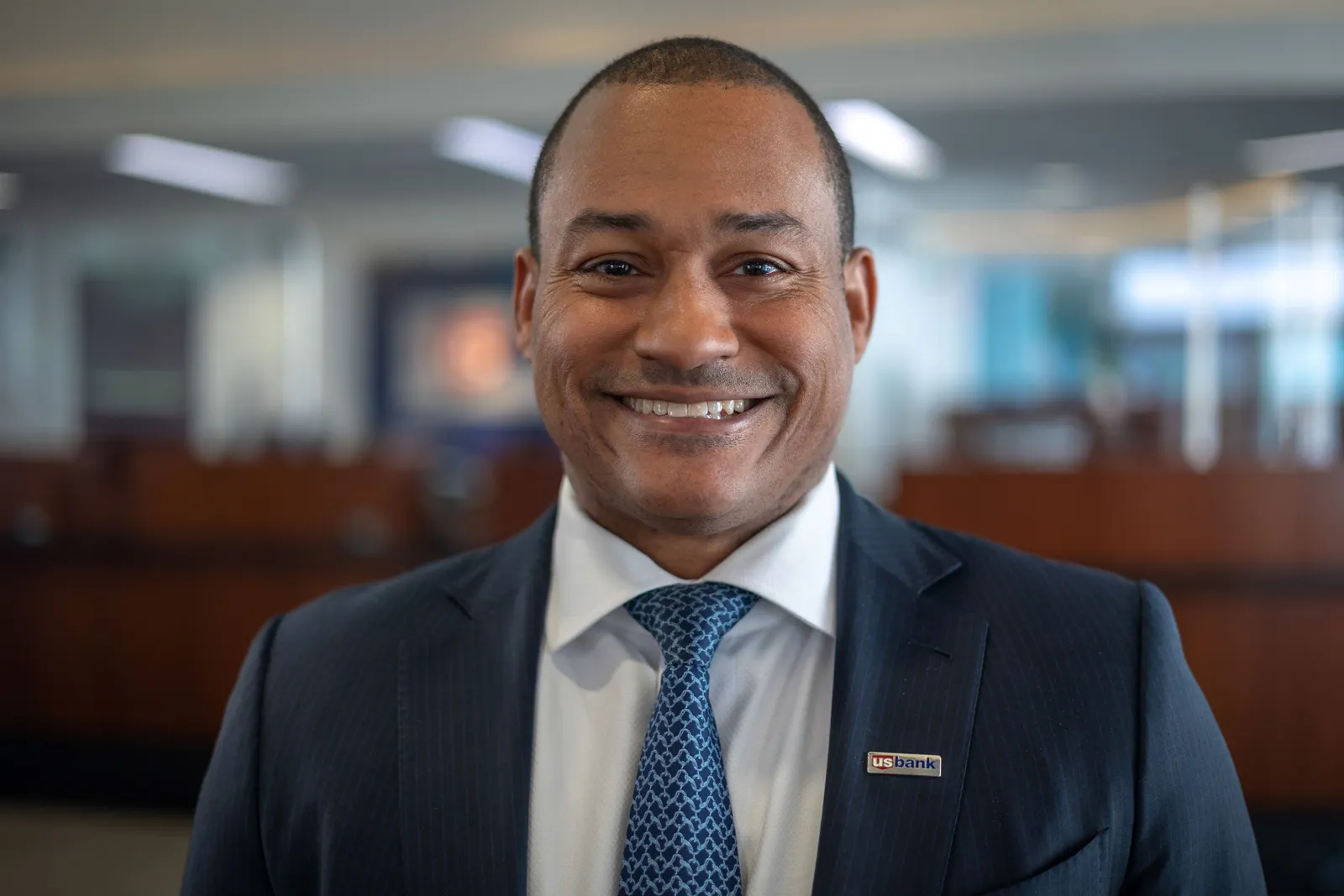
“It's not just building for building’s sake, because it's no longer, ‘you build it and they will come,’” he said. “You have to build it and ensure that you're building in places where it's serving the small-business formation, where it's serving lending.”
The super-regional has about 2,100 branches across 26 states, but “we have some unevenness across that footprint,” Kaalund said. “We may be in places but not have the density that we want.”
The $700 billion-asset bank is particularly focused on boosting its physical presence in California markets, as well as Phoenix; Denver; Nashville, Tennessee; Portland, Oregon; Boise, Idaho; and Minneapolis/St. Paul, he said.
Las Vegas is another market where the bank is evaluating how many branches it needs relative to the opportunity there, he said. And in Charlotte, North Carolina, U.S. Bank aims to bolster its physical presence.
Entering new markets can be advantageous, but “for us, there’s an even greater opportunity where we have brand recognition, where we have the strong awareness, and we have the right to win,” Kaalund said.
California is a highly competitive market – and massive. BMO, for one, is doubling down on growth in the state. U.S. Bank, for its part, is seeing growth in California outpace that of the rest of the franchise, CEO Gunjan Kedia said during the lender’s first-quarter earnings call last month.
The bank has more than 500 branches in California, according to Federal Deposit Insurance Corp. data, thanks largely to the lender’s 2022 acquisition of MUFG Union Bank. Ohio and Illinois have U.S. Bank’s second- and third-highest branch counts, at 160 and 153. Arizona and Tennessee count 57 and 55, respectively.
“The physical branch presence is very critical, both to the quality of the deposits and the deposits per account,” Kedia said during the earnings call. “The economics of a branch-based deposit acquisition are very attractive to us.”
In Phoenix, the bank had more locations in grocery stores than traditional branches, and the latter are preferred for holistic conversations that might involve wealth advisers or small-business specialists, Kaalund said.
In assessing density, the bank wants to ensure it’s met the minimum to be convenient for customers, ideally positioning a branch within 15 to 20 minutes of where they eat, work and play, he said.
Competition for branch locations is high, Kaalund acknowledged, and commercial developers know banks will move quickly if it’s a desirable property.
“We're highly focused on a goal to be top-five in most of these important markets,” or “top-three where we can, if we were already in the top five,” Kaalund said.
In markets where the bank already maintains a top depositor spot, such as St. Louis or Portland, U.S. Bank has been adding or renovating branches to defend its position, he said.
The bank has shortened its branch refresh cycle to 10 years, and now works to tackle an entire market at one time, versus refurbishing branch by branch, he said. Among other benefits, that “gives you better pricing discussions with contractors, because you’re not just doing one branch; you’re doing 30,” Kaalund said.
Kedia noted during the earnings call the lender aims to leverage its payments franchise and digital capabilities to augment branch-based growth.
Banks have historically viewed physical and digital as different channels, but that’s no longer the case, Kaalund said. It’s crucial to connect the dots, to ensure consistency in interactions with customers, he said.
U.S. Bank has bolstered its internal systems to arm a branch banker with information from a customer’s recent phone call with the bank, so the customer doesn’t have to reiterate their issue to the branch employee upon arrival, he said.
“You can't be thinking of this in the siloed way anymore,” Kaalund said. “You need to be truly omnichannel and engage in each of those channels as part of an ecosystem.”