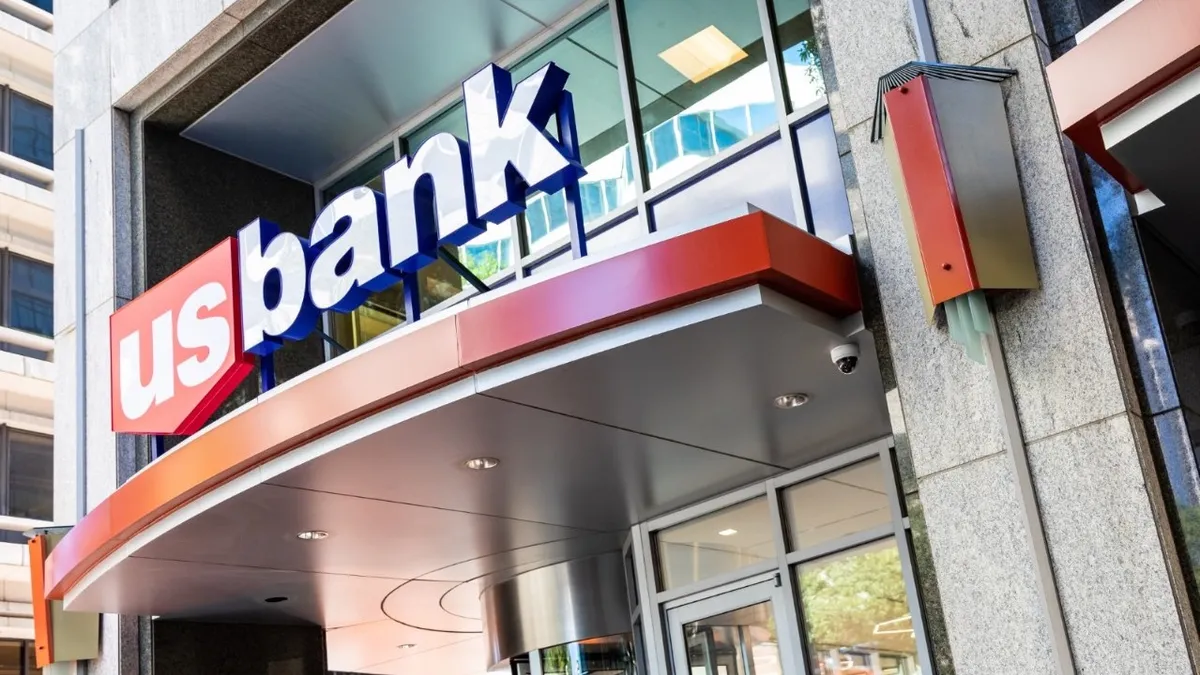
U.S. Bank on Thursday joined the ranks of financial institutions warning its investors of potential consequences from federal agencies’ probes into lenders’ debanking activity and policies.
“The Company is cooperating fully with all pending examinations, inquiries and investigations, any of which could lead to administrative or legal proceedings or settlements,” the Minneapolis-based bank said Thursday in a quarterly filing with the Securities and Exchange Commission. “Remedies in these proceedings or settlements may include fines, penalties, restitution or alterations in the Company’s business practices (which may increase the Company’s operating expenses and decrease its revenue).”
A handful of other banks have flagged inquiries by the Office of the Comptroller of the Currency and other agencies to ensure lenders align with an executive order President Donald Trump signed last August.
Trump, as far back as January 2025, accused banks such as JPMorgan Chase and Bank of America of debanking conservatives on a purely political basis. The banks generally have denied doing so.
But U.S. Bank’s warning marks a bit of a change: It appears to be among the first lenders to flag potential repercussions from debanking inquiries without first having been sued by Trump on similar grounds — or called out publicly by the president.
JPMorgan Chase told its investors last November that it was “responding to requests from government authorities and other external parties regarding, among other things, the Firm’s policies and processes and the provision of services to customers and potential customers.”
“Certain of these matters are at various stages, including reviews, investigations and legal proceedings,” the bank said at the time.
Trump sued JPMorgan and its CEO, Jamie Dimon, in January, accusing the bank of “incorrectly” debanking him in connection with the Jan. 6, 2021, U.S. Capitol riot. JPMorgan denied the claims, and the bank’s lawyers have called Trump’s lawsuit “threadbare.”
Capital One told investors in May it was “responding to demands and requests” related to “fair access to banking.” The Trump Organization sued Capital One in March 2025, alleging the bank closed roughly 300 of its accounts in 2021 because “the political tide at the moment favored doing so.”
The bank last month disclosed the Trump accounts were shuttered after “months of analysis and a careful review” by an internal anti-money laundering team.
Bank of America, meanwhile, signaled the debanking inquiries last fall — in the same quarter as JPMorgan.
It told investors it was “responding to demands and requests regarding ‘fair access to banking,’ including those resulting from [the August 2025 executive order], which directed government agencies to review financial institutions’ policies and practices for providing, maintaining, or discontinuing financial products or services to certain clients or potential clients.”
Trump has not sued Bank of America, but the most recent debanking thread arguably began in January 2025, when the president, answering a question from BofA CEO Brian Moynihan at the World Economic Forum in Davos, Switzerland, said Moynihan had “done a fantastic job, but I hope you start opening your bank to conservatives, because many conservatives complain that the banks are not allowing them to do business within the bank, and that included a place called Bank of America.”
In its disclosure Thursday, U.S. Bank seemed to indicate it was not being singled out.
“In some cases, these matters are part of reviews of specified activities at multiple industry participants; in others, they are directed at the Company individually,” the bank wrote.