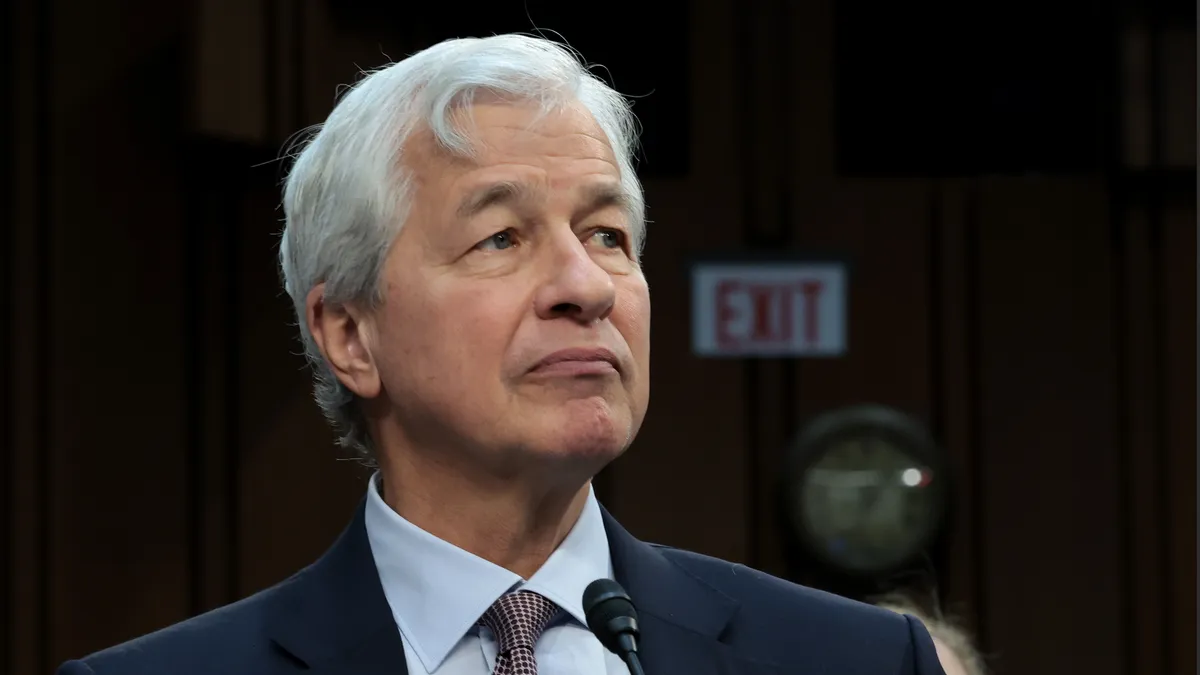
Anthropic CEO Dario Amodei isn’t shy to talk about his company’s new artificial intelligence model Mythos, including about its risks – but JPMorgan Chase CEO Jamie Dimon is calling on Amodei to release more details on the product, so people can assess and mitigate those risks.
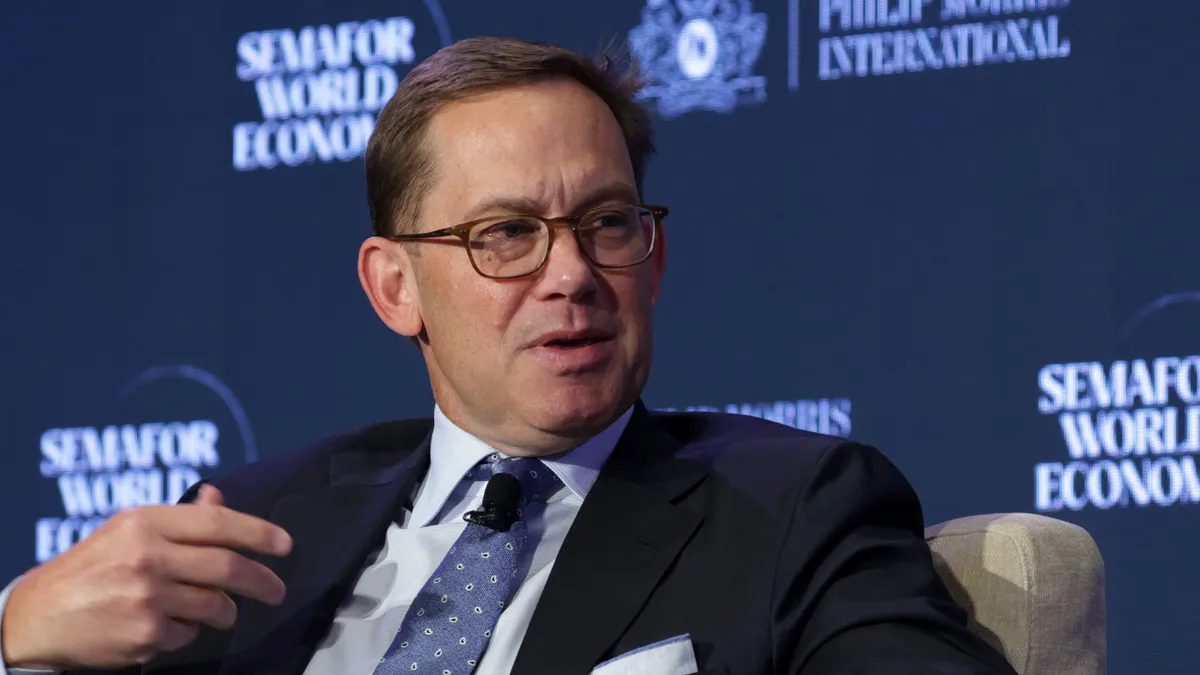
“The right thing [for] Dario and Anthropic [to do is] to lay it out, give people a chance to study it, understand the vulnerabilities, come up with plans so we can handle it,” Dimon said of Mythos at a livestreamed event Tuesday hosted by Anthropic.
Mythos was designed to identify and eventually patch software vulnerabilities. But it presents a “moment of danger” in its exposure of such issues, Amodei said Tuesday. Last month, Anthropic decided against fully releasing Mythos to the public, lest it land in the hands of someone with ill intent.
It was released on a restricted basis to some large tech firms April 7, and that day, Treasury Secretary Scott Bessent and Federal Reserve Chair Jerome Powell called an emergency meeting with big-bank CEOs to discuss Mythos and its cybersecurity implications.
Dimon, who could not make the Bessent-Powell meeting, said Tuesday that cyber issues have been JPMorgan’s biggest risk “for years” and that AI made it worse. But he believes the cybersecurity risk posed by AI is “a temporary thing” during this “transitory period,” he said.
Mythos “highlights the dynamic nature” of AI and how quickly it can evolve, Fed Vice Chair for Supervision Michelle Bowman said last week at a Financial Stability Oversight Council roundtable.
“We know that this model accelerates the process of detecting cyber vulnerabilities. On one hand, this capability enables firms to address self-identified vulnerabilities, thereby enhancing cybersecurity,” she said. “But on the other hand, if used maliciously it could be deployed to identify and exploit weaknesses.”
As more is learned about Mythos, the Fed will consider how to effectively supervise its use, Bowman said. The rapid adoption and evolution of AI highlights a regulatory need for adaptable guidelines, Bowman said, adding that the existing risk-management framework may not be the right fit to assess AI.
The Fed, alongside the Office of the Comptroller of the Currency and the Federal Deposit Insurance Corp., recently amended its model risk management guidance to clarify that it doesn’t apply to generative or agentic AI.
“Regular communication regarding the unique risks of novel and potentially broadly impactful innovation is necessary,” Bowman said. “Banks of all sizes have expressed concern about access to the Mythos model. Regulators will continue to focus on critical developments and communicating these risks to supervised institutions, as well as on refining our cybersecurity approach.”
Regulators must accommodate evolution and call on industry feedback to refine their approach, Bowman said.