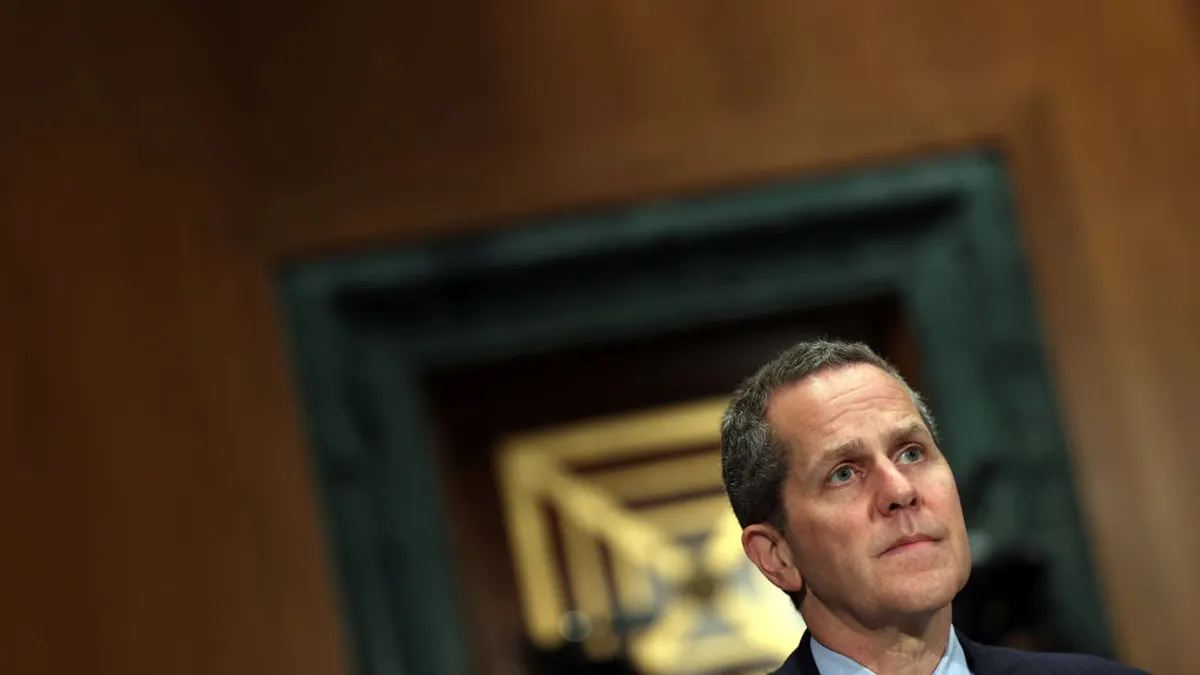
Deregulation can cause an economic “short-term sugar high” but can lead to long-term costs and risks down the road, Federal Reserve Gov. Michael Barr warned Saturday.
Reducing bank regulation doesn’t just affect banks but the entire financial system overall, according to Barr, who spoke at American University in Washington, D.C.
“Considerable, sometimes bitter, experience has shown that the safety and soundness of banks is crucial to the jobs, financial security, and hopes and dreams of everyone in America,” he said.
Barr has routinely dissented on decisions that have weakened bank regulation and supervision in the last 17 months and spoken about resisting a deregulatory spree, as Trump-appointed regulators have pursued an agenda of deregulation.
He opposed the Fed’s proposal to disclose stress test details in October and opposed a capital requirements overhaul in March, saying he feared it could trigger a “race to the bottom.”
In aggregate, deregulatory proposals put forth by the Fed and other financial regulators over the last year and a half reduce by 6% the amount of capital required for the largest banks, Barr said. That translates to $60 billion less capital meant to protect against bank failure and financial system instability, he added.
“Our capital standards are already near the low end of the range of optimal levels estimated by academic research — that is, the levels that strike the best balance between growth and safeguards,” he said.
In addition to reductions in capital rules, liquidity requirements and supervisory practices, Barr noted the decline in consumer protection by the embattled Consumer Financial Protection Bureau – and made a comparison to the years leading up to the financial crisis of 2007-08.
“Taken together, the regulatory and supervisory changes recently enacted or proposed represent the most significant deregulation of the banking system since the Global Financial Crisis,” Barr said. “They tip the imperative balance that must be maintained between openness to innovation, on the one hand, and safety and soundness, on the other, in a way that will increase the risks of financial instability.
“I feel it is also my duty to continue to speak about them and explain that the costs they impose, in the form of risk, greatly outweigh the promised benefits of a lighter regulatory burden,” he said.