Regulators under the Biden administration participated in a “largescale, coordinated effort” to undermine the growth of the digital asset industry by preventing traditional financial institutions from serving it or engaging in crypto-related activity, House Republicans allege.
In a 53-page report published Monday, Republicans on the House Financial Services Committee allege the Biden administration “sought to make it nearly impossible to engage in digital asset related activities” by using a “regulatory regime that provided too little certainty to financial institutions and gave too much discretion to the regulators that oversee them.”
Regulator pressure, often through informal guidance and weaponized enforcement actions, resulted in the debanking of at least 30 entities engaged in digital asset activities, a committee investigation found.
“The wrongful debanking of legitimate businesses engaging in lawful activity has long term consequences for the U.S. banking system,” the committee wrote in a staff report. “For example, debanking negatively affects a company’s capacity to pay basic operating expenses, including wages, payroll taxes, employee benefits, rent, utilities, office supplies, travel costs, and more.”
One such entity was Anchorage Digital, an OCC-chartered bank focused on crypto. The company’s CEO, Nathan McCauley, told a Senate committee in 2023 that Anchorage was debanked by an institution where it held a corporate bank account for two years without issue. The bank, which McCauley didn’t identify, held Anchorage’s client fees and general corporate funds for payroll and administrative expenses.
The bank notified Anchorage that its account would close in 30 days because it was “not comfortable” with Anchorage’s “crypto clients’ transactions.” Then unable to access essential banking services, Anchorage had to lay off 20% of its workforce, McCauley told the Senate.
McCauley told Banking Dive via email Tuesday that it’s “encouraging” to see the House Financial Services Committee “memorializing the injustice” experienced by “many in the crypto industry.”
“When regulators can quietly cut off legal businesses from the financial system without due process, everyone loses,” he said.
Uniswap CEO Hayden Adams, Ripple CEO Brad Garlinghouse and Gemini co-founder Tyler Winklevoss were all, at different points, debanked, according to the House committee report.
“The [Biden] Administration targeted digital asset firms on the premise that their innovative technologies and the sector’s limited regulatory framework posed heightened risks,” the committee reported Monday. “Despite claiming significant risks associated with digital assets and calling for regulatory gaps to be filled, the Biden Administration refused to right-size the regulatory structure for digital assets to enable firms to operate under clear rules.
“Instead, the repeated emphasis on risk resulted in heightened scrutiny by federal regulators when examining financial institutions engaging in digital asset-related activities,” the House Committee wrote.
Federal financial regulators have done an about-face on crypto regulations since January, rolling back several Biden-era pieces of guidance.
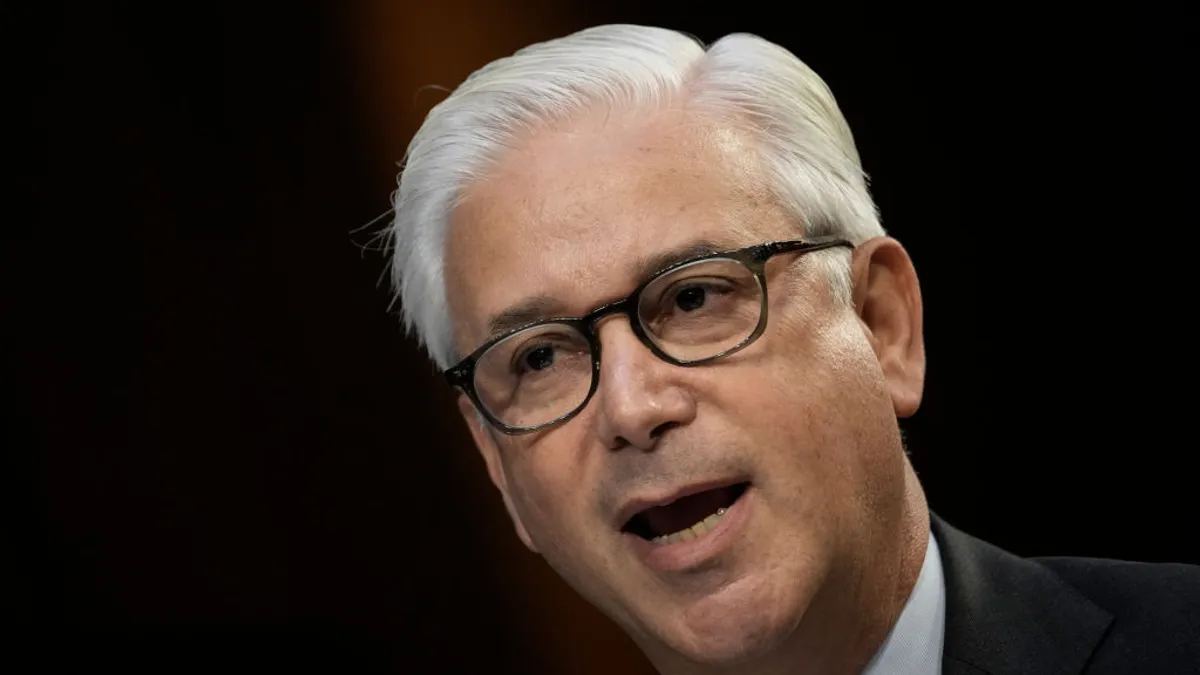
Comptroller of the Currency Jonathan Gould commended the committee Monday for “shining a light on the politicization of banking which has hampered industry’s efforts to modernize, innovate, better serve their customers and contribute to the national economy.”
Committee Republicans recommended that the Securities and Exchange Commission continue to modernize securities laws to oversee crypto markets where appropriate, and that the executive branch work toward effectively implementing the stablecoin-focused Genius Act.
Congress, for its part, should enact crypto market structure laws “to cement lasting certainty and pro-growth, pro-innovation policies in the United States,” the report said.
“We are optimistic that greater clarity will usher in a new era of fairness for crypto banking — and American innovation will be better for it,” McCauley told Banking Dive on Tuesday.