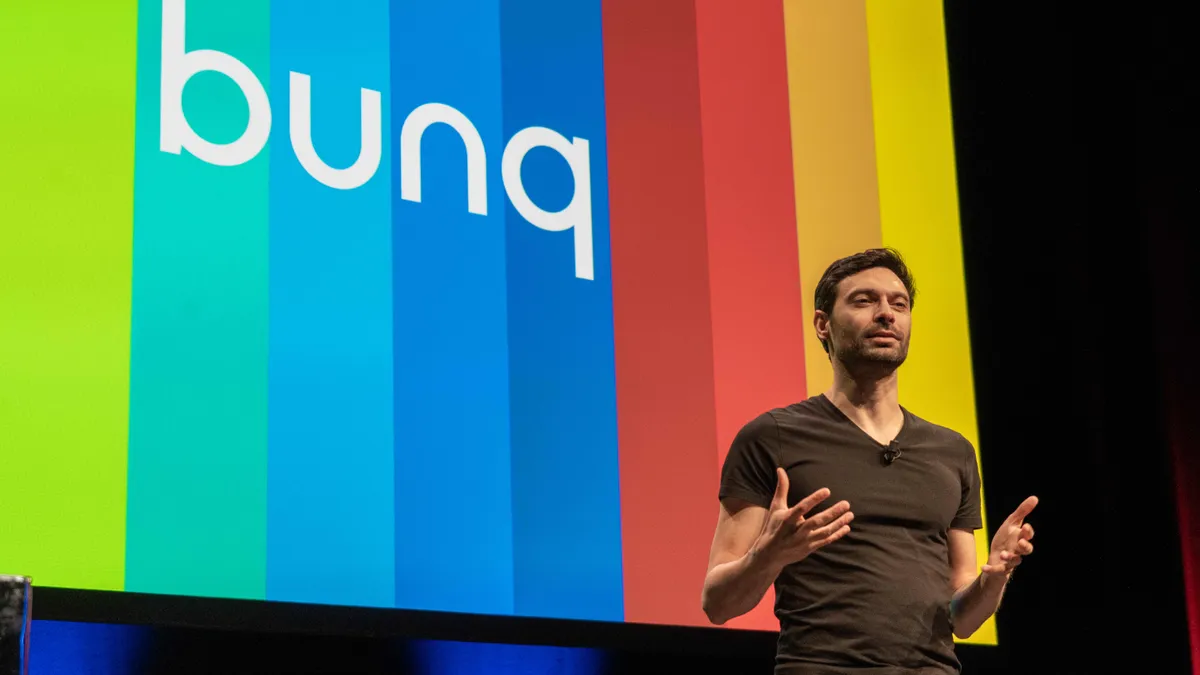
Bunq has re-applied for a de novo banking license with the Office of the Comptroller of the Currency, the Dutch neobank announced Wednesday.
The fintech previously sought a U.S. banking license in April 2023, hoping to tap into a digital-nomad user base.
But the company withdrew its application after a 301-day wait, citing a “difference of views” between financial regulators in the U.S. and the Netherlands.
If the application is approved, Bunq intends to launch its services beginning with U.S. metropolitan areas with large expatriate communities, the fintech said.
Bunq said its platform will help users quickly build credit scores by accessing European financial records, and allow customers to maintain U.S. and European checking accounts if they’re eligible.
“Our users are building their lives across borders, so they need a bank that is safe, secure and easy to use, wherever they are,” CEO Ali Niknam said in a statement Wednesday. “We want to give them the freedom to live the way they want, whether they’re heading to America, coming to Europe, or moving between both.”
Bunq’s latest effort comes a little more than two months after the fintech obtained a U.S. broker-dealer license through the Financial Industry Regulatory Authority, allowing users to invest in U.S. stocks, including mutual funds and exchange-traded funds.
Several other fintechs have applied for banking licenses with the OCC in recent months, amid a perception of relaxed financial regulations under the Trump administration.
Mercury submitted its paperwork in December. The OCC conditionally approved five digital asset firms, including Circle, Ripple and Paxos, for de novo national trust bank charters last month. And the regulator conditionally approved a de novo bank charter application for Erebor Bank in October.
Bunq foretold its intent to refile for a broader U.S. banking license in October — “once everything is ready,” a spokesperson told Reuters at the time.
In comments roughly midway through Bunq’s 2023 application window, Niknam said the fintech would “rather do things right than rush things,” adding that he expected a “tough but fair” evaluation.