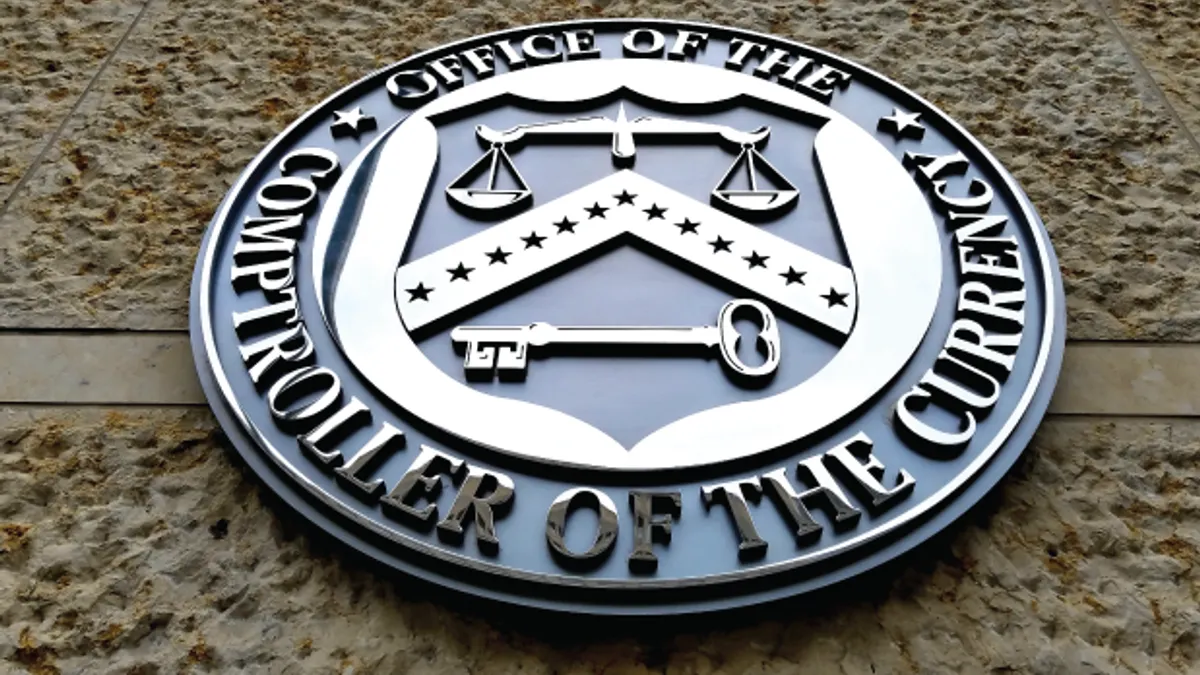
Cryptocurrency firm MoonPay has applied for a national trust bank charter, according to documents filed with the Office of the Comptroller of the Currency and a Thursday post from the company’s X account.
The vast majority of business details in the application, filed Tuesday, were kept confidential. However, in the public portion of the application, MoonPay said it would provide fiduciary custody services, stablecoin services such as issuance, redemption and reserve management, and serve as an agent in the conversion of currency from fiat to crypto.
MoonPay’s trust bank “will endeavor to promote trust and transparency in stablecoin markets, provide enterprise-grade infrastructure for digitally native finance and support innovation within a framework of regulatory compliance and safety and soundness,” the company said in the application.
The trust bank would be headquartered in Miami Beach, Florida, while the holding company would stay in New York City.
MoonPay touts alumni from incumbent banks and regulators in its upper echelons.
Yujush Saksena, who until July served as managing director for treasury risk at BNY, will become the trust bank’s chief risk officer, according to the application.
MoonPay was also the landing spot for Caroline Pham.
Pham, at this time last year, was acting chair of the Commodity Futures Trading Commission – and its only board member, serving until current chief Mike Selig gained Senate confirmation.
Pham began last December as MoonPay’s chief legal officer but has since become CEO of the company’s international arm, which launched in April with the acquisition of crypto key management firm Sodot.
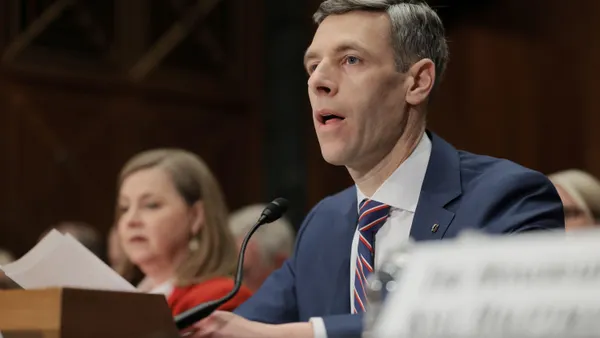
MoonPay’s banking license pursuit comes as the OCC has seen a marked uptick in charter applications received and approved. The agency has approved 28 charter applications in the past two years, “with several dozen more in the pipeline,” Comptroller of the Currency Jonathan Gould said Wednesday in remarks to the Exchequer Club of Washington, D.C.
And the agency received as many charter applications last year as it did in the previous four years, Gould noted.
“A functional chartering process allows the banking system to renew itself and remain dynamic,” he said. “It brings new capital and new ideas into institutions subject to federal supervision. That is especially important as technology changes how Americans expect to receive financial services.”
The licensing glut has its detractors, however. The Independent Community Bankers of America, sued the OCC last month, arguing the spike in trust bank charter activity would create “a gaping hole in financial regulation.”
The trade group, in an October statement, asserted that expanded use of the trust charter by the OCC “undermines the stability of the financial system by allowing a non-traditional institution to offer deposit-like services without adequate regulatory oversight or deposit insurance.”
The ICBA, at the time, was objecting to the OCC’s unconditional approval of crypto firm Ripple’s charter application.
Indeed, if MoonPay’s application is approved, it won’t be permitted to take deposits or lend commercially.
MoonPay says it counts more than 30 million users, including more than 500 enterprise customers in crypto and fintech.