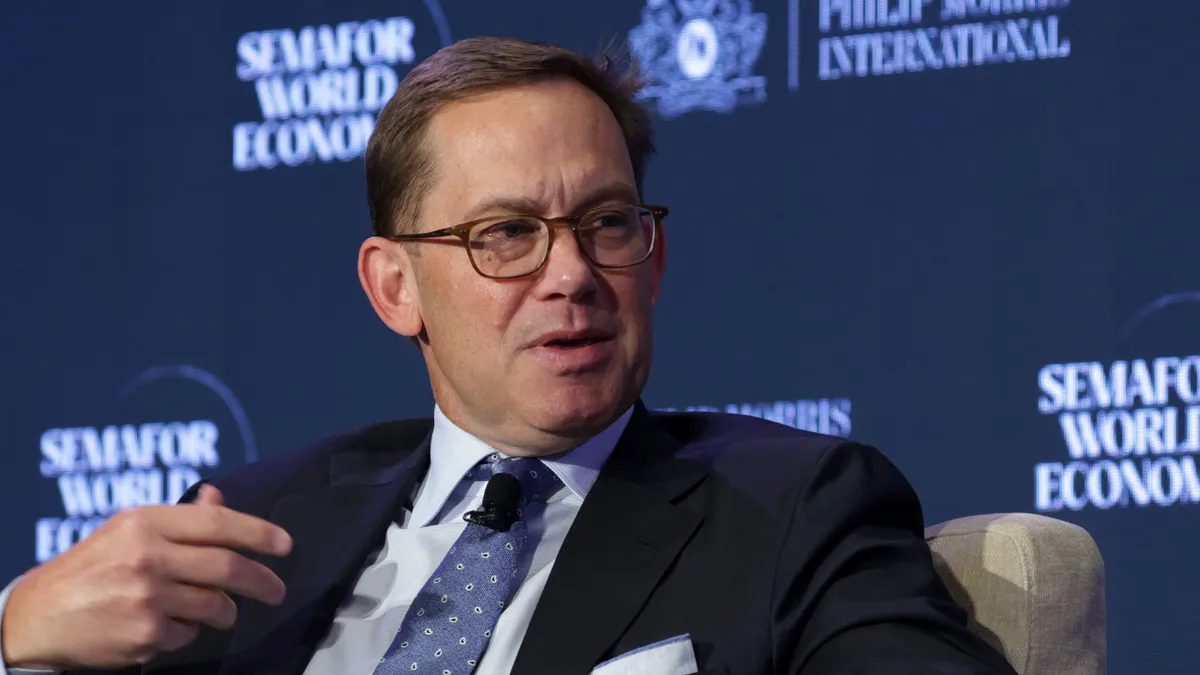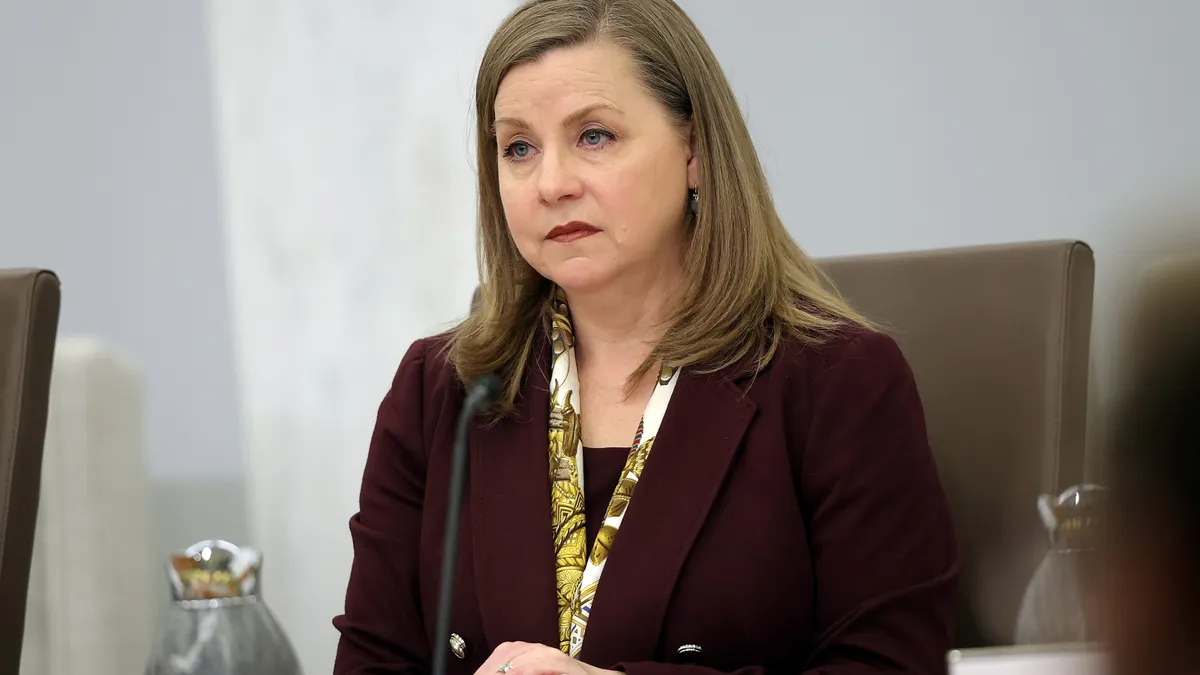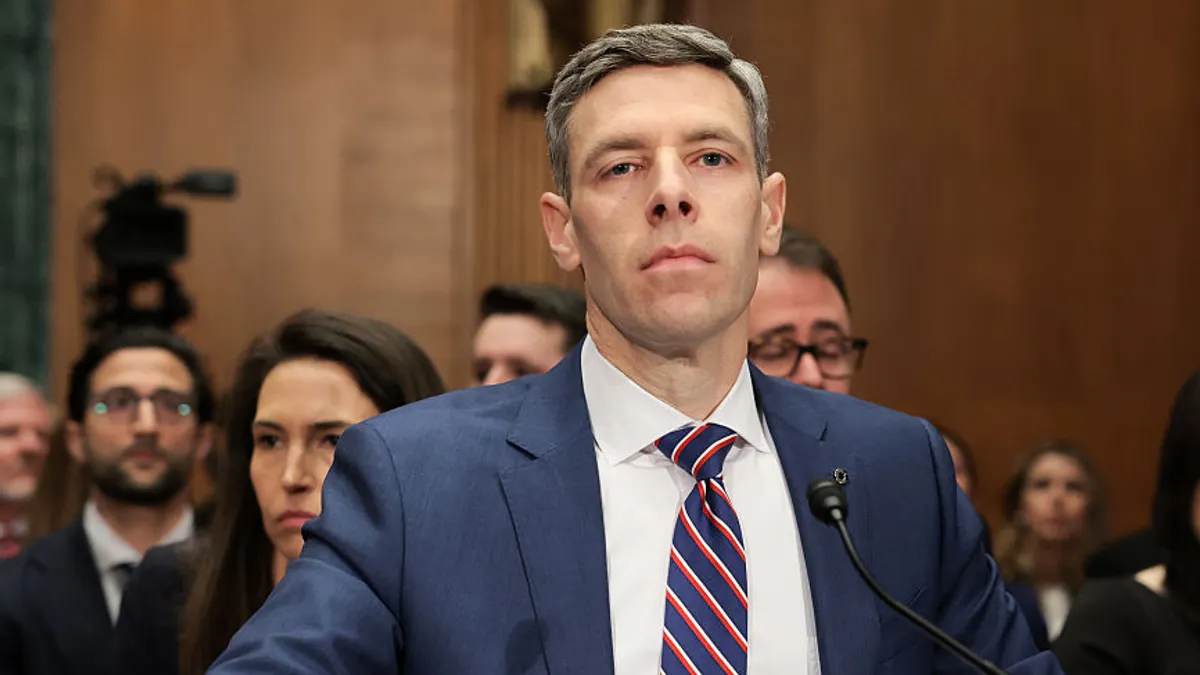
Comptroller of the Currency Jonathan Gould on Wednesday defended his agency’s conditional approval of a spate of national trust bank charters, as the OCC faces criticism from both bank trade groups and Democratic lawmakers over the approvals.
“We don’t have a zero risk tolerance anymore,” Gould said during Semafor’s Banking on the Future Forum. “That’s not what the statute says. The statute talks about a reasonable chance of success. That’s how we evaluate applications.”
After 2008, the OCC saw an average of between zero and two applications per year, Gould said. “That’s a disgrace,” he said firmly.
“What we are doing at the OCC is actually restoring regular working order in doing our jobs on the time frames that we’ve established, and consistent with the statutory factors that Congress has given us,” he said.
So few applications were seen during those years because the OCC and Federal Deposit Insurance Corp. were “sending a very clear message that applicants need not apply, because you’re not going to get a charter, period,” Gould said.
That’s changed under Gould’s leadership. About nine national trust charters have been approved on a conditional basis, including to Coinbase, Ripple, Circle, Fidelity Digital Assets and Paxos. Gould, who previously worked as chief legal officer at blockchain firm Bitfury, has told Banking Dive crypto is “no longer this other,” and that he doesn’t view the relationship between traditional finance and digital assets as antagonistic.
Bank trade groups, however, have said allowing crypto and fintech companies to offer bank-like products while operating under a less rigorous charter could increase risks to consumers and the financial system.
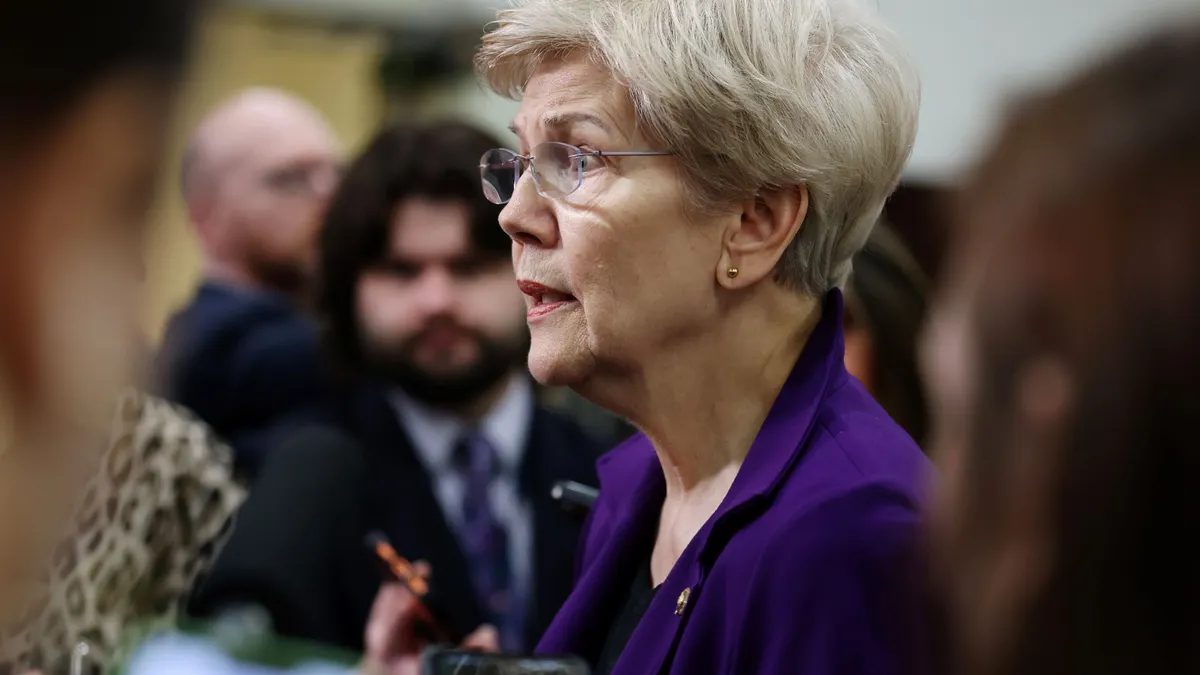
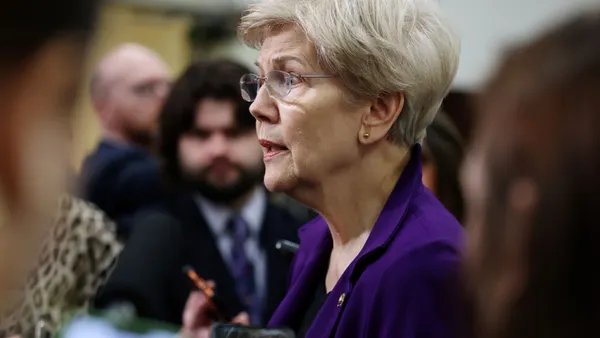
The issue has also drawn the scrutiny of Sen. Elizabeth Warren, D-MA. Earlier this week, she wrote to Gould, demanding further explanation on the OCC’s “improper” approval of national trust charters for cryptocurrency firms.
Responding to a report that bank lobbyists are weighing a lawsuit against the OCC on the issue, Gould said he’s “confident that we have an excellent litigation team at the OCC, and I'm confident that we have full legal authority to do the things that we're doing.”
While chief counsel at the OCC during Trump’s first term, “we sometimes got sued. It disciplines us,” Gould said. “There's nothing wrong with being on the receiving side of a lawsuit. It makes sure that our pencils are a little bit sharpened and we do our job a little bit better.”
The flood of trust bank charter applications is partly due to pent-up demand, Gould said. Additionally, FDIC efforts to improve the deposit insurance application process, which has been slow and “laborious,” are attracting more applicants, Gould said.
While the OCC’s conditional approval decision can be expected earlier in the process, “the applicant is still waiting and waiting and waiting to see whether or not the FDIC is going to grant deposit insurance application. That’s a higher risk proposition,” Gould said.
FDIC Chair Travis Hill has pushed for changes aimed at making the agency’s process “more thoughtful” and faster, Gould said, so “would-be applicants will have a better sense of how much they'll have to invest to get an indication of, ‘hey, is this going to be a go or no-go?’”
Gould likened the banking system to a walled garden.
“You don’t want the walls to be too high or too impermeable to entrants, because you run the risk of that walled garden, over time, decaying and becoming decrepit and not serving the U.S. economy, the markets, the customers who depend upon it,” Gould said. “We need fresh entrants, we need that constant refreshing of the system to ensure that, long term, it stays relevant and serves its function.”
Warren, the Senate Banking Committee’s ranking member, has warned Gould and other bank regulators of the risks some of those entrants pose. On Wednesday, Warren and Sen. Chris Van Hollen, D-MD, issued another letter to Gould and incoming Federal Reserve Chair Kevin Warsh, urging them to reject nonbank lender Enova’s application to buy digital bank Grasshopper. The lawmakers pointed to the fintech’s “history of predatory lending and regulatory noncompliance.”
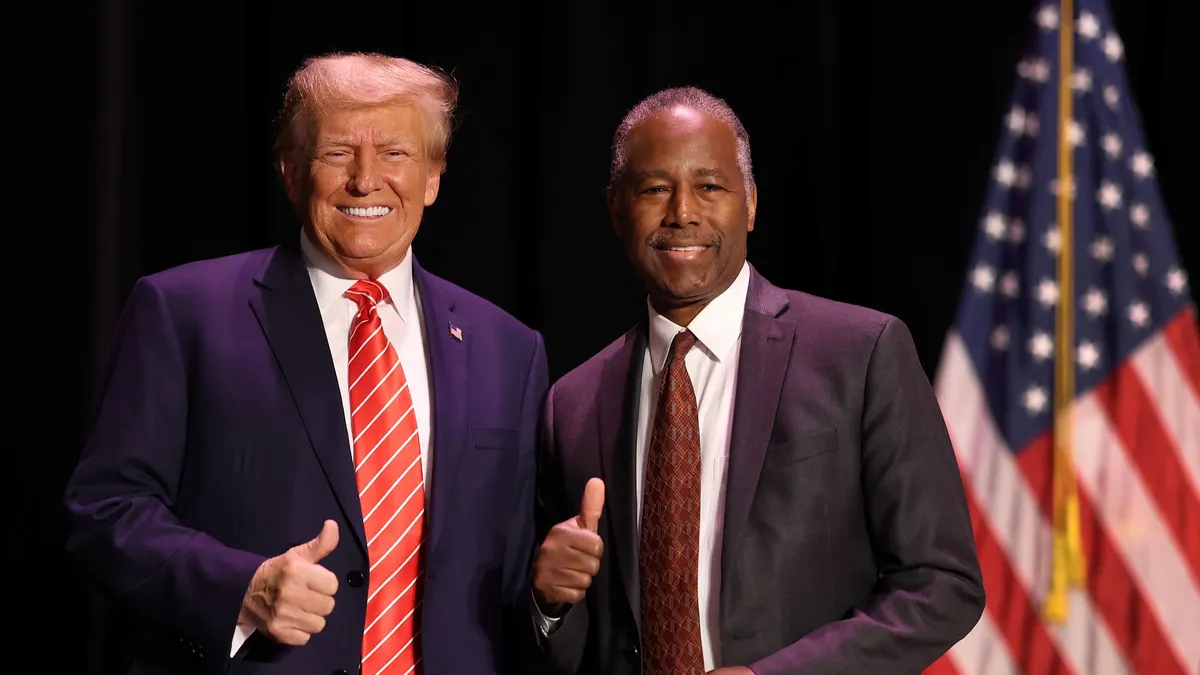
At Wednesday’s event, Gould was also asked about President Donald Trump’s Tuesday executive order aimed at getting banks to gather more information on their customers’ immigration status.
The order, “Restoring Integrity to America’s Financial System,” directs federal bank regulators to put forth changes to Bank Secrecy Act regulations “to strengthen risk-based customer due diligence requirements” for banks, ensuring lenders have the authority to pursue additional customer information including their immigration status.
Gould called it “a common-sense set of reforms that give us the tools that we need and preserve bank flexibility around how they establish the identities, that is, how they know their customers.”
Banks have an important obligation to know their customer and “the identities of their customer,” and are held to a regulatory expectation that they’re not helping facilitate financial fraud, money laundering or terrorism finance, Gould said.
He pointed to the federal banking agencies and the Financial Crimes Enforcement Network recently issuing a proposal to revise the BSA/anti-money laundering program rule. That revamp would direct financial institutions to put more attention and resources toward higher-risk customers and activities, rather than those categorized as lower-risk.
The executive order “syncs up with some of the changes” regulators have proposed with the BSA/AML rule, including FinCEN’s ability to help focus banks’ BSA/AML programs on specific issues, Gould said. Under that proposal, FinCEN and the Treasury Department will be able to highlight areas of potential risk and direct banks to take a closer look at those, he said.