Subprime lender OppFi has withdrawn its applications to acquire Arizona-based BNC National Bank, the company said Tuesday.
However, the fintech’s CEO stressed the company isn’t giving up on obtaining a bank charter.
"To clarify, the deal did not fall apart," OppFi CEO Todd Schwartz said in an email to American Banker. "Our merger agreement with BNCCORP [the bank’s holding company] remains in effect."
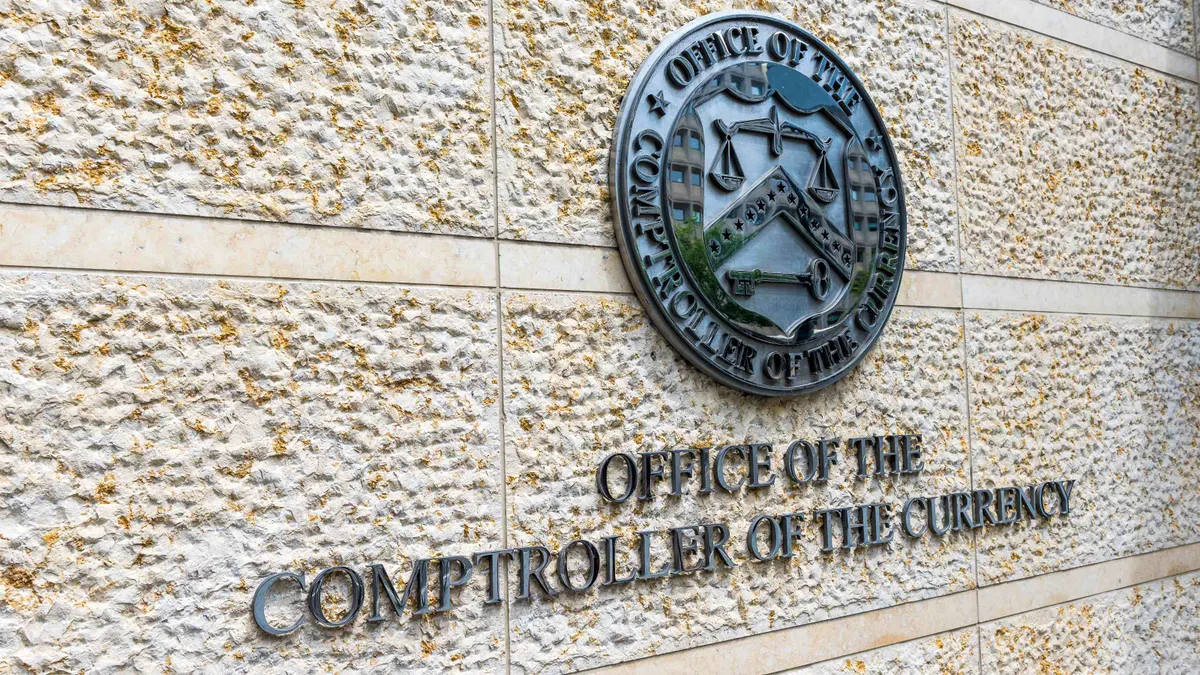
In a press release Tuesday, Chicago-based OppFi said it “proactively engaged with federal regulators before entering into the BNC transaction and has diligently responded to extensive information requests” from the office of the Comptroller of the Currency, Federal Reserve and Federal Deposit Insurance Corp. “throughout the application process.”
"We believe that our applications satisfied the existing statutory criteria for approval, but there is a lack of clearly articulated standards by which those criteria are being used to evaluate our applications and the proposed combination with BNC," Schwartz said in the press release. "We encourage federal regulators to expeditiously articulate clear standards that will allow innovative community banks and financial technology platforms to combine to better serve the tens of millions of Americans whose needs are not being met by traditional banks."
Schwartz’s sentiment echoes that of another Chicago-based fintech whose recent bank-acquisition journey hit a similar speed bump.
“Regulators do not have clear standards for nonbanks that want to become banks and that serve customers whose credit needs today are met mostly outside of the banking system,” Enova CEO Steve Cunningham said in September, affirming the fintech had withdrawn its applications to the Fed and OCC to buy digital lender Grasshopper Bank.
“Without clearly articulated standards, the process is susceptible to political pressure and outside advocacy, rather than being guided strictly by the statutory factors that should govern it,” Cunningham said at the time.
Twenty state and district attorneys general wrote federal regulators in July, urging them to reject the OppFi and Enova deals over concerns that they represented efforts “to avoid state usury laws.”
OppFi and Enova partner with banks chartered in states that don’t limit interest rates, the attorneys general wrote. That allows them to offer loans with annual percentage rates well beyond the 36% cap that some states carry – in some cases, up to 195%, according to a disclosure on OppFi’s website.
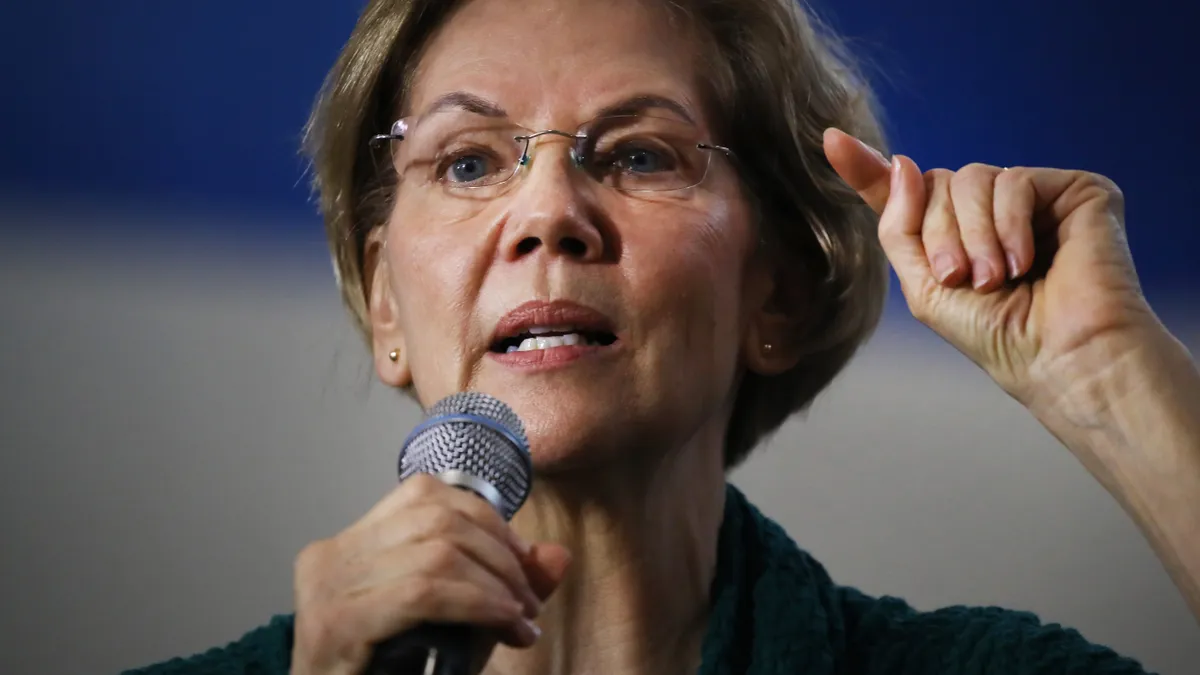
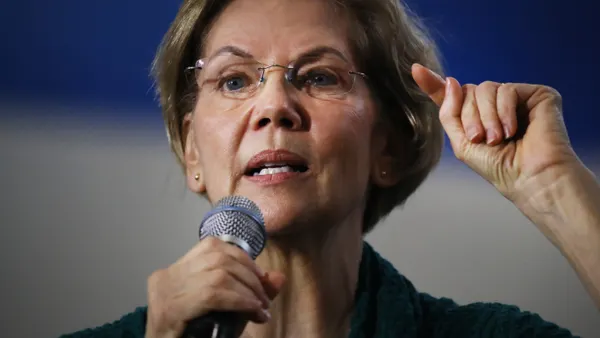
Political pressure didn’t stop at AGs. Roughly two weeks after Enova dropped its bid to buy Grasshopper, Sens. Elizabeth Warren, D-MA, and Chris Van Hollen, D-MD, pressed OppFi to follow suit.
OppFi “brands itself as a lender that ‘empower(s) everyday consumers to overcome financial hurdles and build long-term financial stability,’” the senators wrote Sept. 30. “But, a closer look into its business model reveals persistent, predatory financial strategies.”
As news of OppFi’s withdrawal circulated Tuesday, the senators doubled down on their stance.
“Americans shouldn’t have to pay triple-digit interest rates on loans. That’s why twice now, we have called out predatory lenders for attempting to acquire national banks and expand across the country, and we’re glad that both times the lenders – first Enova and now OppFi – have withdrawn their applications,” Warren and Van Hollen wrote Tuesday. “As Americans struggle under historic debt loads, [President Donald] Trump’s regulators should protect American consumers from predatory practices.”
Under the deal as OppFi proposed it in April, the acquisition of BNC would have closed by the end of the year. According to that agreement, OppFi would have to pay roughly $1.95 million, or 1.5% of the $130 million value of the deal, if the acquisition is terminated.
Schwartz gave little indication of friction with the proposed deal when OppFi reported its third-quarter earnings last week.
Regulator approval, he said, stood as the “final step” for the transaction, which was “overwhelmingly” approved by shareholders, Schwartz said during the Oct. 28 earnings call.
OppFi, Schwartz said in Tuesday’s statement, “is executing on the strategic transformation of our business as we build a more diversified, technology-enabled financial platform designed to better serve customers across their financial journeys.”
“We are confident in the long-term earning power of OppFi and our opportunity to create substantial long-term value, regardless of whether we do so under a national banking charter," Schwartz said. "OppFi and BNC are both established businesses that have remained profitable throughout business cycles, and we believe the combination … would create a stronger … organization that would be well capitalized with significant resources to pursue its business."