UBS has received final approval for a U.S. national charter from the Office of the Comptroller of the Currency, two of the bank’s top executives said in a video Friday posted to LinkedIn.
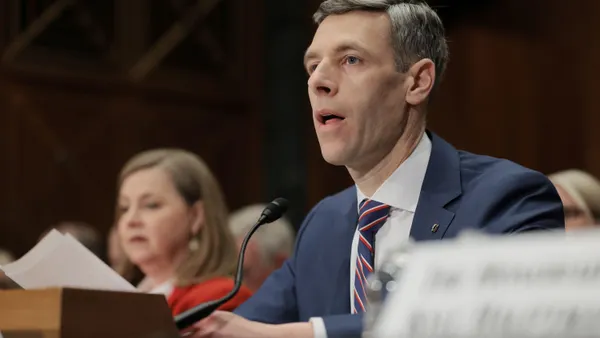
“This milestone really positions us well for the next phase of growth as we work to strengthen our U.S. banking platform and enhance how we will be able to serve our clients and advisers,” said Rob Karofsky, president of UBS’s Americas division and co-president of global wealth management. “It also underscores our long commitment to the U.S. business and investments that we continue to make.”
UBS has been operating as a Utah-chartered industrial bank, through which it offers basic banking services, including securities-based lending and credit cards, to private wealth clients.
“Now we’re going to go head-to-head with everyday banking,” Brian Carlin, UBS’s U.S. CEO, said in Friday’s video. That, presumably, includes payments, checking and savings account services, and deposit-taking.
The Americas stand as UBS’s richest region for wealth management, accounting for $2.3 trillion in invested assets as of last year.
The bank’s chair, Colm Kelleher – formerly second-in-command at Morgan Stanley – has said UBS would consider buying a U.S. wealth manager once its integration of Credit Suisse is complete.
Incidentally, UBS wrapped the most complex stage of its Credit Suisse integration this week.
Additionally, the Swiss bank, in recent years, has allegedly considered making the U.S. its global headquarters. The move comes as Swiss regulators have mulled forcing the bank to hold tens of billions of dollars more in capital.
By contrast, capital requirements for the largest U.S. banks could decrease if Thursday’s proposals from a spate of regulators take effect.
UBS has long sought to boost its U.S. profile in wealth management, moving in 2022 to buy robo-adviser Wealthfront. The deal collapsed months later, but the bank’s ambition remained.
UBS in late 2024 detailed a strategy to expand its foothold in the U.S. by tapping into rungs of wealth beneath the typical ultrawealthy targets.
The Swiss bank filed its initial application with the OCC last October, and the regulator gave conditional approval in January, Karofsky said Friday.
In a post accompanying Friday’s video, UBS said nothing would change for its current U.S. clients for now. A new platform, however, is set to roll out in the second half of 2027, according to The Wall Street Journal.